|
Getting your Trinity Audio player ready...
|
“Hi, my name is Chira, Brian Chira, and I saw the whole accident.”
That was 2022. A roadside accident in Kenya. A crowd of witnesses has gathered in front of a female reporter’s microphone, and as she adjusts her earphones to start the live broadcast, a young man in a frumpy, white T-shirt steps forward, naming himself before anyone asks, articulate and composed at a scene of death. Nobody in that crowd knew his name yet. Two years later, the whole country would.
Here was a young man sharing an account of a grisly road accident, articulate in his recounting and confident in his manner. His name would find me again in March 2024, following his own tragic death after a hit-and-run incident at 3 a.m. on March 16. A news report said Chira had been ejected from a club in Gacharage, took a boda boda, and when the rider took the wrong side of the road, Chira alighted. He ran towards the main road and was struck by a white Canter vehicle that did not stop. The autopsy revealed that he died of multiple organ injuries and blunt force trauma.
He was only 23 years old at the time of his death.
It was the outpouring that stopped me, the sheer viral volume of it, and got me reflecting on who he was and why the circumstances of his life connected with so many of his peers who came to celebrate him at his funeral.
The build-up to his funeral lit up social media before a single wreath had been ordered. The Chira Clan crowdfunded the burial and raised over eight million Kenyan shillings in days. On the 26th of March 2024, over five thousand young people descended on Gathanje village in Githunguri in rural Kiambu and overran it.
The village was overwhelmed. Some mourners arrived with alcohol and watered the bouquets with it. They took selfies at the graveside. It mimicked a mass content creators’ gathering. They performed because performance was the only grief language available to them. To locals and observers, it read as disrespect, but to the Chira Clan, it was the only funeral they knew how to hold. This was a generation attempting to mourn without having inherited the tools for mourning.
Grief expert Kenneth Doka calls it disenfranchised grief. This is grief that society fails to recognize as legitimate, that receives no ritual, no validation, no communal architecture for release. When the recognition is withheld long enough, grief does not disappear. It goes underground and resurfaces as performance, as spectacle, as young people watering flowers with alcohol because nobody taught them the older grammar of sorrow.
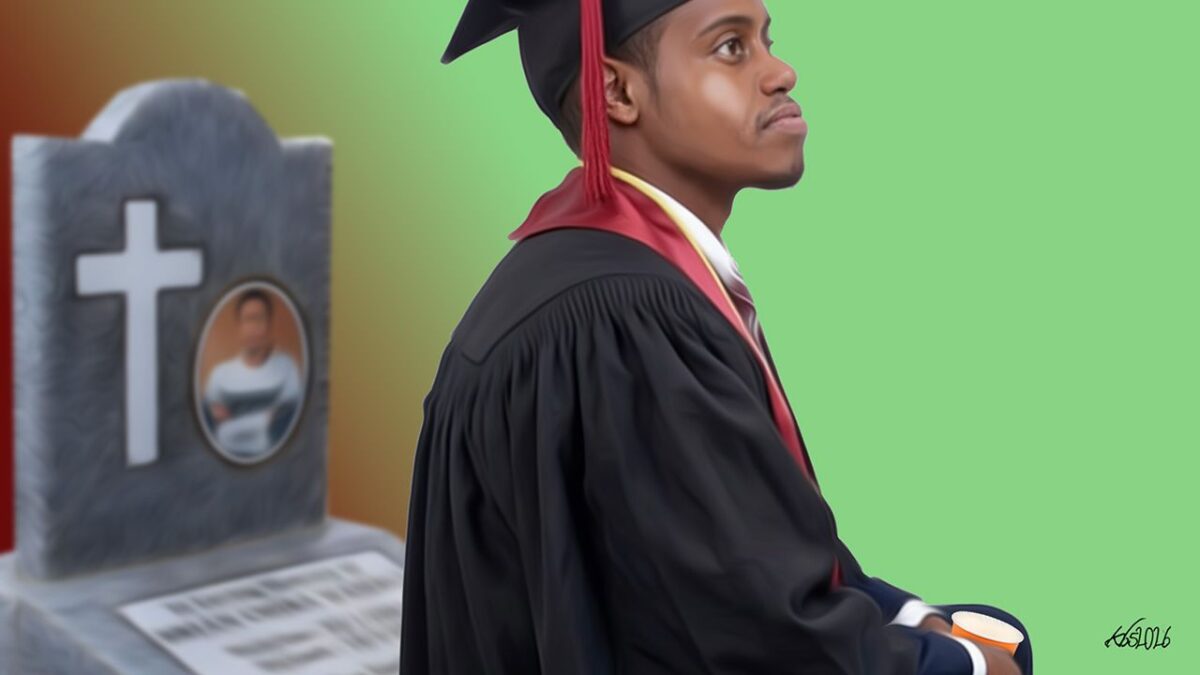
Brian Chira’s grandmother, Esther Njeri, had one request. She buried Brian in a graduation gown that in life, he never got to wear because he dropped out of university for lack of fees. She dressed him in the future that was taken from him. The mainstream press arrived and reported on the alcohol, the selfies, the sexuality of the deceased, and the chaos. The press corps covered the spectacle and forgot about the grief that compelled five thousand people to come to a village in Kiambu to bury someone most of their parents had never heard of.
Brian Chira’s back story, before TikTok made him famous, is one of layered loss. His fame came from his charisma, relatability and honesty. He personified the frustrations and setbacks of his generation, and he had the ability to share his pain with unflinching honesty. Chira was orphaned at eight, both his parents taken by HIV/AIDS, a disease that moved through two decades of Kenyan life and left a generation of orphans around the country in the care of grandmothers. He came under the care of his grandmother, living in Githunguri, Kiambu. Chira would later contract HIV himself, after being sexually assaulted by a friend at a party in Mombasa. He had blacked out. The friend who betrayed his trust later took his own life. Chira wasn’t afraid to speak of any of this. He turned his pain into content.
This is the singular trait of Chira’s generation. They do not suffer in silence. They name what is hurting them. They take the trouble to identify what is not normal.
In Chira’s story, we find a symbol of a bereaved generation that arrived on the scene already carrying unprocessed loss, passed along like a tin can kicked down the road, from one generation to the next, until it joins a pile of uncollected garbage by the roadside that keeps growing until those who live around it stop smelling its stench or noticing its abnormality.
Brian Chira and his generation are the kids who shout that the king is naked. The public reaction is to call them disrespectful for drawing attention to something everyone else has trained themselves to not see. His story is where the inherited traumas of a generation become visible.
The original sin of this country was the war of independence that arrived as a negotiated settlement, the betrayal leaving the freedom fighters, the Mau Mau, the youth of that generation, unburied and erased. There is no clearer example than Field Marshal Dedan Kimathi, who was executed by the British on the 18th of February 1957 and buried in an unmarked grave within the grounds of Kamiti Maximum Security Prison. His widow Mukami spent the next 66 years asking one question: Where is my husband’s body? She survived Kenyatta, Moi, Kibaki, Uhuru, and Ruto. In 1990, Nelson Mandela, five months out of prison, came to Kenya and asked to see Kimathi’s grave and to meet his widow. He left having done neither. Neither the grave nor the widow could be produced. Mandela finally met Mukami in 2005, only after Mau Mau had been quietly decriminalized. Mukami died in May 2023, aged 96, still not knowing where her husband lay. Though his statue now stands on a street named after him in the centre of Nairobi, his grave remains unknown.
Cameroonian historian Achille Mbembe teaches us that sovereignty is not only the power to govern the living. It is also the power to decide whose death matters, whose body deserves a location, and whose grief is permitted. The Kenyan state answered that question in 1957 and has been defending that answer ever since. The dispossessed remained landless. The land clashes that followed across generations were the unresolved argument returning in violence. And the template was set. Name the crime. Honour the martyr. Bury justice in an unmarked grave.
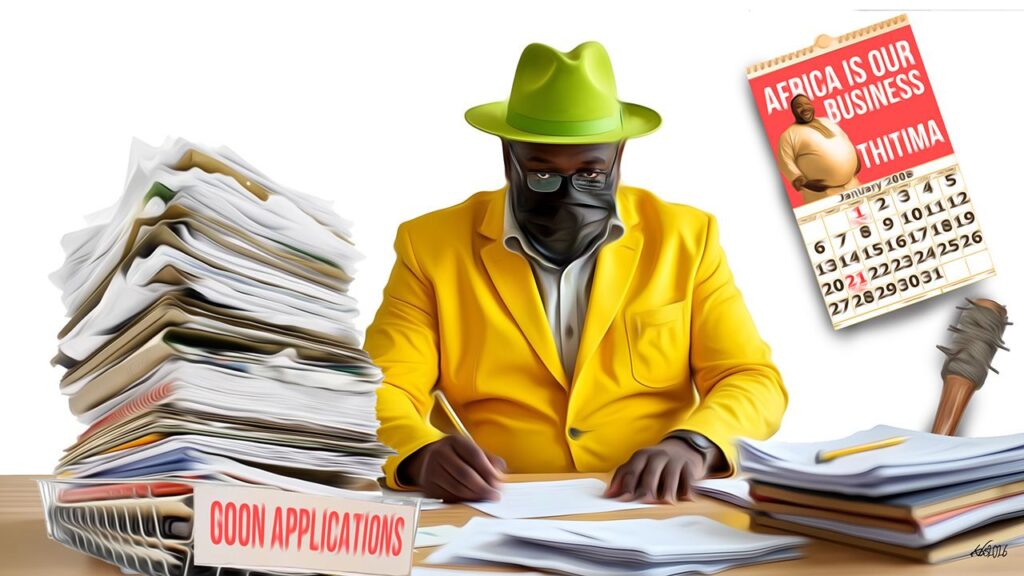
JM Kariuki was murdered in 1975 for imagining a different Kenya that was not defined as a country of ten millionaires and ten million beggars. A parliamentary committee named the killers, and yet nothing happened. That sequence, the naming of the crime, and the inaction that follows became the template for Kenya going forward. The public came to terms with a state that is under no obligation to keep its promises because there was really no consequence for breaking them. Unlike Dedan Kimathi or Tom Mboya, whose statue stands on Moi Avenue in Nairobi, twenty metres from where he was assassinated in 1969, JM Kariuki has neither a street named after him nor a monument. JM’s demand for economic redistribution remains a live indictment of every government since.
The AIDS crisis of the 1980s and 1990s did not just take lives. It decimated a generation and with it the ritual holders. The elders, the mid-generation, the very people who knew how to conduct a burial, how to hold a family through loss, and how to give grief a communal shape. The cultural tools for processing grief were overwhelmed at the precise moment that loss became overwhelming. The Structural Adjustment Programmes of the 1990s removed the guard rails simultaneously. Public health facilities became dysfunctional. Cost-sharing rendered dedicated healthcare a matter of privilege. Burial became logistical rather than ceremonial. It was like a time of war, but characteristically slow and unacknowledged. A violence that had no single author and therefore no one to hold accountable. Families mourned their dead in helpless silence. Like COVID, which arrived decades later to repeat the lesson, societies discovered they had never built the infrastructure for collective grief. What remained in place was only for collective forgetting.
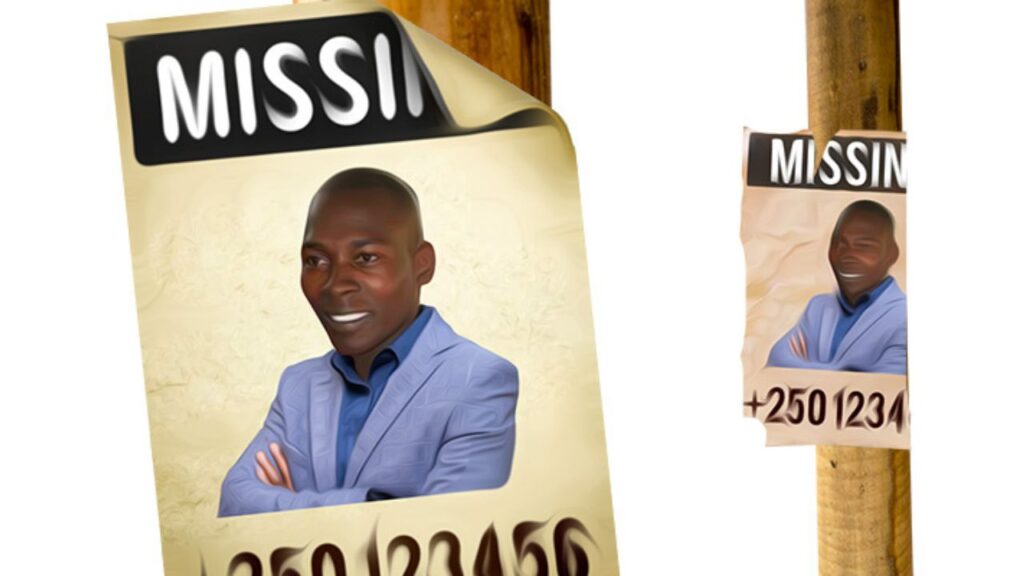
Swiss-American psychologist Pauline Boss developed the concept of ambiguous loss to describe what happens when grief has no resolution. What happens when there is no body to bury, no verdict to receive, no moment at which mourning is permitted to close. Boss developed the framework for families: the soldier missing in action, the parent lost to dementia, the child taken, leaving no trace.
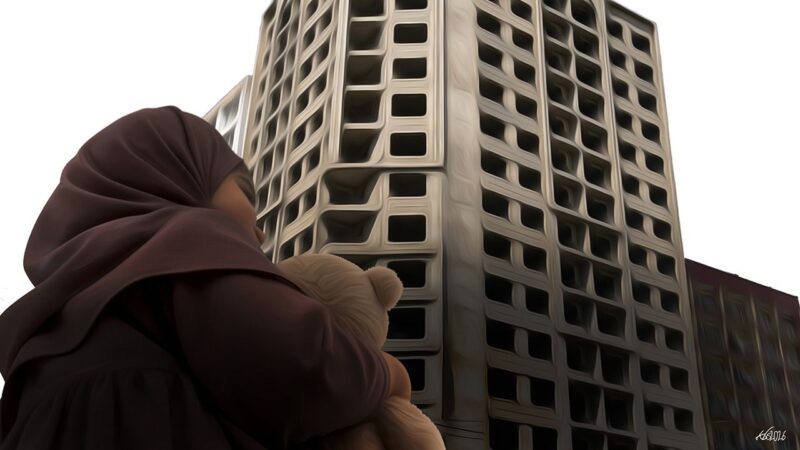
But what happens when the family is an entire nation? What happens when the unresolved losses are not one family’s private wound but a country’s accumulated, unacknowledged, and unaccepted grief, passed down through silence, and through the bodies of children who grew up in houses where certain names were never spoken, and certain dates arrived each year without ceremony?
Kenya is that nation.
The land clashes of 1992 were state-sponsored ethnic violence that swept through the Rift Valley and the Coast, leaving between 1,500 and 3,000 dead according to some accounts, and hundreds of thousands displaced, many of whom remain displaced to this day. Kenyan author Kinyanjui Kombani documented what the statistics could not hold in his novel The Last Villains of Molo. Kombani writes about five young men brought together by the Molo clashes of 1992, forging a friendship that crossed the ethnic lines along which people around them were killing each other. The children of the violence built solidarity from its rubble. Nothing happened to the perpetrators.
The cycle repeated in 1997. The state revived the same script, enacted it with the same impunity, and confirmed what 1992 had already suggested, that there would be no consequences. Something changed in the fabric of Kenya, at least for my generation that came of age during this time. The fiction of a nation dropped, and the realization settled that political stakes could turn your neighbour into a raging arsonist and that there was no place to run to for justice. Ignorance was no longer a defence. This is where the silence was born of people who knew exactly what had happened and had learned that knowing changed nothing.
Even after President Moi vacated power in 2002, the respite was brief. The ghosts had not been exorcised. When the 2007 post-election violence erupted, it was those unhealed wounds that were torn open again. Over 1,300 dead, hundreds of thousands displaced, and then followed the familiar sequence: the quest for justice that led to the ICC proceedings in The Hague, with the promise that this time would be different. The men whose hands carried blood would marshal support on a sovereignty platform and capture political office, and the cases collapsed soon after as the silences returned.
The grief of 2007 joined the long list of unresolved losses converted into political currency. Accept and move on became the national slogan. We were witnessing disenfranchised grief at a national scale because what happens to a person when you realize that the boot on your neck belongs to the hand that feeds you? When the people mourning loudest at the funeral are the sponsors of the crimes, silence becomes the only available adjustment to absurdity.
Over these decades, the crucial ritual architecture of mourning was dismantled, layer by layer, crisis after crisis. By the time Brian Chira was buried in March 2024, there was nothing left to hold the weight of what five thousand young people brought to that graveside in Githunguri.
Three months later, in June, the streets of Nairobi erupted.
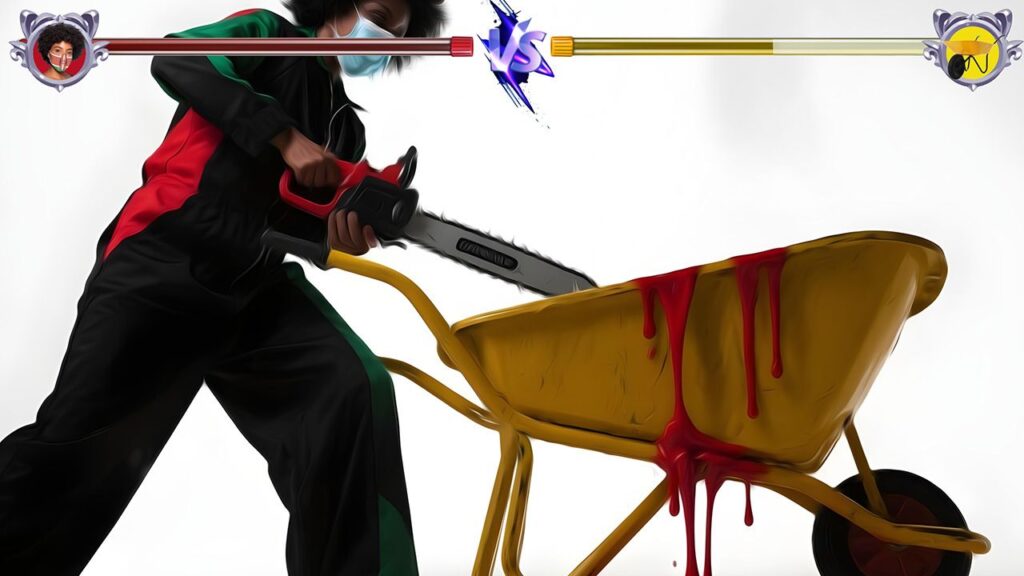
Before they masked up and took to the streets, many wrote their own obituaries and posted them to their social media timelines, instructing followers to notify their families and organize their burials if the police killed them. A generation that had studied Kenya’s pattern long enough to know that they might become its next unseen entry chose to go anyway.
Over sixty young people were killed in the state’s suppression of the Finance Bill protests. The sequence held. Mass loss of lives. Named perpetrators. No accountability. And then, as before, the grief was converted into political currency. The 2007 post-election violence produced a government of national unity. The 2024 protests produced a broad-based government. Different eras, but the same transaction, the dead paying the political bill, the living expected to accept the change and move on. After every election cycle, grief is left unattended or left raw by design because of the political potential it holds to prevent reckoning and to be banked whenever convenience demands.
But the transaction failed this time. The conversion mechanism had broken down. The political class that normally captures grief and weaponizes it into ethnic arithmetic had already performed that trick in 2007-8, and this generation had watched the whole sequence in real time. The trick had been performed too recently and too visibly. A generation that grew up watching grief converted into power and position could not be made to hand their grief over for the same purpose again.
Therefore, what can a generation do with grief it cannot name? Brian Chira turned his story of grief and survival into content and his pain into entertainment. Social media became a stage available to a young man without ritual architecture, without elders to guide him through loss, or a political channel willing to take his grief seriously. It was the last public stage, where he could share his testimony to an audience that recognized what he was carrying because they were carrying the same thing.
This is what the generation that we labelled Gen Z is doing all along. The social feed has become a mourning ground because every other mourning ground was inaccessible, and the public spaces policed. A generation with nowhere to grieve did what humans have always done when the recognized channels close. They found another way.
Brian Chira’s burial and the June 2024 protests were not separate phenomena. They were the same grief on different stages, both leaderless, both excessive by the standards of those who had learned to grieve in silence. Both generated a collective outpouring that far exceeded the immediate occasion, because the immediate occasion was never really the point. The point was everything buried underneath it.
This is what public grief looks like when it stops waiting for legitimacy. What June 2024 revealed was not a protest that burnt bright and faded. It was a grief ritual. The streets became a mourning ground, and for a moment, the grief stopped waiting for permission.
Two years later, the question is not what the generation achieved. Grief rituals are not measured in political outcomes. What matters is what was finally named; the sixty years of accumulated loss, spoken aloud in public, without being immediately converted into someone else’s political currency. Whether that naming becomes closure is a question this anniversary cannot answer. The wound is older than the generation carrying it. And the older the wound, the longer the vigil.
What remains is Esther Njeri, Brian Chira’s grandmother, alone at the headstone, tending the grave. The Chira clan has moved back to the feed. The five thousand are elsewhere. But Njeri remains, doing what her generation knew how to do, and the New Native is still learning on their own terms, what she already knows.