|
Getting your Trinity Audio player ready...
|
“Here’s to the crazy ones. The misfits. The rebels. The troublemakers. The round pegs in the square holes. The ones who see things differently… The people who are crazy enough to think they can change the world, are the ones who do.” — Steve Jobs
“You never rioted this much when Uhuru (Kenyatta) was president,” a notable official lamented in mid-May on national television. The underlying assumption being that, one, Kenyans barely rioted then, and, two, that there are no substantive issues that have provoked the citizenry to dissent. This is despite the continued existence of a whole host of exasperating issues including the cost of fuel crisis that is now bedevilling wananchi following the outbreak of the US-Iran war and the blockade of Hormuz.
In that regard, the official’s stance is no different from the prevailing thinking within the public imagination; the belief that any revolt by raia through protest is often grounded, not in any values, principles, or the deprived material conditions of the wananchi but only in identity.
The identity invoked here, whether geographical, gendered, class, tribal or religious is then laden with all kinds of stereotypes and historical baggage to derive a caricatured motive as to why person X or group Y has protested. Whatever the issue at hand, the opposition, protest or riot is always boiled down to: You did it because you’re opposed to a politician from this tribe, that faith, that other political persuasion, or the much maligned middle class.
And in that mould, in June 2024 the president went on a wild tirade, blaming the opposition, foreign NGOs, unknown powers, and unnamed principalities; anything except the critical questions raised by those in the streets. Because one critical blindside of our society is that, ultimately, everything that happens in this country has to be proximated to an identity.
Nothing screams this laxity of thought and consideration than the crude insistence of boiling down any event, opinion, or quest to a reducible identity. It shuts down conversation, allows for poorly thought-out assumptions about the motivations of the speaker, and clogs any pathways towards truly weighing the argument on the basis of its own merits. This fixation with identity can be said to be truly Kenya’s ultimate disease. In this case identity becomes the simplest yet inadequate toolkit that the wananchi reach for and deploy, as though it were a tool for analysing any and all of Kenya’s civic predicaments.
Yet, as Dr Wandia clarifies, the obsession with identity, which is the political logic that runs the Euro-American global empire (and most of its neo-colonial outposts), now in decline, was revived in Europe in the 17th century from the ruins of the ancient Roman Empire.
‘’The goal of this civilization, from the European sense, was not to affirm common humanity. It was to fragment, create division, and conflict. It is to do the opposite of what Jesus did in the stories I have cited, which was to look for the common denominator that united all the people, which is faith, spirit and truth,’’ she adds.
So, in the construction of their own humanity within the confines of empire, the natives are often forced to define their existence for or against this metric of identity. Hence, they codify and overemphasize tribe, gender, ethnicity, locality, class, hierarchies, as well as religious factionalisms of any and all kinds in order to achieve a baseline of realities to ground the age-old nefarious question: Wewe ni wa wapi?
The above question is meant to situate you within a tag whose pre-existing stereotypes they can then lord over you, so they don’t have to do the laborious work of truly knowing you or grappling with the issues that you’ve raised. The core problem with this identity politics is that framing social issues strictly around ethnicity, race, gender, or religion problematically replaces citizen solidarity with fragmentation.
And that tactic has worked as one of the most resilient legacies of the colonial era that still haunt us today. This is because, in the precarity of a colonially hangovered state like Kenya, affiliation with the current political, social, ethnic, gender, class, or local group could be the difference between landing that coveted spot at privilege and getting the door not so subtly shut in your face. And this works whether seeking public services or private gigs, limited slots, or contested opportunities anywhere in the country.
However, by obsessing on our differences rather than our commonality, identity politics has essentialized individuals into rigid groups, fostered tribalism, overshadowed our shared humanity, and sparked a zero-sum competition across the society.
Kuja saa nane mkubwa hayuko could, with a simple greeting in the mother tongue, turn into Leta ni sign. This dance of primitive belonging continues unscrutinized, often treated as ubiquitous as air. Nyinyi wa huko huwa mko hivyo, wherever huko is, is bandied around to justify lazy stereotyping and determine who belongs and who doesn’t, who is deserving and who isn’t.
A society in transition
In recent years, though, we’ve seen the obsession with identity enter a period of slow fade, if not in its utility, at least in its overall appeal. A new creature forces itself to rise from the embers of the old ways of thinking with which wananchi used to define their positioning and their humanity; a new native if you will.
This not-so-new creature currently exists in a tentative world where the persistent caricatures of tribes, class, and gender stereotypes remain resilient, their crumbling edifices, though weakened yet still formidable. Meanwhile a new, yet-to-be concretized tribeless, leaderless world fights to be configured and acknowledged in Kenya.
Meanwhile, our politicians, stuck in the old ways, still try to whip up tribal, gender, or class sentiment, a tactic that continues to work as Odipodev demonstrated in their October 2025 report, which outlined rising tribalisms among Gen Zs despite their claim to be tribeless.
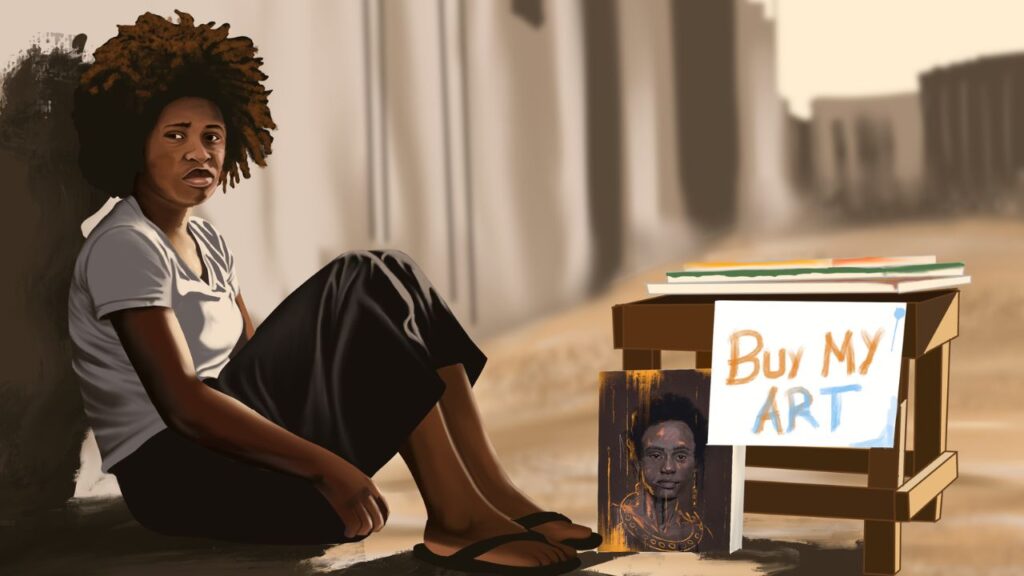
In this world where the old is dying and the new is yet to be born, the new native oscillates between the unorthodoxy of a maverick and the constraints of a misfit as he tries to chastise the society, unpack historical realities, develop coherent literature, find community in concerts, in theatres and libraries, and generally attempt to, where possible, create new ways of being and existing away from the mostly ethnic-based identities.
This creature went to Alliance, or maybe not, rightly belongs to the inorganic Kenyan elite, or scoffs at its ill-fitting pretensions, smirks at missing Drunken Lectures Series, or relishes the chance to hit the streets and express their vocal displeasure.
The new native takes delight in their opposition to state mediocrity, in dress, in speech, in life’s simple pursuits, and often exists at the margins, quietly shunned by their fellow self-conscious ruling-class peers who see them as unwilling to play the game in order to benefit from the largesse of the elites, whether in private careers, or in public service.
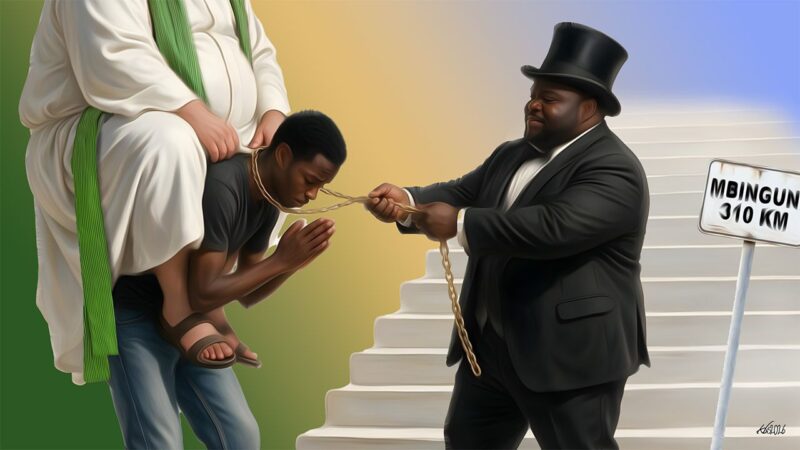
Need we be reminded that the ruling class isn’t truly a fully independent bourgeois class but mere intermediaries? That they simply manage extraction – whether it’s Ebola facilities, content moderation scandals, or carbon scams – on behalf of imperial capital in exchange for personal gain?
Shouting from the margins
Still, one has to pause and wonder where these new natives have emerged, formed, and forged their traditions and values from. What causes them to engage Fanon as the world around them drowns in Gifted Hands? What makes one willing to commit class suicide, to escape the tyranny of conformity, to forsake the fleeting allures and pretensions of class belonging?
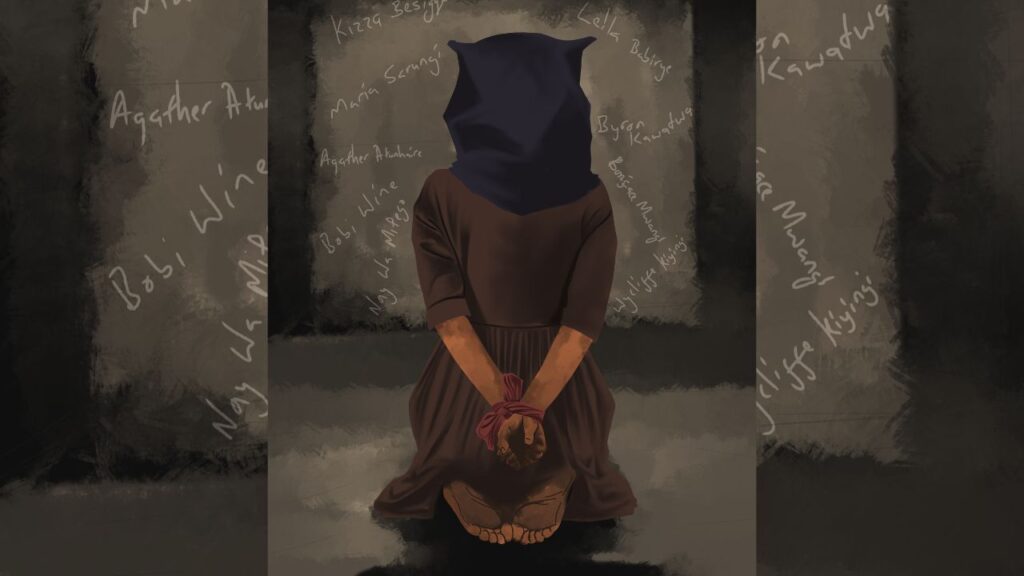
Like a wolf among sheep, they navigate life and society, reminding us that conservation perpetuates racist beliefs, that academic pathways lay snares that will entangle whole generations and commit them to mental atrophy. They have the audacity to plant trees to remind us of sons lost to the excessive forces of the state, and offer their mind, their craft, their brains, their patience to causes that will endure long after they are gone.
Usually, when the fringe becomes a lifestyle, it’s easy for one to forget the price paid by those who stood for those truths when they were unpopular and inconvenient – the day ones, as the Kenyan colloquial expression goes. It is easy to join the masses when what was once seditious is now a merely harmless evening chant. But for those who stay the course, what informs their moral and intellectual courage? What makes them stay true to their convictions when their insights about society – novel and misunderstood – are mocked, caricatured, and held up as a testament to a flaw in their personality, if not of their character?
“You’re always criticizing,” they are told. “What is your solution?” they are asked. “Let’s not politicize issues,” they are reminded.
But the issues of public interest about which they have spoken and continue to speak do not lend themselves to easy answers and quick solutions. The issues – whether concerning conservation, economics, education, or healthcare – demand patience, historical understanding, philosophical weightlifting, and the patience of the biblical Job.
What happens when they try to call on society to pause and reflect, even when the crisis at hand carries a sense of urgency and demands immediate answers? What becomes of their beckoning, come let us reason together, when the national issues at hand easily lend themselves to the tyranny of the readily available answers that are often simplistic, emotionally satisfying, but mostly wrong or inadequate?
How do they get the masses to invite complexity and inconvenience, when the allure of populist and simplistic solutions reigns dominant in public conversations, whether it’s securitizing paychecks, building yet another shiny toy that we can’t afford, or borrowing yet another billion or trillion?
How do they fight back when the nationalist-supremacist beliefs stand as proud edifices of imperial snobbery that the colonialists left behind? How do they confront the superiority complex about our regional position? The often not-so-subtle sense that we’re better than our immediate neighbours in this precarious Horn of Africa? The feeling that our larger economy is a testament to our competitive edge and better grasp of global reality, even though the proceeds of this make-believe Kasongo prosperity doesn’t translate to better lives for the majority of the hustlers stuck in the enormous underclasses across the country?
The new native fights to unpack the structure of Kenyan society for the masses who’re easily enchanted by the rituals of a loud but unproductive political class, the cluster most invested in propping up an unthinking framework of existence for the country based on political ideas whose contradictions and falsities are rarely questioned.
They trudge on, often in the margins, relying on the imperial tools of digital reach to propagate their often unwelcome message. They exist in a world with a chronic aversion to organized or even personal resistance, and an exasperating affinity for compromise. The lone parent who fights for better dormitories finds himself or herself isolated, until the call comes in that an atrocity like Utumishi Girls or Endarasha has been committed by young souls.
Yet in all these travails, the new native carries on with their trade; armed with a desire to belong, a vivid vision of the ideal future, and an unwillingness to succumb to offers to betray the cause for a state appointment here or an award there.
They remain steadfast when the focus moves on, and the cameras have found a shiny new story to focus on. They document, augment, articulate, commiserate, and clean up after the party is over and the guests are gone. This new creature stays single-minded and undeterred, learning to define their wins, labouring under the weight of unpopularity, and the climbing costs of inconvenience.
Whither this new native?
The new native has found a home on the streets of digital media, finding community, solace, and camaraderie.
In fact, by the late 2000s, the new natives were no longer fringe weirdos; their traditions, habits, jobs, and speeches had found virality on the interwebs. They multiplied in numbers, in resolve, in ideas, in a world where learning, socializing, agitating had long been democratized.
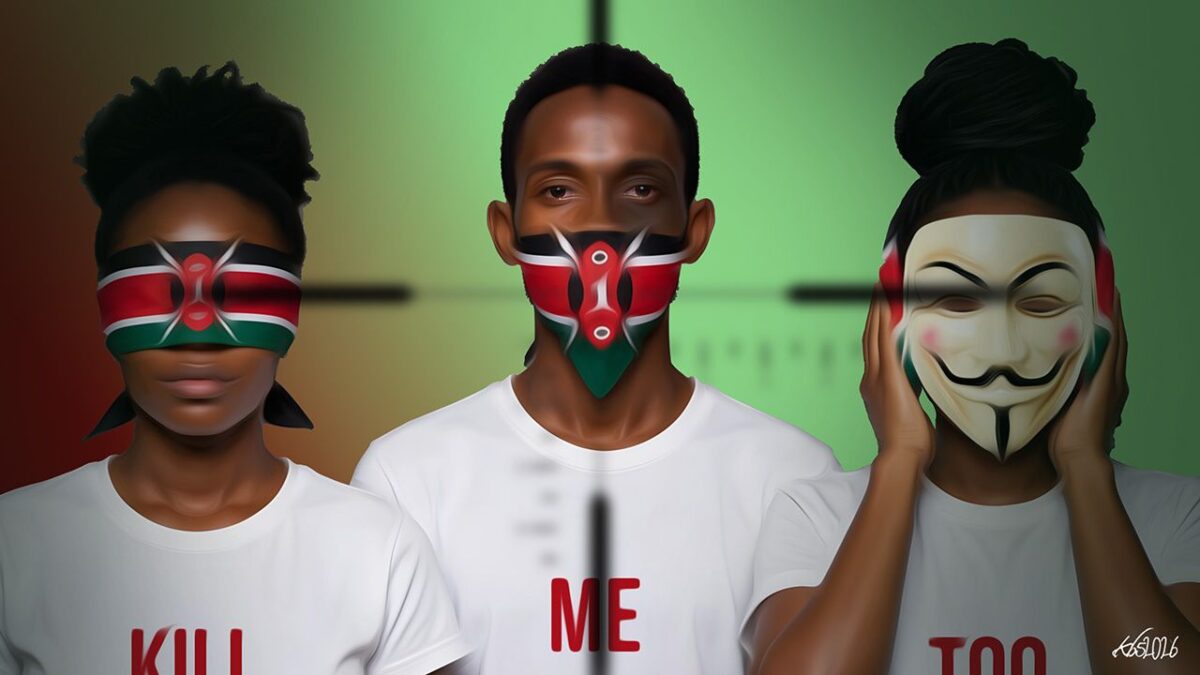
They therefore sought to recruit those for whom the state’s narratives had failed to match their dreams with opportunity and robust public policies. They then recruited outwards among the quiescent, the demoralized, the mystified, the fearful, those drawn to fantasy and spite, and those yearning for purpose. And in June 2024, they constructed the disfranchised clusters into an articulate pool, albeit temporarily.
Odipodev and Amnesty International-Kenya insightfully show us that the typical native is not your household-name activist that is often accused of being in service to the humanitarian arm of empire. It’s your neighbour who’s more likely to publicly agonize and organize, their main grievances being bad roads, land grabbing, localized insecurity – bread and butter issues.
In the weeks leading up to the storming of the Kenyan parliament in June 2024, I noticed a unique element in the type of people who attended the protests; they polled much younger, were more enthusiastic, and some wore fairly pricey clothing. Not exactly what we had come to expect of the rank-and-file rioters in Kenya.
The quest for justice expressed through protests had found resonance with the type of Kenyan who would often be considered apolitical and unimpressed by politics and issues of public interest. They are not the group most invested in the everyday mechanics of dealing with teargas, running battles, and placards. Something had changed. We just didn’t fully appreciate it yet. Somehow, this apathetic regime had finally managed to enrage a unique cluster: the middle-class Gen Zs.
It seemed like a sudden breaching of political order. But a keen eye can tell that our nation, Kenya, has for a while been gradually moving towards two societies, separate and unequal: one, a massive, stressed-out underclass; the other, wealthy and incorrigible. The economic underclass has for a long time been caught up in a predicament where their lives consist of navigating a long list of urban ills and rural challenges. The current regime’s missteps have simply crystallized their grievances and inadvertently built a commonality around their shared resentments.
This must be the delight of the new native who, for eons, has existed among and alongside these two contrasting groups. They leaned into a sermonizing power to enjoin the list of localized dissidents picketing about nyumba kumi issues into a nationwide architecture of dissent.
But zeal preceded knowledge, and the limits of their rallying call met the tyranny of immediate needs, and the failure to understand the protracted nature of revolutions. Sooner than anticipated, the masses went home, but they had tasted a thing which they could vividly describe even though they barely understood it: the power of possibility.
Still, it would be remiss to define the new native more by that against which they stand and less by that for which they stand. They want justice, an equitable society, and the freedom to pursue their personal interests unencumbered by the limitations wrought by corruption, such as bad roads, a burdensome bureaucracy, and decaying infrastructure.
One has to commend them, as the new native’s impressive legacy has been their ability to make the dulled masses see the urgency of righting historical wrongs, and to question colonial modernity and its legacies. Their rebellion gives a seditious pulse to the otherwise leisured masses who in their escape, are sedated by betting, cheap strong liquor, lipa everything mdogo mdogo, celebrity adoration, and an affinity for salacious stories, both true and otherwise.
They have played Moses’s biblical role of leading a grumbling mass through the desert of missed opportunities towards a land that for now only exists as a promise and which is occupied by the home guards, the imperial stooges, and the new elites.
Only that for the new native, they have to construct it piece by piece for Kenyans, a people not known for their great patience, and who want quick solutions to problems they barely take the time to understand.
Still, one can say that the new native has achieved far more than they could have imagined. That their vision of society, which has been torpedoed by collaborators and home guards again and again, has endured. Hence, time and again, the new native has found ways to thrust this dream of a better society into the mainstream of societal conversations and demand a reckoning in ways that move the society forward. Hail the new native.