|
Getting your Trinity Audio player ready...
|
A couple of weeks ago, I had guests from a neighbouring East African country that had just gone through a bruising presidential electioneering campaign period. They couldn’t fail to notice that even though we are 17 months to the 10 August 2027 general election, the country is in the grip of a political campaign fever and looks like it’s going into an election in 17 weeks’ time.
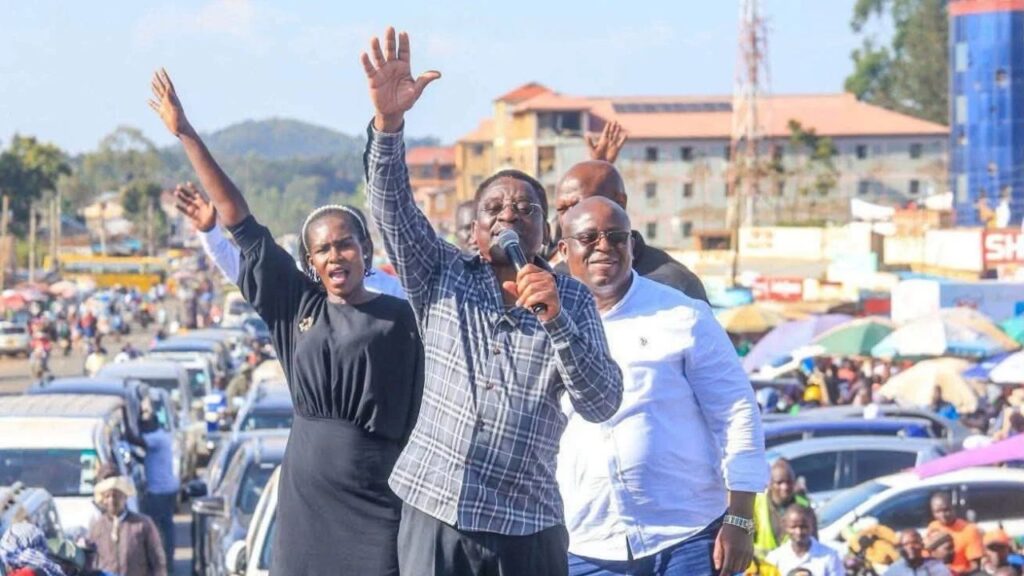
The heightened electoral campaigns, disguised over the weekends as church services and consecrations, have now become a matter of fact. Church and funeral services are the new sites of realpolitik. Nothing new. During Daniel arap Moi’s tyranny and the one-party Kanu rule, opposition politics was conducted from church pulpits and at funeral congregations. The difference today is that even incumbent President William Ruto has taken to the pulpit to admonish and engage in verbal attacks against real and perceived opposition to his gradually evolving tyrannical rule that is reminiscent of the days of his political godfather, Moi. Is Ruto a reincarnation of brutal dictator Moi?
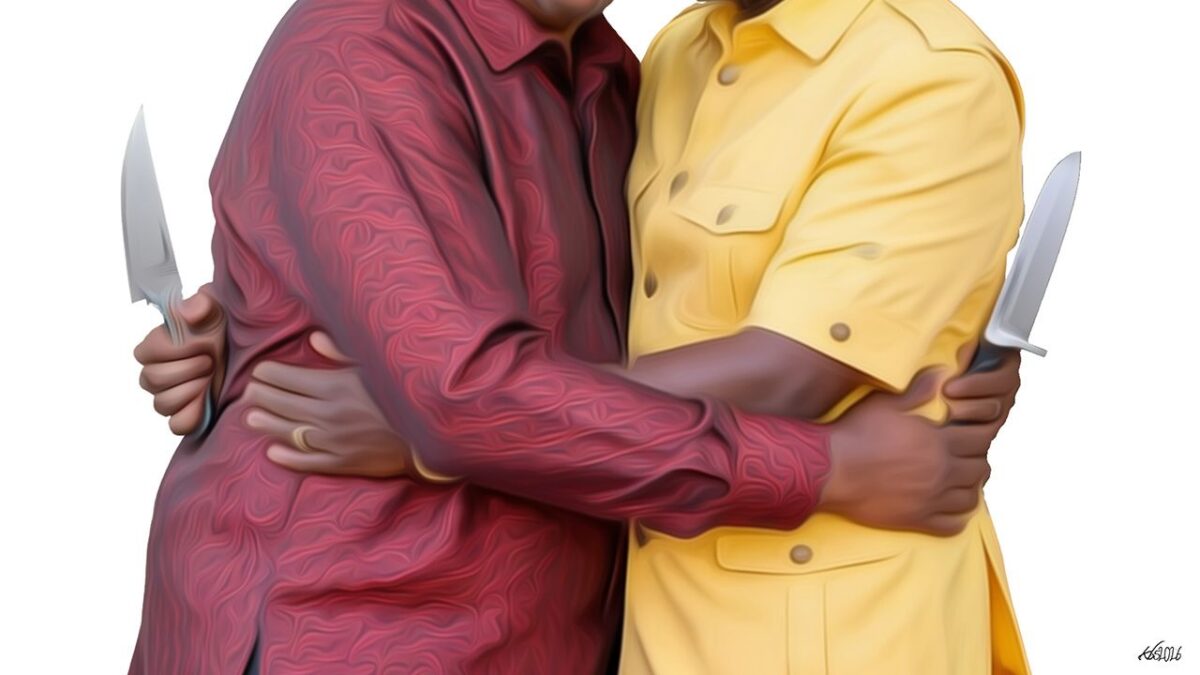
Yet the most interesting formation that is gradually taking shape is the assembling of troops by the protagonists ready to do battle in a presidential contest that looks in shape and form to be a rematch between former President Uhuru Kenyatta and President Ruto, his deputy between 2013 and 2022. The question of the day among Kenya’s political observers is; are we gearing up for a second-round battle royal, disguised as a supposedly democratic contest among contending presidential contestants but which is in reality a repeat elite fight to settle scores between two powermongers, one a former president, the other a president clutching at straws as he navigates how to yet again, if luck allows, outmanoeuvre his opponents?
Soon after the 9 March 9 2018 handshake between Uhuru Kenyatta and Raila Amolo Odinga, It was evident that Uhuru and Raila, who died on 15 October 2025, were henceforth going to work hand-in-glove to not only stabilize the country politically, but also possibly craft a working formula for Uhuru’s successor in 2022. Deputy President Ruto, who was bitterly opposed to Raila being invited to the presidential table as it were, essentially become the outsider. The presidential elite squabbles had started. They culminated in an electoral battle whose climax was that in the first round of the 2022 presidential election, Ruto defeated former president Uhuru Kenyatta’s candidate of choice, the late Raila Amolo Odinga.
For Azimio to resurrect, Raila had to die
On 2 February 2 2026, Uhuru, who is the chairman of Azimio la Umoja-One Kenya Coalition party, breathed new life into what was slowly mutating into a moribund coalition following its defeat by Ruto’s Kenya Kwanza team by appointing Stephen Kalonzo Musyoka of Wiper Patriotic Front (WPF) as the new party leader, after chairing a joint meeting of Azimio’s council and national executive committee. Other key appointments were those of former Nairobi Town Clerk Philip Kisia as executive director and, most significantly, the appointment of Suba South ODM MP Caroli Omondi as secretary general to replace Junet Mohammed, the ODM MP for Suba East. Until Raila’s death, Junet was his loyal right-hand man and protégé. With that clever move, Uhuru signalled his desire to deftly circumnavigate the country’s electoral politics indirectly as he sidesteps political landmines. He has begun aligning his troops in readiness for war in 2027. Why did Uhuru resuscitate a dying Azimio coalition? But before we pose that question, we must ask, did Raila have to die for Azimio to live? Let’s put it differently: For Azimio to resurrect, Raila had to die.
Uhuru’s new pet project
There are several reasons why Uhuru revived Azimio. One, hopefully, to create a home for the United Opposition. As currently constituted, the United Opposition is an amalgam of disparate political parties that do not have a place to call home. Uhuru would very much like the United Opposition to come to Azimio. This way he would most certainly leverage his political influence and financial power. Two, hopefully provide a safe haven for the “renegade” Edwin Sifuna-led ODM faction that’s in contradiction with the Oburu Odinga/Gladys Wanga-led faction that has decided to back the broad-based government (BBG). Three, subtly tell all and sundry that his erstwhile super Cabinet Secretary, Fred Matiang’i, is not really his preferred presidential candidate. Matiang’i, who has been branded Uhuru’s project, has always, in my view, been a ruse used by Uhuru to blindside Ruto. Four, tame the impeached former Deputy President Rigathi Gachagua, who has arrogated himself the role of Mt Kenya Muthamaki. Last but not least, install Kalonzo as the de facto opposition presidential flag bearer.
By naming Kalonzo to the position that had been occupied by the late Raila, who was the Azimio coalition party leader and the presidential flag bearer in 2022, he is effectively hoping to wrestle Kalonzo from the clutches of Gachagua and to plot to regain his pre-eminent position as the Mt Kenya Muthamaki (leader-patron). He still relishes with nostalgia his anointment as the Central Kenya spokesman by the late John Njoroge Michuki in 2010. The reorganization means that Kalonzo will effectively become Uhuru’s “pet project” as it were, much in the same manner as Raila, who chose to work with Uhuru in 2022, was perceived to have been Uhuru’s project. It was easy to install Kalonzo because he served as Raila’s running mate in 2013 and 2017, and although in 2022 he was sidelined as his running mate, Kalonzo still stuck with Raila.
The Ocampo Six
Two days after Uhuru was busy reorganizing his battalion, Ruto summoned all the UDA aspirants to State House to equally “troop the colour” and signal his readiness to consolidate his power come 2027. Both Ruto and Uhuru have a desire to control the levers of the state and, in essence, capture the state itself. Both the incumbent and his predecessor are engaged in elite political games that began in 2012 when they were jointly fingered as part of the “Ocampo Six” by the International Criminal Court (ICC). The Ocampo Six came to be after the country experienced the 2007–2008 post-election violence (PEV), one of the darkest moments in post-independence Kenya. Particular names from across the political divide were handed over to The Hague Court by the government of national unity (GNU) of Mwai Kibaki and Raila Odinga, who assumed the position of non-executive prime minister in 2008.
Proxy war
The coming together of Uhuru and Ruto in the lead-up to the 2013 election had nothing to do with the people, much less the country’s national interests. Their coming together was driven by their quest for survival at the ICC and political survival at home by engaging in politics of balkanization and ethnic mobilization. They captured power by defeating Raila’s Coalition for Reform and Democracy (CORD). For the first five years, Uhuru delegated presidential powers to his deputy, Ruto, instead of delegating duties. What happened is that Ruto took the chance to popularize himself and penetrate the state machinery. In the second half of the UhuRuto regime, it was obvious that the mantra kumi yangu, kumi ya Ruto – 10 for me, 10 for Ruto – was as dead as a dodo and wasn’t going to be honoured. There’s no honour among quarrelling political elites who are constantly engaged in power grabs and powermongering. Uhuru and Ruto are two sides of the same coin. Their elite quarrel is about absolute power capture and retention. And because Uhuru is barred by the constitution from running again for the presidency and from actively engaging in elective politics, his fight with Ruto for 2027 is through a proxy war. That’s why he’s apparently aligning his troops for a rematch in a year and a half’s time.
Elite games
In 2018, Uhuru, as the exiting incumbent, entered into an elite pact with Raila, his political arch-enemy, that would have Raila succeed him. This move was not an awakening of some nationalistic principles in the interests of the Kenyan people; rather, Uhuru wanted a president who would be friendly to his personal and business interests. So, he crafted a coalition with Raila’s Azimio and became the coalition’s chairman while Raila became the presidential flag-bearer for the fifth time. Uhuru hoped to retain power through Raila becoming president. The sudden bromance shift from UhuRuto to UhuRaila wasn’t because Uhuru had gone through a moment of reawakening; nor was Raila embracing Uhuru because he had had a Damascus moment. They were engaging in the time-tested elite games that are about elite consolidation and survival, not about the uplifting of the standard of living of the electorate that they use as a stepping stone to grabbing power. Hence, Uhuru and Raila were not conspiring against Ruto because he apparently had a hideous agenda to monopolize state power (just like they were plotting to do), but engaging in politics of deception and subterfuge.
A wake-up call
The 64-million-dollar question is: As Uhuru and his nemesis Ruto plot for a replay in their elite political game, where is the voter? Where does their elite game leave the people of Kenya? By the end of 2022, Ruto was one up and Uhuru nil. Soon after the general election, the electorate realized it had been played; the political mandarins were not interested in their welfare, but in the furtherance of their nested elite games. Nothing seems to suggest 2027 will be any different. If anything, the nested games will be even more vicious, the people will again be reduced to a cog in a wheel and a spectator in a game of thrones designed to make them choose their preferred elite of oppression. The time for a party that hopes to win hearts and minds as it centres its programme around the people is now. The people are thirsting for just such a party. The 25 June 2024 Gen Z protests were a wake-up call by an emerging demographic that said we’re tired of legacy politicians with their lies and never-ending deceptive games that have kept drowning the people’s aspirations.