|
Getting your Trinity Audio player ready...
|
The pupils call him Babu behind his back. Grandpa. He is held in great affection by his charges in this school that was built in 1948, next to the native market on the edge of a colonial farm where the settler grew wheat and ran cattle.
In the decades since independence, the native market has slowly grown into a small township where, on either side of the dusty main street, pharmacies, agrovet shops, hardware stores, and grocers sit cheek by jowl with wooden shacks housing butcheries, a posho mill, a barber’s, and a couple of hair salons.
Babu has been head teacher at the school for almost two decades. When he first arrived, transferred from a school just a few kilometres down the road, the wooden classroom built in colonial days was still in use, as were the pit latrines, which during the rainy season would overflow as the water table rose, permeating the air with a nauseating stench.
On the mornings after a heavy rain, Babu would be met with cries of “Teacher! Teacher! Choo zimejaa!” and off he would go to call the exhauster. It cost the school almost 80,000 shillings annually to empty the pit latrines. Babu was literally pouring money down the toilet, flushing down about a quarter of the funding the school received from the government annually to cover the costs of general repairs and maintenance. Something had to give.
Heads came together at a school board meeting, a solution was identified, parents were roped in and a fundraiser organised. Supplemented by a small amount from a local politician and a contribution from the constituencies development fund, the money raised by the local community was used to build modern bio-toilets, permanently doing away with the need for exhauster services.
In Kenya, Free Primary Education (FPE) is a well-orchestrated fiction and parents must dig deep into their pockets if their children are to have a chance at an education. But Babu is all too aware of the unfavourable socio-economic background of the vast majority of his pupils. He is a man of empathy, loath to overburden parents. Babu is also both inventive and thrifty; he knows how to make a shilling stretch.
Not that the education ministry makes it easy for him. When the new competency-based curriculum (CBC) was introduced in 2017, Babu had to find the money to supplement the meagre resources he received to build secure storage for the tablets that were to henceforth support teaching. The digital content that was to accompany the tablets didn’t follow and so much use is made of the blackboard still, while the students might use the tablets for supervised searches online.
Still, Babu has steered his school through the change from the old 8-4-4 system to the new CBC one with dexterity and a strong dose of realism, ensuring staff cohesion and collaboration within an institution now harbouring both primary pupils and junior secondary students with insufficient resources to properly cater for both. To illustrate, in 2025, the school was supposed to receive just under 6.8 million shillings for the 457 junior secondary school students. Instead, Babu had to make do with 2.4 million shillings. Pubescent girl students still received their sanitary towels, though.
Happily, for a very different reason, the decision to construct bio-toilets turns out to have been a judicious one. Quite apart from saving the school money, the bio-toilets also avoided Babu what could have been a major headache: where to find the money to establish a science lab.
Heads once again came together and a decision was made to build the infrastructure needed to exploit the methane emanating from the bio-toilets. A suitable classroom was identified and evacuated, a biogas storage room was constructed behind it, and piping was laid from the source of the biogas to the newly created lab, now fitted out with long tables with sinks and Bunsen burners.
And so it was that the first cohort to undergo the Kenya Junior School Education Assessment (KJSEA) at Babu’s school at the end of 2025 had the advantage of taking their science lessons in a properly equipped lab. As it turns out, however, Babu needn’t have stressed himself out; practicals were quietly dropped from the science assessment, which was limited to theory only, presumably in recognition that not all students in the junior secondary sections recently implanted in primary schools throughout Kenya had access to a lab.
Luka* was overjoyed when he received his results in mid-December; he had met or exceeded expectations in all the subjects so he was sure that he would be called to his first choice of senior secondary school where he would take STEM (science, technology, engineering, and mathematics) subjects. Luka’s reaction when he received news in early January that he was to proceed, not to that big, well-equipped, well-renowned school half an hour from his home that had been his first choice, but to another less prestigious school two counties over, was consternation, fury, and then despondency.
Luka’s mother, Keziah, is self-employed, knitting jumpers on the machine that her father gifted her many years ago to start her off in life. Afraid to lose Luka to despair, Keziah made her way to that school of his first choice where she was informed that against payment of first term fees and the cost of school uniform, Luka had a place. But she must hurry, places were very sought after. Placement by the government did not count; it was first come, first served, and excellent assessment results and the ability to pay were the determining criteria.
As Keziah made her way out of the Deputy Principal’s office, she ran into Wanjohi, a neighbour visiting the school for the same reason. His daughter, Wangũi, had been placed in a day school in a far-off county where he had no relations with whom he could lodge his child.
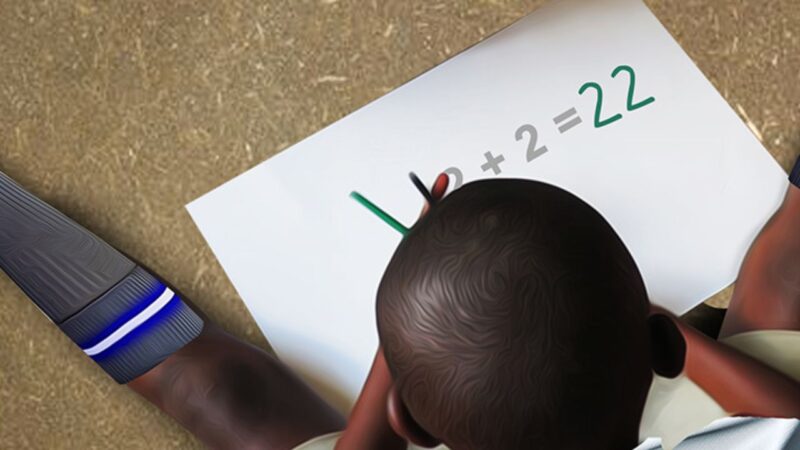
In the 8-4-4 years, when Keziah’s eldest son sat his Kenya Certificate of Secondary Education, placement in secondary schools seemed fair; one might understand why one’s child’s results had not taken them to their first school of choice, the fiction of an egalitarian public education system was maintained. CBC has done away with that illusion, and with it, all but killed what hope there was that a poor man’s daughter, a poor woman’s son, an orphan, might, against the odds, attend a secondary school from which they might soar, attaining heights of achievement ordinarily experienced by the offspring of the wealthy.
In those years of the 8-4-4 system, Babu had the habit of seeking financial help for those pupils who showed promise that might be compromised by poverty and want. And so it was that, under his tutelage, Lijah did exceedingly well and obtained a scholarship from a major Kenyan corporate to study at a well-endowed national secondary school originally established to receive orphans and the sons of the indigent, proceeding to university where he graduated top of his class. Lijah now works for one of the big four audit firms internationally.
Lijah’s corporate benefactor has offered scholarships to needy students for the last 16 years. For Luka’s cohort, however, no scholarships have been forthcoming, the corporate apparently unsure about how to assess potential beneficiaries under the CBC dispensation.
What does it say for the CBC model if even those who offer scholarships as part of their corporate social responsibility endeavours are unable to establish selection criteria on the basis of CBC assessment outcomes?
Perhaps Esther could have been a beneficiary under the old 8-4-4 system; she earned a place at a boarding school in her home county but her parents haven’t the means. Esther couldn’t countenance the idea of joining the local day secondary school and had been doing the rounds of local businesses tearfully begging for help. Babu finally found a person of goodwill to cover the cost.
Meanwhile, their parents scrambled to find the 60,000 shillings necessary for Luka and Wangũi to join the well-endowed boarding school that had been their first choice but to which they had not been called, probably taking the rightful places of those whose parents had tarried.
Babu retires this year and the community is worried about what will become of a school that, under his direction has, on reputation alone, attracted learners from localities much further afield, the parents not discouraged by the lack of a dining hall or the rudimentary boys’ dorm.
Undeterred by late disbursements of funds and incessant demands for all manner of data from the ministry that frequently distract from the business of teaching and running a school, Babu forges on. He is the avatar of that rural teacher of yore; a teacher by calling, well respected by the community he serves, whose word guarantees there will be porridge at break time and maize and beans in the kitchen for lunch when government funding delays.
But Babu is at the end of his tether now and doesn’t hide the fact that he is looking forward to retirement, jokingly saying that he is soon to divorce his second wife and return home to his true love. Keeping a school afloat on insufficient funding and creatively navigating an education system that is neither fish nor fowl in an attempt to provide an acceptable learning environment where pupils and students can thrive has taken its toll.
Whatever the merits or demerits of the CBC model, given how the very first transition from junior to senior secondary school has been handled by the government, it is abundantly clear that parents who rely on the public education system – and that is the majority of Kenyan parents – are now well and truly on their own, unsure of the value and quality of the education that their children are receiving and abandoned to the whims of school managements that may henceforth privilege money over equitable access to education without fear of censure from a ministry of education that is resolutely looking the other way.
*Names have been changed.