|
Getting your Trinity Audio player ready...
|
Kenya’s Gen Z has already achieved what many thought impossible. It forced a sitting government into retreat, disrupted the language of national politics, and demonstrated that a decentralized movement could challenge state power without waiting for opposition leaders, ethnic kingpins, or civil society gatekeepers. It made taxation, corruption, police brutality, and public arrogance matters of everyday conversation. A generation dismissed as online, distracted or apolitical instead organized, educated and mobilized with remarkable speed.
But as Kenya moves closer to the 2027 general election, the harder question is whether it can convert protest into political power in an electoral field shaped by an embattled incumbent, a fractured opposition, and a political class with a remarkable ability to absorb anger without necessarily changing. The 2024 Finance Bill protests were a turning point because they were never only about taxation. The bill became the object through which wider frustration found expression. Young people were rejecting a political culture in which citizens are repeatedly asked to make sacrifices while leaders appear insulated from the consequences of their own decisions. The anger was fiscal, but it was also moral. It was about the cost of living, but equally about the cost of being ignored.
This is why the Gen Z moment mattered. It broke the familiar script of Kenyan politics. For decades, national mobilization has often depended on party structures, ethnic blocs, regional brokers and elite bargains. The protests unsettled that order. They were decentralized, digitally coordinated, and issue-based. They did not wait for politicians to speak. Young people named MPs, circulated information, created protest art, translated complex policy into popular language, and turned online outrage into street presence.
In that sense, Gen Z has already won something important. It has changed what counts as political participation. Politics is no longer confined to rallies, party headquarters, parliamentary speeches or election campaigns. It now happens in TikTok explainers, X Spaces, WhatsApp groups, memes, screenshots, civic education threads and viral slogans. A generation once accused of apathy has created a new civic vocabulary.
Yet visibility is not the same as power. Protest legitimacy is not electoral legitimacy. Delegitimizing an incumbent is not the same as constructing a government-in-waiting. Elections reward organization as much as conviction, coalition building as much as moral clarity, and institutional discipline as much as popular enthusiasm. That is the realpolitik now confronting Kenya’s youngest political generation.
Ruto’s politics of survival
President William Ruto appears to understand this distinction better than many of his critics. His political problem is serious, but it is not impossible. He faces the anger of a young population that feels betrayed by the gulf between campaign promises and lived hardship. He faces continuing resentment over taxation, unemployment, corruption, police violence, and the handling of protest. The “one term” slogan captures something real: the desire to punish power.
But Ruto also has advantages that should not be underestimated. He is the incumbent. He has access to state machinery, a national campaign structure, parliamentary networks, administrative reach, and the discipline of someone who has spent years mastering electoral arithmetic. His strategy will not necessarily be to win Gen Z over emotionally. It may be to survive them politically.
AFCON 2027 may also become part of this survival politics. Kenya will co-host the tournament with Uganda and Tanzania from 19 June to 17 July 2027, just weeks before the general election. On paper, this is a sporting event. Politically, however, it offers the incumbent a rare stage on which to perform infrastructure delivery, regional leadership, national pride, and stability. Stadiums, roads, ceremonies, visiting fans, and the language of East African “Pamoja” can easily become part of a broader campaign mood. This does not mean football will determine the election, but it may give the government a symbolic platform through which to shift attention from anger to achievement, from protest to patriotism, and from discontent to spectacle.
That survival strategy is visible in the broader logic of incorporation. In the wake of the protests, Ruto nominated opposition figures to his cabinet under the language of a broad-based government. On the surface, this could be presented as stabilization. Politically, it also reshaped the electoral terrain. By reaching into sections of the opposition, Ruto lowered the temperature of elite confrontation while weakening the institutional space from which a united challenge might emerge.
The broad-based government is therefore also a project of fragmentation. If the opposition is divided, morally compromised, or partially absorbed into state power, anti-government anger loses a clear institutional vehicle. The public may remain angry, but anger without organization can be contained, redirected or exhausted.
This is the realpolitik of incumbency. Ruto does not need every young Kenyan to love him. He needs sufficient opposition disorganization, enough voter fatigue, enough regional bargaining and enough uncertainty about the alternatives. Kenyan elections are not won by mood alone. They are won through coalitions, turnout, candidates, agents, financing, local networks, message discipline and vote protection. A weakened incumbent can therefore still win if the opposition is more fractured than the anger directed against him.
The lesson of 1992, 1997 and 2002
Kenya has seen this before. The first two multiparty elections offer a cautionary lesson about the limits of public dissatisfaction. In 1992, President Daniel arap Moi faced an electorate eager for change, but the opposition divided the anti-KANU vote among Kenneth Matiba, Mwai Kibaki, Jaramogi Oginga Odinga, and others. Moi retained power not because the country lacked appetite for change, but because that appetite was split across competing opposition formations.
The pattern repeated itself in 1997 when Kibaki, Raila Odinga, Michael Wamalwa, Charity Ngilu, and other opposition candidates again divided the vote against the incumbent. It was only in 2002, when previously competing leaders subordinated personal ambition to coalition-building under the National Rainbow Coalition, that KANU’s four-decade hold on power was finally broken.
The circumstances surrounding 2027 are clearly different. Kenya’s constitutional order has changed, digital mobilization has transformed political communication, and Gen Z has introduced forms of civic engagement that do not fit neatly within older ethnic and party frameworks. Yet the strategic lesson remains familiar that incumbents do not always survive because they are popular. They often survive because their opponents fail to organize public dissatisfaction into a credible and unified alternative. That is why 2027 cannot be understood only as a referendum on Ruto, but it will also be an audit of the opposition.
There is another reason 2027 feels historically unusual. It will be the first multiparty election in which Raila Odinga is absent not only from the ballot, but also from the political field itself. This distinction matters. Raila did not contest every election as a presidential candidate, but for more than three decades he remained one of the central organizing figures of Kenya’s opposition politics. He carried reform memory, protest legitimacy, coalition-making experience, and a rare capacity to convert grievance into national political movement. His absence therefore creates more than a leadership gap inside ODM since it also creates a wider vacuum in the architecture of opposition politics. Without Raila, the anti-government field is no longer organized around a single gravitational figure. It is more open, but also more unstable. For Gen Z, this creates both opportunity and risk. Opportunity because old opposition hierarchies are weaker; risk because no obvious figure now exists to translate diffuse anger into a disciplined national electoral project.
The opposition problem
Gen Z anger may be anti-government, but it does not automatically translate into confidence in those seeking to replace the government. The anti-Ruto space is crowded, fragmented and ideologically unclear. It contains figures who speak to different parts of the protest mood, but none who fully resolve the deeper political dilemma.
David Maraga attracts fascination precisely because he is not the stereotypical Kenyan politician. As former Chief Justice, he represents institutional integrity, constitutionalism and moral distance from the everyday noise of party politics. For a generation tired of corruption, impunity and political theatre, Maraga offers the image of clean hands. Yet the same distance that makes him attractive also raises practical questions. Can moral authority build a national campaign machine? Can constitutional symbolism survive the rough terrain of coalition bargaining, regional mobilization, campaign financing, party agents and vote protection?
Fred Matiang’i occupies a related but different space. Like Maraga, he is not primarily seen as a conventional politician. His appeal lies in the image of competence, order and state capacity. For citizens exhausted by dysfunction, the technocrat can appear reassuring. But technocracy is not innocence. Matiang’i also carries the memory of state power, bureaucracy and security politics. Gen Z may admire efficiency, but it is also deeply suspicious of coercive state authority. That contradiction cannot simply be wished away.
Edwin Sifuna represents another possibility and another limitation. He has become one of the more visible opposition voices among younger, urban and digitally engaged publics. His appeal lies in his sharpness, fluency and willingness to confront power in language that travels well online. Yet Sifuna’s dilemma is that he is also a product of ODM, a party whose moral authority among young protesters has been complicated by its proximity to power and internal contradictions. To some, he represents a generational bridge. To others, he remains trapped inside the very party culture Gen Z distrusts. His battles within ODM therefore reveal a wider question, which is whether a younger politician can break from the old order while still being formed by it.
Rigathi Gachagua presents yet another contradiction. He is an effective mobilizer and a wounded insider who understands the machinery of power. His fallout with the ruling establishment gives him anti-Ruto credentials. But for many young Kenyans, he also represents the older grammar of politics: regional mobilization, ethnic signalling, bureaucratic survival, and hard-edged transactional politics. He may understand realpolitik, but he does not necessarily embody the political renewal Gen Z imagined.
Kalonzo Musyoka, meanwhile, represents experience, patience and institutional continuity. He has been in national politics for decades and understands coalition arithmetic better than most. But that is also his burden. To a disillusioned generation, longevity can look less like wisdom and more like evidence of political recycling. He may be acceptable to sections of the opposition, but acceptability among political elites is not the same as excitement among young voters.
This is why the opposition question is so difficult. The anti-government field offers Gen Z several imperfect vehicles: The judge, the technocrat, the party rebel, the regional mobilizer, and the veteran coalition builder. Each speaks to part of the current mood, but each also exposes a limitation. Maraga offers moral credibility but faces organizational questions. Matiang’i offers administrative competence but carries the baggage of state power. Sifuna offers generational fluency but remains entangled in ODM’s contradictions. Gachagua offers mobilization but carries the burden of ethnicized politics. Kalonzo offers experience but struggles to symbolize rupture.
The deeper problem extends beyond personalities. The current opposition is united more by exclusion from power than by a shared political programme. Removing Ruto may be a common objective, but agreement on what should replace him remains far less obvious. Coalitions built primarily around hostility to an incumbent often begin to fracture when confronted with questions of leadership, regional balance, policy, succession, and the distribution of power. For Gen Z, this creates a difficult choice. How does a generation that demanded issue-based politics support an opposition that has yet to articulate a genuinely alternative governing project?
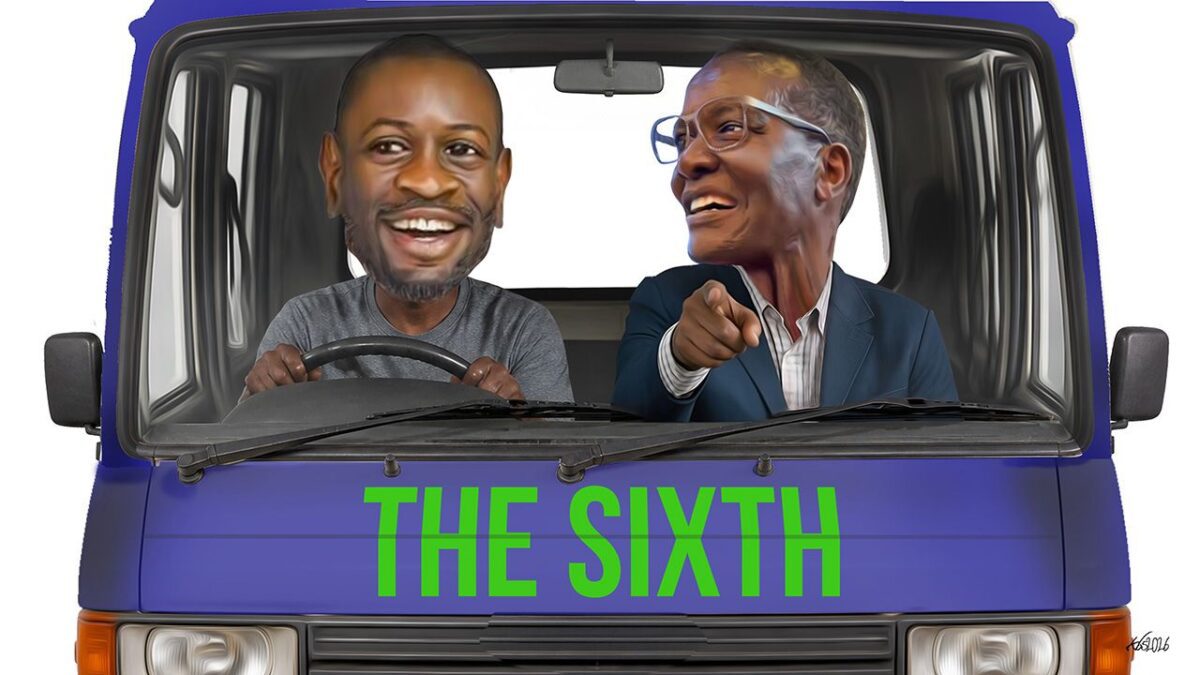
There is, however, a reason the idea of a Maraga-Sifuna candidature has begun to attract attention. Among the available opposition possibilities, it offers one of the clearest bridges between constitutional restoration and generational renewal. Maraga carries the symbolism of institutional integrity, judicial independence, and moral distance from the everyday vulgarity of Kenyan party politics. Sifuna, by contrast, carries fluency in the language of contemporary opposition politics: digital visibility, urban appeal, parliamentary combativeness, and a capacity to speak to younger publics in a register they recognize.
This does not make such a ticket inevitable, nor does it remove the organizational questions surrounding it. Maraga would still need machinery, money, regional reach, party agents and coalition discipline. Sifuna would still have to navigate the same, in addition to ODM’s contradictions, and prove that generational fluency can mature into national political leadership. Yet as a political proposition, the pairing speaks to something the current moment demands, which, put simply, is a transition that is neither purely technocratic nor merely generational, neither trapped in old opposition nostalgia nor completely detached from formal institutions.
Aside from a people’s transition driven directly by organized citizens themselves, a Maraga-Sifuna axis may be one of the few available formations capable of translating the Gen Z mood into electoral politics without immediately collapsing into the old grammar of ethnic bargaining. It would signal that the country’s crisis is not only about replacing an incumbent, but also about restoring public trust, renewing political representation and rebuilding the bridge between constitutionalism and everyday citizenship.
The thin line between protest and power
Gen Z’s challenge is therefore not simply whether to oppose Ruto. That part is relatively easy. The danger is that Gen Z becomes useful to politicians as moral energy, online amplification, and street pressure, only to be excluded when coalitions are negotiated, tickets are shared, and power is distributed. Young people may provide the language of change while older political actors retain control over the institutions through which change is formally negotiated.
This is where realpolitik becomes unavoidable. The movement’s greatest strength was its refusal of old politics. It rejected ethnic mobilization, elite capture, and the assumption that public discontent must always be mediated by professional politicians. But the electoral arena is built precisely around the structures Gen Z distrusts: Parties, nominations, alliances, campaign financing, constituency machinery and compromise.
There is also the darker infrastructure of contemporary Kenyan electoral politics: Goonery. This should not be understood as the preserve of one party or one politician. In Kenya, hired disruption has long operated across political divides as a deniable instrument of competition. It appears in disrupted meetings, invaded rallies, intimidated opponents, infiltrated protests, and public gatherings suddenly turned chaotic. Its purpose is not always to win an argument but simply, to alter the conditions under which politics happens. Once civic action is associated with disorder, or once opposition activity becomes physically risky, the political field has already been narrowed before voters reach the ballot. For Gen Z, this matters because a movement built on moral clarity is especially vulnerable to infiltration, provocation, and narrative capture.
The tragedy would be for Gen Z to reject realpolitik so completely that it leaves real power to those who understand it best. But the danger is also the reverse, that in learning realpolitik, Gen Z becomes absorbed into the same transactional politics it rose against. This is the thin line the movement must walk.
The next phase requires political translation. Gen Z must translate outrage into organization, hashtags into institutions, protest into policy, online visibility into local presence, and moral clarity into strategic discipline. This does not mean forming one party or rallying behind one leader. In fact, forcing Gen Z into a conventional party structure may destroy what made it powerful in the first place.
The answer may lie in multiple forms of influence: Voter registration drives, issue-based scorecards, constituency-level civic education, independent candidate support, legal defence networks, public finance monitoring, digital accountability platforms and sustained pressure on all political parties to commit to clear reforms. Gen Z does not have to become a party to become politically powerful. But it must become organized.
Beyond Nairobi’s digital publics
The movement must also confront the questions of class and geography. Much of its visible discourse remains urban, educated, and digitally fluent. Yet electoral politics in Kenya is also rural, local, and deeply shaped by immediate material needs.
If Gen Z politics remains trapped in urban digital spaces, it risks becoming culturally influential but electorally limited. The challenge is to build bridges between Nairobi’s digital publics and the everyday struggles of young people in counties, informal settlements, small towns, border communities, and rural economies.
The frustrations of a university graduate in Nairobi may overlap with those of a boda boda rider in Bungoma, a young farmer in Nyandarua, an unemployed school leaver in Kilifi, or a trader in Kisii, but political organization requires those frustrations to be translated into a common programme. Without that bridge, digital fluency may produce national visibility without national reach.
This is where Ruto still has room to manoeuvre. He can attempt to reposition himself as the candidate of stability against uncertainty, development against anger, and experience against experimentation. He can argue that the opposition is divided, that protest cannot govern, and that anger is not a manifesto.
Whether that argument succeeds will depend partly on whether citizens experience any material improvement before the election. But politically, the strategy is already clear: Survive the anger, divide the alternatives and force voters to compare imperfect options.
The realpolitik of 2027
The 2027 election will also test whether the opposition can persuade Kenyans that it is ready not merely to criticise government, but to govern. Can it transcend personality politics long enough to build organizational coherence? Can it present an alternative programme rather than simply an alternative set of elites? Can it convince a generation that rejected old politics that it represents something genuinely new?
Gen Z’s answer must be organization, memory, and accountability. It must refuse to allow 2027 to become another elite auction in which young people provide the noise while older politicians divide the spoils.
That requires asking harder questions of every candidate. Who has an organization capable of reaching beyond social media? Who can protect votes? Who has a credible reform agenda? Who is willing to submit to public accountability? Who can speak beyond Nairobi? Who can build across class, region, and generation? Who is merely using Gen Z anger as campaign fuel?
The coming election will also be a test of whether Kenya’s youngest political generation can move from protest to durable influence without surrendering the values that made it powerful in the first place. Gen Z has already rewritten the language of Kenyan politics. It has changed how Kenyans talk about taxation, accountability, citizenship, and state power. The harder task now lies ahead. Democracies are not transformed by hashtags alone, or even by protests alone. They are transformed when new political ideas become new political institutions. Whether 2027 marks that transition will depend not only on those who govern today, but also on whether those seeking to replace them can offer something more enduring than outrage.