|
Getting your Trinity Audio player ready...
|
I want to tell you about a book that made me deeply uncomfortable, not because it was difficult to read, but because it was easy. I kept expecting the analysis to feel dated, to hit a page where I could say well, things have changed since then. That page never came.
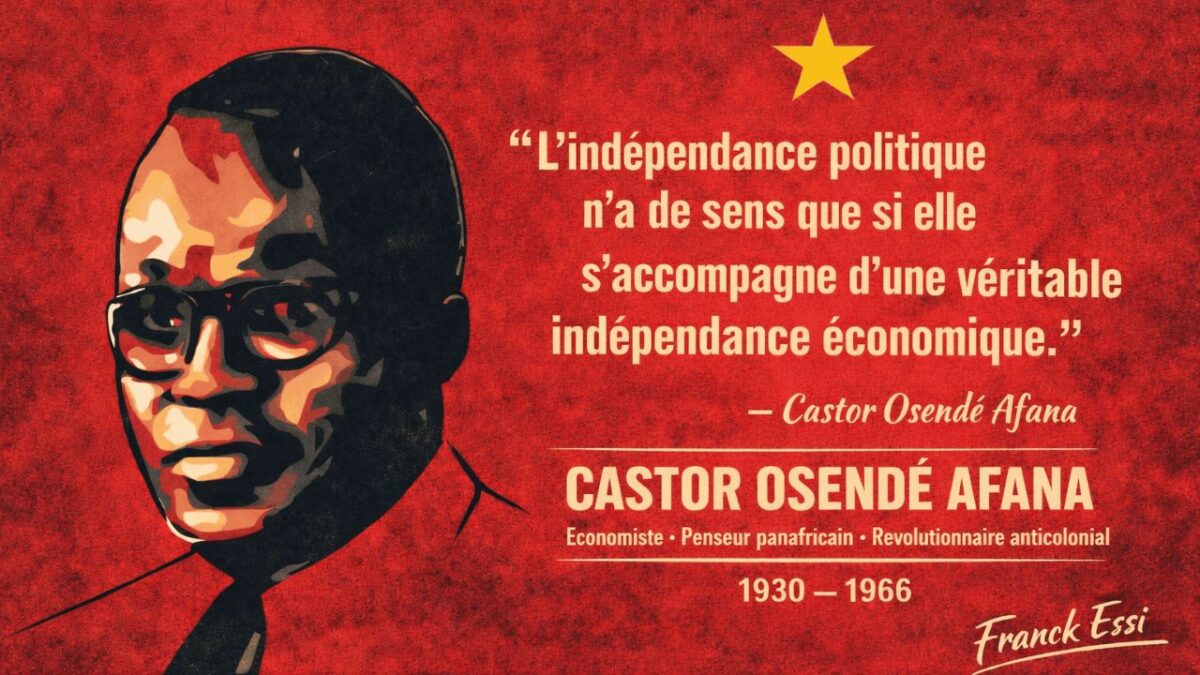
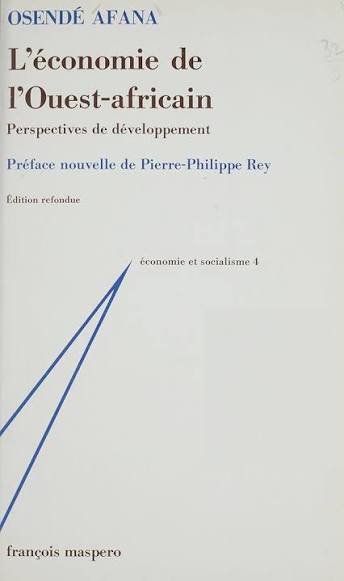
The book is L’Économie de l’Ouest Africain, written by Osendé Afana, an economist and militant who finished it in 1966, the same year the Cameroonian army shot him dead in the forest at age 36. His doctoral thesis explained why Ghana, Nigeria, Côte d’Ivoire, and Cameroon remained stuck and dependent despite decades of export earnings.
Here is what needs to be said honestly upfront: some people in power did listen. Kwame Nkrumah spent a decade trying to act on this analysis: building the Volta Dam, establishing state industries, and pursuing industrialisation. In 1966, the same year Afana was killed, Nkrumah was removed in a CIA-backed coup. His industrial programme was dismantled, the cocoa export economy was restored. The lesson was not we tried this and it failed. It was we tried this and were stopped. The obstacle was never ignorance. It was organised elite-power defending a structure it benefited from.
I grew up in a West African economy. I have watched the same fiscal crisis repeat so many times I can recite the script: commodity prices fall, revenues collapse, the development budget gets slashed, somebody in a suit announces austerity. Then prices recover, and everyone forgets. Afana described this in 1966, not as a future risk, but as the logical consequence of a structure powerful interests had every reason to preserve.
The cocoa trap, now the oil trap too
Afana’s central observation was stark: the entire economic life of West Africa moved to the rhythm of a single export crop. In Cameroon’s Evodula district, spending, prices, and even weddings followed the cocoa harvest calendar. Cocoa brought in 60% of Ghana’s export earnings, 80% of Cameroon’s customs revenues, and 75% of private income in producing regions. Development built on monoculture, he wrote, is “slow, dependent, vulnerable, and irregular.” You cannot build a country on a commodity you do not price, selling to markets you do not control.
Now look at Nigeria. Crude oil provides over 85% of its export earnings and roughly half of government revenues. When the price fell from over $100 a barrel in 2014 to below $30 in 2016, Nigeria entered its first recession in 25 years. Schools went unfunded. Civil servants went unpaid. Inflation hit the poorest hardest. In 2020, another crash amid the COVID-19 pandemic produced the same outcome, line for line. Côte d’Ivoire still earns over 40% of export income from cocoa, barely changed from Afana’s numbers. The names change. The structure does not.
The fix is not complicated to describe. Stop measuring progress by how much raw commodity you ship and start measuring how much you process at home before it leaves. Ethiopia’s 2011 export tax on raw hides made domestic leather processing economically rational; within five years, shoe manufacturing exports had grown significantly. Nigeria’s 2010 Local Content Act pushed oil companies to hire Nigerian engineers for roles previously filled entirely by expatriates. Neither solved the structural problem. Both proved that deliberate decisions, held consistently, produce results. The single most honest metric for any West African finance minister is the share of commodities in total export receipts. Is that share falling?
The money was always there, just never for us
We are told African economies lack savings and need foreign capital because they cannot generate their own. Afana found the opposite. West African savings existed abundantly: in tontines, rotating credit groups, village deposit contracts, and cocoa farmers investing in schooling and farms. The problem was not absence. It was systematic redirection.
Ghana’s Marketing Boards accumulated £73 million in reserves by 1954, roughly equal to Ghana’s entire ten-year development plan, and lent it back to London rather than investing it in Ghanaian manufacturing. Afana called it la complaisance envers le capital privé: the indulgence shown toward private capital.
Today, West Africa leads the world in mobile money. Yet credit to the private sector sits below 20% of GDP across most West African states, and a manufacturer seeking a five-year equipment loan faces rates of 25% or no access at all. The African Union estimates $50 billion leaves the continent annually through transfer pricing and royalty manipulation, more than the continent receives in aid. Afana identified this at the Alucam aluminium complex in Cameroon, where Pechiney paid suppressed costs while transferring all real value-added back to France. The mechanism has not changed.
The structure persists because it works for a small elite
In 2017, Nigeria’s Economic Recovery and Growth Plan set targets for agriculture and manufacturing. By 2020, post-harvest losses were unchanged, irrigation targets unmet, and fertiliser subsidies had been captured by politically connected distributors. This is the regional pattern: good plans, collapsing implementation. Afana named it the formation des cadres problem: too few trained, accountable people whose reputations depend on whether the thing works, not whether the document was approved. Ghana had exactly one entomologist and one plant pathologist for the world’s largest cocoa industry on the eve of World War II. That institutional deficit did not vanish at independence, and it has not vanished since.
The reason this persists is not the absence of knowledge. Afana said it. Nkrumah acted on it and was removed. Samir Amin spent fifty years elaborating it. Walter Rodney wrote How Europe Underdeveloped Africa – a book the entire continent read. What has been consistently stronger is the coalition benefiting from the current structure: foreign firms preferring raw material access, domestic elites whose wealth depends on commodity flows, and international institutions that have long favoured stable suppliers over potentially competitive industrialisers.
When commodity prices crash, it is not elites who take the hit. It is farmers who borrowed against a harvest that suddenly pays less than it costs. It is civil servants in regions where the government runs out of cash before it runs out of months. It is the rural poor whose clinic closes because it was in the capital expenditure budget, and capital expenditure is always the first to go. Elites have buffers. They always have. They had them in the 1960s too.
Interests do not yield to better analysis. They yield when the political cost of staying still exceeds the cost of changing. The African Continental Free Trade Area matters in that calculation, not because regional integration automatically drives structural change, but because it creates the scale at which coordinated industrial policy becomes possible at all. Without that coordination, it will do what ECOWAS did: open markets in ways that benefit the most industrialised economies and leave the rest more exposed. The architecture is there. The question is what political force would be required to use it against the interests that built the current structure, and whether anyone with real power is willing to pay that price.
Afana was not subtle about what he thought the answer was. Sixty years on, the question has not changed.
The obstacle was never ignorance. It was organised elite-power defending a structure it benefited from.
–
This article was first published by ROAPE.