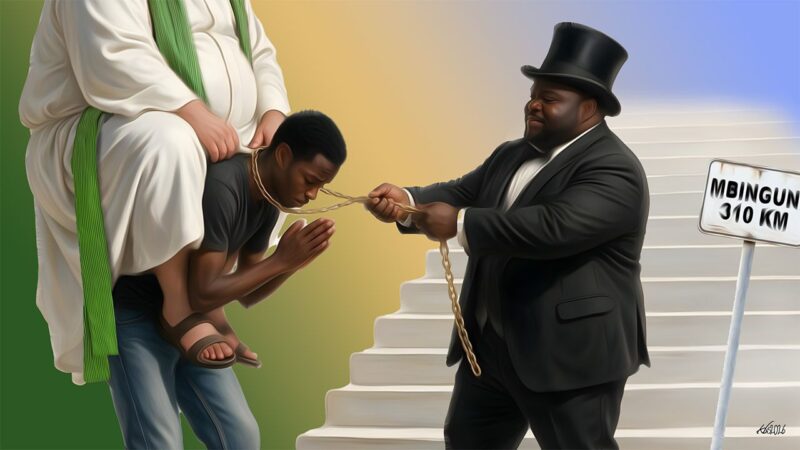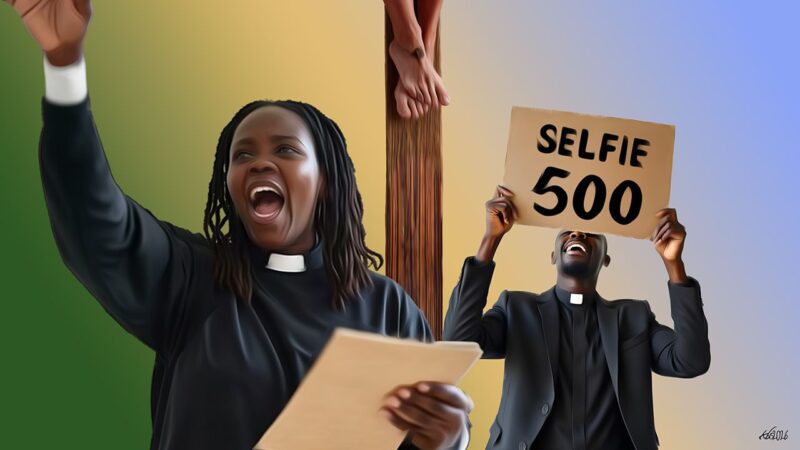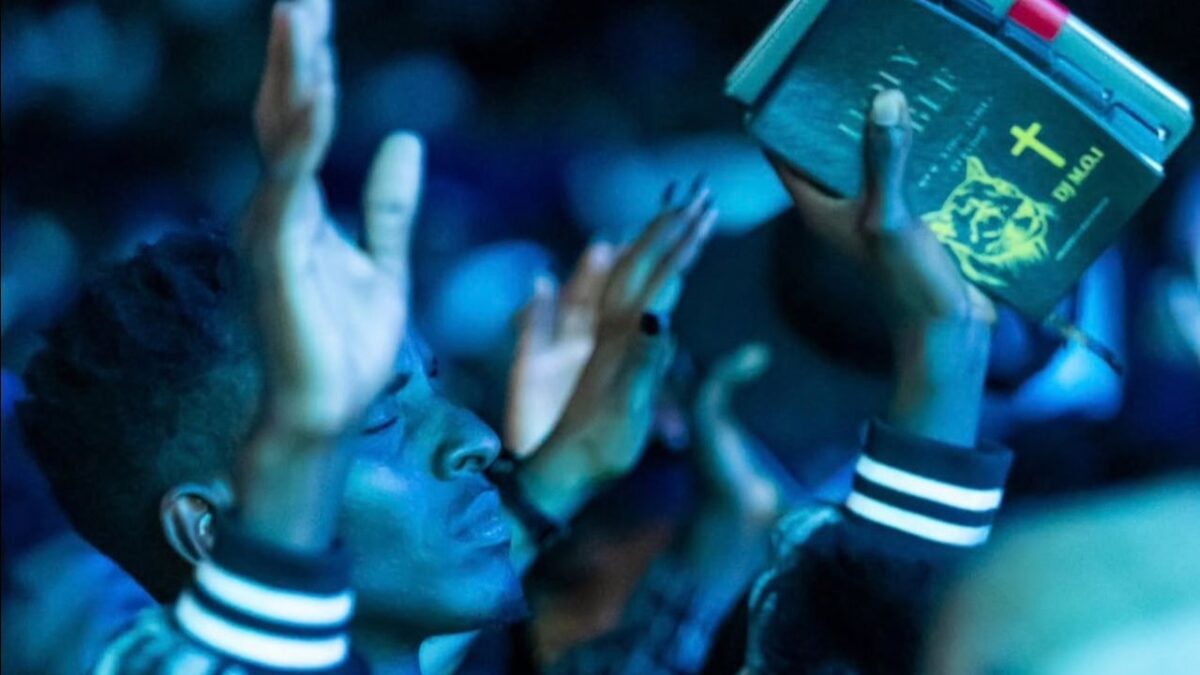
In a recent edition of The Elephant, younger Kenyans voiced a growing dissatisfaction with the state of religion in public life. Their concern is not simply that religion has become political; it is that, in many instances, it has become too closely aligned with the state. Politicians continue to occupy pulpits, opaque fundraisers flourish, and a state-friendly theology often appears more concerned with legitimising power than confronting the hardship, corruption and inequality that shape ordinary Kenyan lives. During the 2024 Gen Z protests, this frustration crystallised in the #OccupyChurches movement, which challenged clergy and politicians who used religious spaces to legitimise unpopular economic policies and political authority.
Yet Kenya remains a profoundly religious country. The 2019 census found that about 85.5 per cent of Kenyans identified as Christian and 11 per cent as Muslim, and religious institutions still command large followings nationwide. Kenyans still flock to churches, mosques, crusades, prayer meetings and religious festivals, albeit for varied and sometimes contradictory reasons.
Some attend in search of spiritual refuge, healing, moral direction or hope. Others come for community, music, ritual, fellowship and a sense of belonging. There is also a more civic explanation. Wandia Njoya has argued that Kenya’s shortage of accessible “third spaces”, places beyond home and work where citizens can meet, converse and think together, may make religious gatherings one of the few widely available sites of collective life. Whether Kenyans fill religious sanctuaries because of faith, sociability, the search for meaning, or the absence of alternative public spaces remains an open question.
The Kenyan scholar John S. Mbiti famously observed that “Africans are notoriously religious,” arguing that religion is woven into the fabric of African social life rather than confined to private belief or weekly worship. In Kenya, this observation still resonates. Religion is not merely an institution; it is a language through which many Kenyans interpret suffering, aspiration, family, nationhood and public morality.
Here, photojournalist Jimmy Kitiro captures religious life across Kenya: the crowds, worship, prayer, evangelism, rituals and public performances of faith that continue to shape the country’s moral and civic imagination.
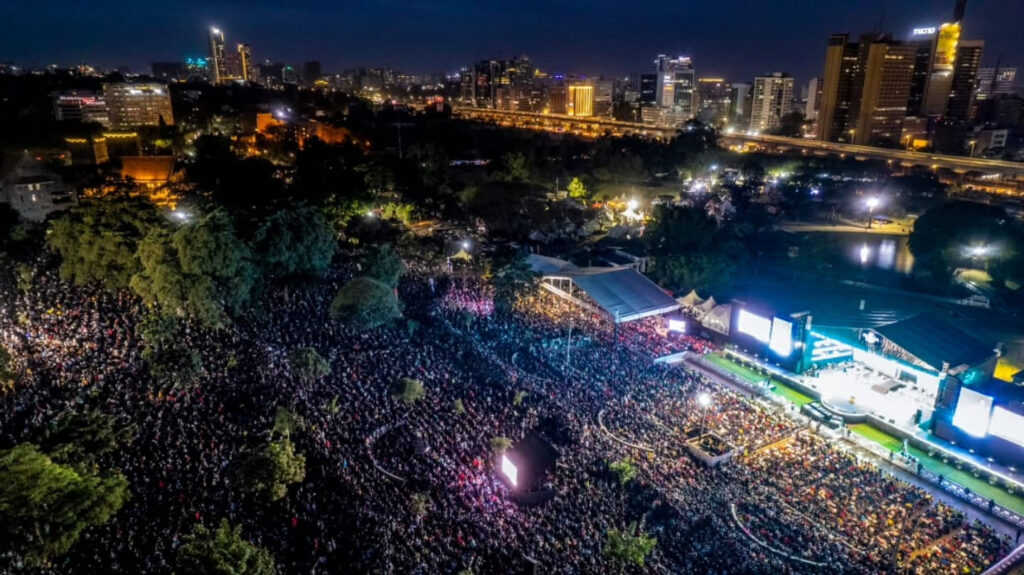
The recent Rhema Feast, organised by Reverend Julian Kyula, has become a major feature of Kenya’s Christian calendar. Held at Uhuru Park in Nairobi from 31 August to 4 September 2026, the five-day non-denominational gathering drew worshippers from across Kenya and the wider region for prayer, worship, teaching and spiritual renewal. Its scale is a testament to a population still craving religious experience, social belonging and public spaces in which to gather, hope and imagine change.
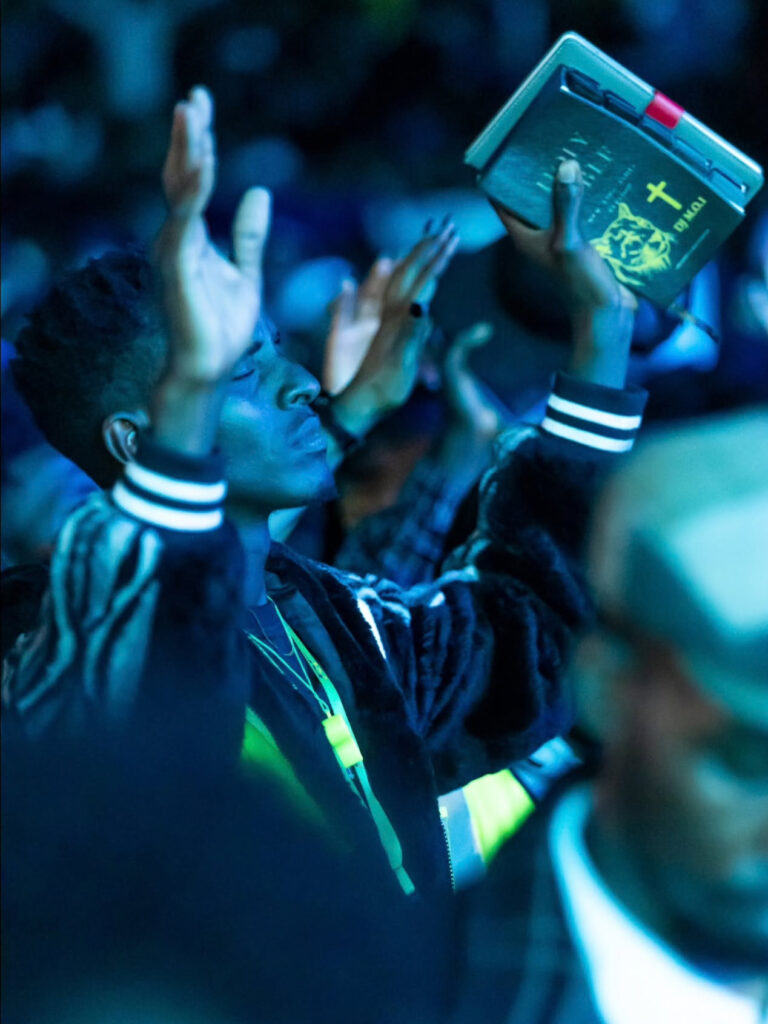
During the Rhema Feast, a young man raises his hands in praise and worship. Since the 2024 Occupy movement, the whistle has become a recognisable symbol of a generation reimagining Kenyan society and demanding accountability from both state and religious institutions.
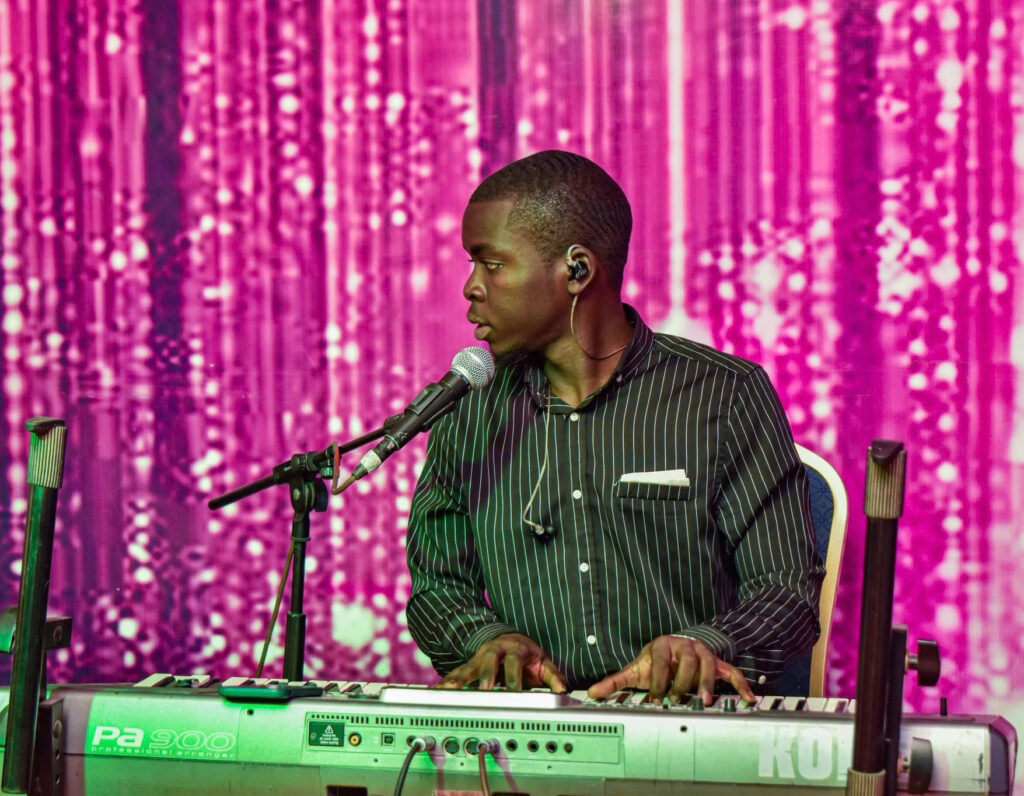
Worship music remains a central form of religious expression in Kenya. A pianist leads a congregation in song, turning faith into a collective, emotional, and participatory experience.
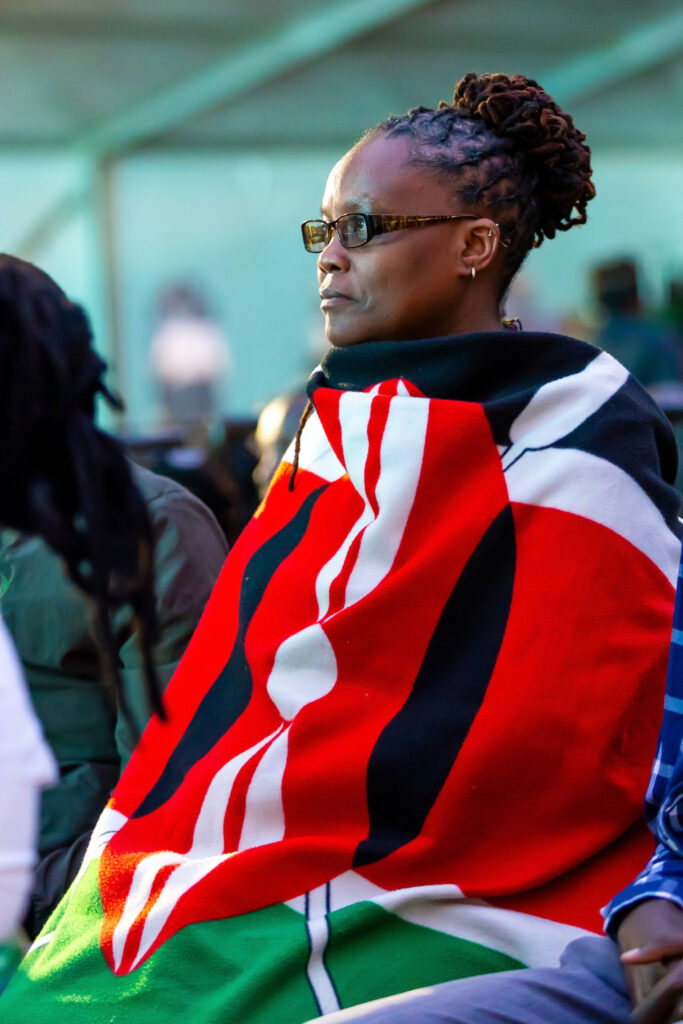
Since the #OccupyChurches movement of 2024, Kenyan Christians have increasingly asserted a new sense of patriotic agency in public life. The church, too, has not been exempt from this scrutiny. A worshipper dons the Kenyan flag while attending the Rhema Feast, embodying a faith that is at once personal, national and politically self-aware.
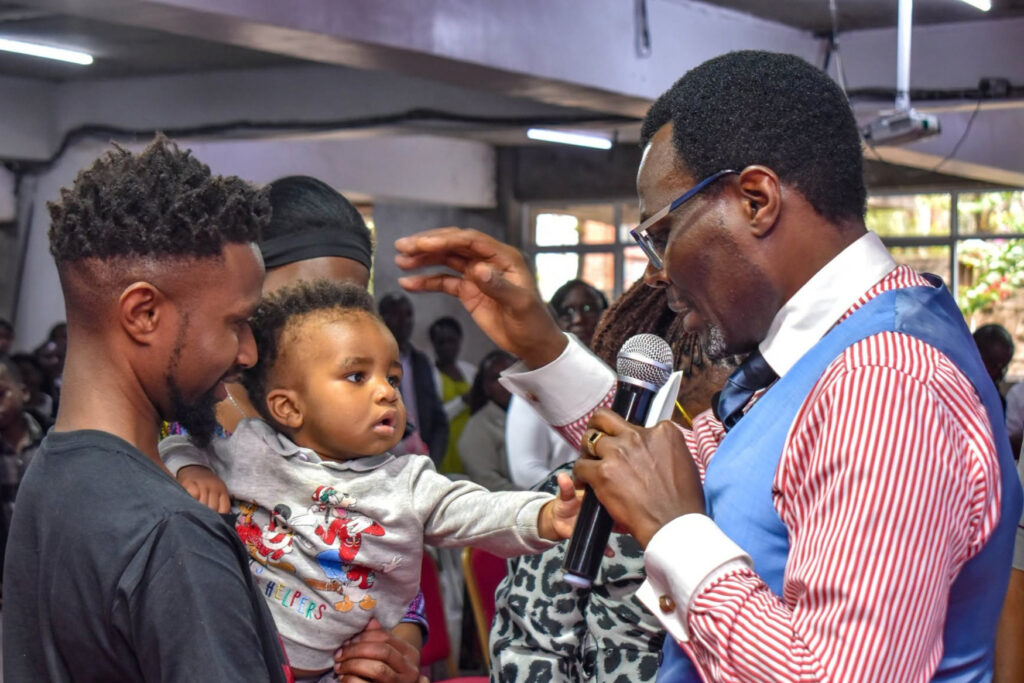
A clergyman prays for a young family in a local congregation. Beyond public spectacle, religious life in Kenya is sustained through intimate acts of pastoral care, blessing, counselling and communal support.
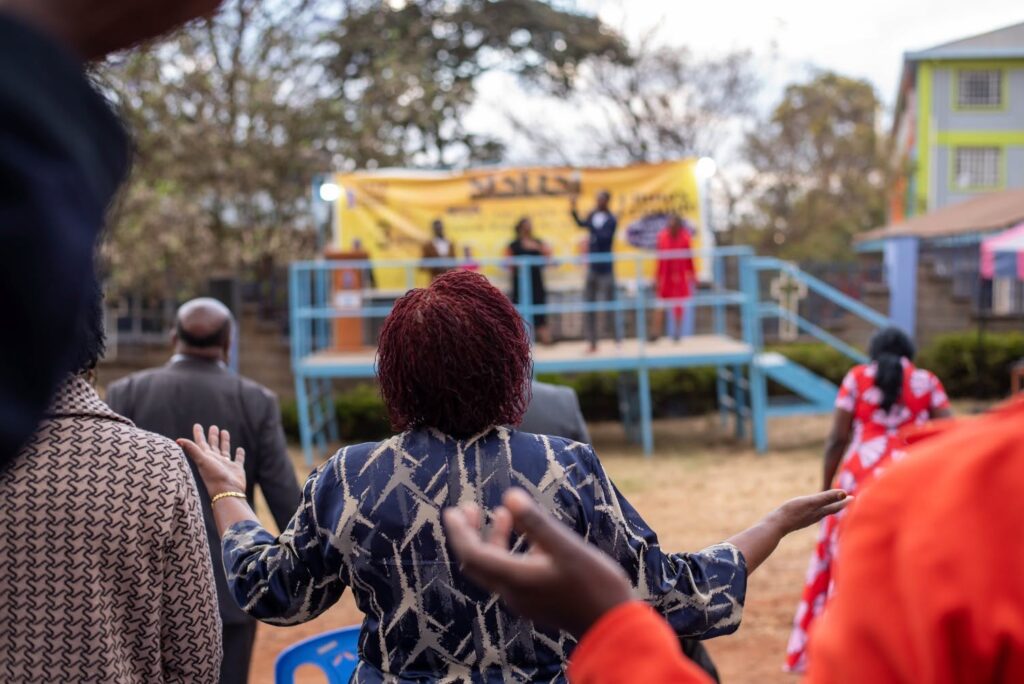
From the late 1980s through the 1990s, crusades became emblematic of Kenya’s mushrooming tent churches—spaces that offered hope, fellowship and a sense of stability as the country underwent structural adjustment and economic hardship. Today, crusades remain part of Kenya’s religious landscape. A crusade unfolds in [location], drawing believers into a shared ritual of preaching, prayer and conversion.
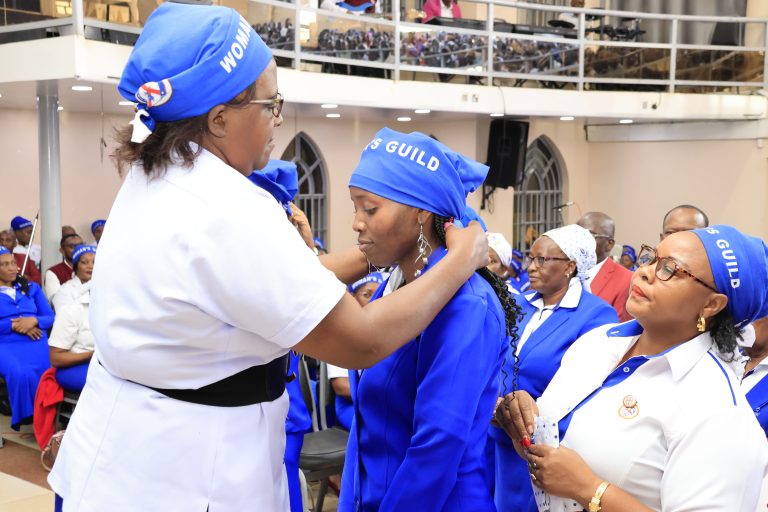
Religion provides meaning and social belonging to many Kenyans. In this photograph, a young woman is ushered into a women’s group in a ceremony of transition. The moment evokes the biblical instruction in Titus 2:3–5, in which older women are called to teach and mentor younger women, illustrating how religious communities transmit values, identity and intergenerational belonging.
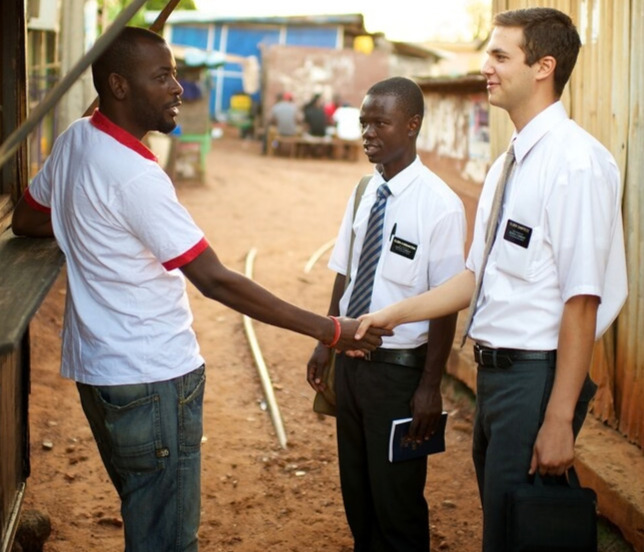
Evangelism remains a visible practice within Kenyan religious life. Across Christian, Muslim and other faith communities, believers continue to share their doctrines, invite others into their traditions and seek converts through preaching, personal witness and public outreach.
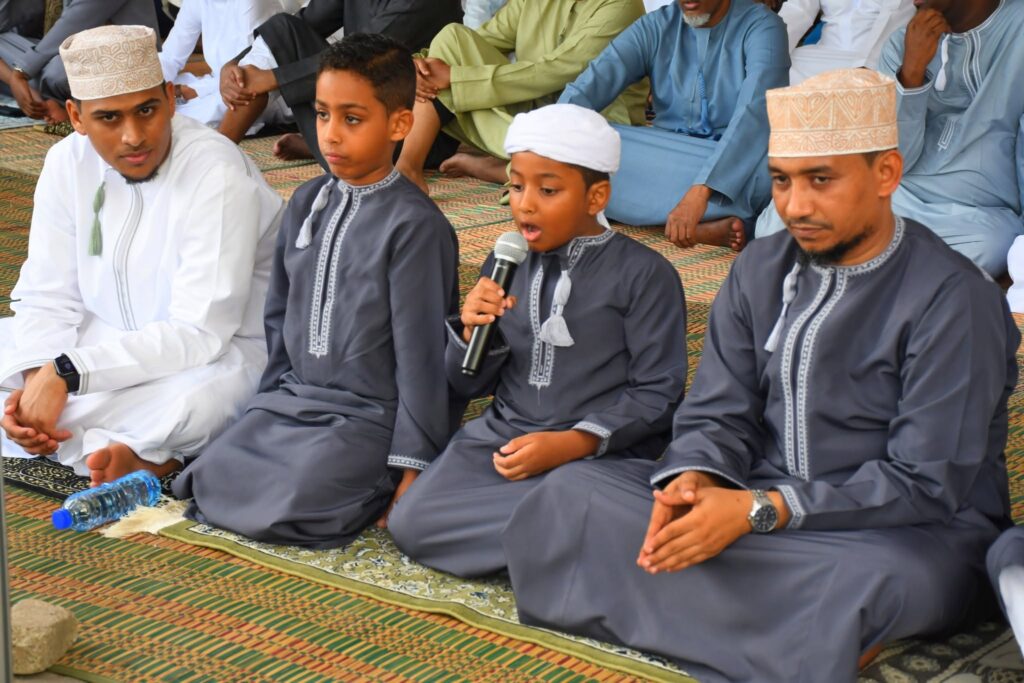
Kenya has long been a multi-religious society in which different faith communities have, for the most part, coexisted. Muslim faithful gather for daily prayers, reflecting the country’s religious diversity and the enduring presence of Islam alongside Christianity in Kenyan public life.
A country still praying
These images do not offer a simple verdict on religion in Kenya. They reveal a society in tension: one that criticises the political capture of sacred spaces while continuing to seek comfort, identity and hope within them. The question is not whether Kenyans are religious, but what kind of religious public they are building, one that legitimises power, or one that can speak truth to it.