|
Getting your Trinity Audio player ready...
|
Religion has never been peripheral to Kenyan politics. Churches have provided welfare, organized communities and challenged governments; they have also offered political leaders networks of influence and a language of moral legitimacy. The relationship has never been straightforward. Religious authority has, at different moments, been used to reinforce political power and to confront it.
What deserves attention now is not the presence of faith in politics, but the changing relationship between religious authority and political legitimacy.
William Ruto did not introduce Christianity into Kenya’s political life. Nor did he invent the longstanding practice of politicians cultivating religious constituencies. What is distinctive about his presidency is the prominence of his own born-again identity within the exercise and symbolism of political office. His political biography is repeatedly narrated through faith, providence and renewal; his presidency has cultivated visible relationships with Christian leaders and institutions, particularly within evangelical and Pentecostal circles; and religious symbolism has increasingly accompanied the performance of presidential authority.
The question is not whether religion belongs in Kenyan public life. It plainly does. Nor is it whether Christians should bring their convictions into politics. They should. The harder question is what happens when religious authority moves beyond participation in political contestation and begins to furnish political power with an additional claim to legitimacy.
In Kenya, that question has acquired concrete form. Prayer has become part of the symbolism surrounding the presidency. Religious leaders have maintained close access to political power. Financial relationships between politicians and churches have raised questions about influence and patronage. And proposals to establish religious institutions within state spaces have raised a more fundamental question about the boundary between the faith of an officeholder and the institutional character of the state.
None of this makes Kenya a theocracy. Nor does it make Christian institutions a single political bloc. The church has never spoken with one voice, and religious actors have continued to challenge as well as support political authority.
But it does expose a tension at the heart of democratic politics: how can deeply held religious convictions shape public life without allowing any particular interpretation of those convictions to become the measure of political legitimacy?
That is the question this essay explores. Because moral populism does not require faith to enter politics. It requires moral authority to become political currency.
The sacramental logic of power
Political authority has rarely been purely secular. Rulers have long sought legitimacy not only through law, institutions and force, but also through claims about morality, tradition and the sacred. Christianity became embedded in the institutions and social structures through which colonial rule was organized, while postcolonial states across Africa have continued to negotiate the relationship between constitutional authority, religious institutions and public morality.
Kenya’s political history reflects this complexity. Churches have not simply been instruments of political power. They have been schools, welfare providers, mediators, and important sites of civic organization. They have also moved between proximity to political authority and resistance to it. During the authoritarian years, sections of the church worked alongside the state on questions of welfare and national cohesion, while others became increasingly critical of one-party rule. By the late 1980s and 1990s, clergy such as Anglican bishops David Gitari and Henry Okullu, Presbyterian minister Timothy Njoya and Catholic bishop Ndingi Mwana-a Nzeki were among the religious leaders using sermons, church networks, and public advocacy to challenge political repression and press for democratic reform. The National Council of Churches of Kenya also became an important institutional voice in the struggle for political and constitutional change.
That history matters because it complicates any simple account of religion and power. The church has not occupied a fixed political position in Kenya. Religious authority has at different moments been used to reinforce political order and to challenge it. The same pulpit that can lend moral weight to political authority can also provide a platform from which that authority is questioned.
There is, therefore, nothing inherently undemocratic about religious citizens participating in politics or churches speaking on public questions. A democracy that protects freedom of religion must also allow believers to bring their convictions into public life. Nor is there anything unusual about politicians seeking support from religious constituencies. Churches are among Kenya’s most deeply rooted social institutions, and their political influence is part of the country’s democratic reality.
The democratic difficulty begins elsewhere: when religious authority is used not simply to participate in political contestation but to authenticate political power.
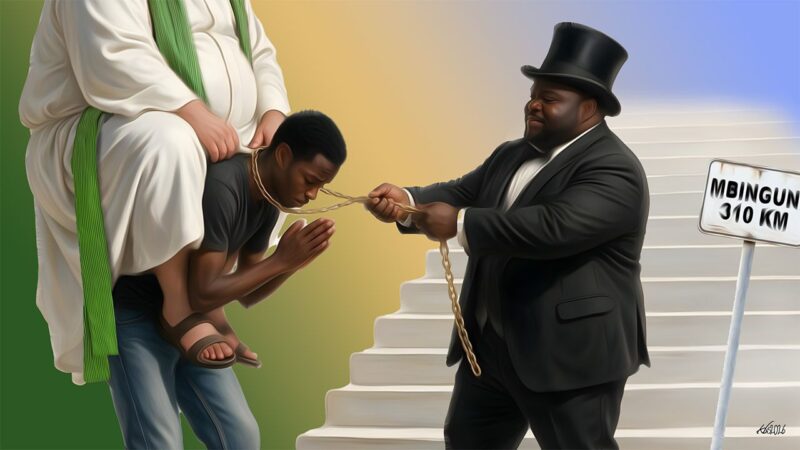
This is the sacramental logic of power: political authority seeks an additional source of legitimacy by associating itself with the sacred. In this arrangement, a leader is not merely elected; his political journey may be interpreted as providential. A policy is not simply defended on its merits; it may be presented as consistent with a particular moral or divine order. And an opponent is not merely wrong; disagreement can acquire the language of moral or even spiritual failure.
The distinction is important because religious authority does not inherently belong to either power or opposition. Its political significance depends on who invokes it, how it is interpreted, and whether the authority it confers remains open to question.
The concern arises when a particular interpretation of religious teaching is elevated from a conviction held by some citizens into a claim of moral primacy over political debate. Democratic politics permits citizens to argue that something is right or wrong, just or unjust, even on religious grounds. It does not require other citizens to accept one interpretation of moral truth as politically determinative.
This is where the language of moral populism becomes useful. Political disagreement can begin to be organized around competing claims of moral legitimacy: renewal against decline, righteousness against corruption, virtue against failure. The issue is not that political actors use moral language. Politics inevitably does. The problem arises when one interpretation of moral order acquires sufficient authority to define not only what policy should be pursued but also who is entitled to be regarded as morally legitimate within the political community.
The effect can be subtle as the political system does not necessarily cease to be democratic. Elections continue, courts continue to function, and constitutions remain in place. What changes is the language through which political legitimacy is understood. Political choices can begin to appear less like contestable judgements and more like expressions of a settled moral truth.
This is the historical and institutional context in which Ruto’s presidency becomes significant. He did not introduce religion into Kenyan politics, nor did he create the longstanding relationship between political leaders and Christian institutions. What merits attention is how that relationship is being expressed through a president whose own political identity is explicitly shaped by born-again Christianity and how religious symbolism, institutional relationships and presidential authority may reinforce one another.
The question is therefore not whether faith belongs in Kenyan public life. It plainly does. The question is whether political authority can remain fully contestable when it is accompanied by claims, symbols or relationships that give it additional moral authority.
That is the tension at the centre of Kenya’s current encounter with moral populism.
The born-again president
William Ruto’s relationship with evangelical and Pentecostal Christianity predates his presidency. During the Jubilee campaign, he cultivated relationships with Christian leaders and networks, particularly within evangelical and Pentecostal circles, while presenting himself to a much broader Christian constituency. His political biography has also frequently been narrated through the language of faith and providence: the son of a peasant farmer who rose through Kenya’s political establishment through hard work, political resilience, and God’s favour.
What changed with the presidency was the setting in which that faith was expressed.
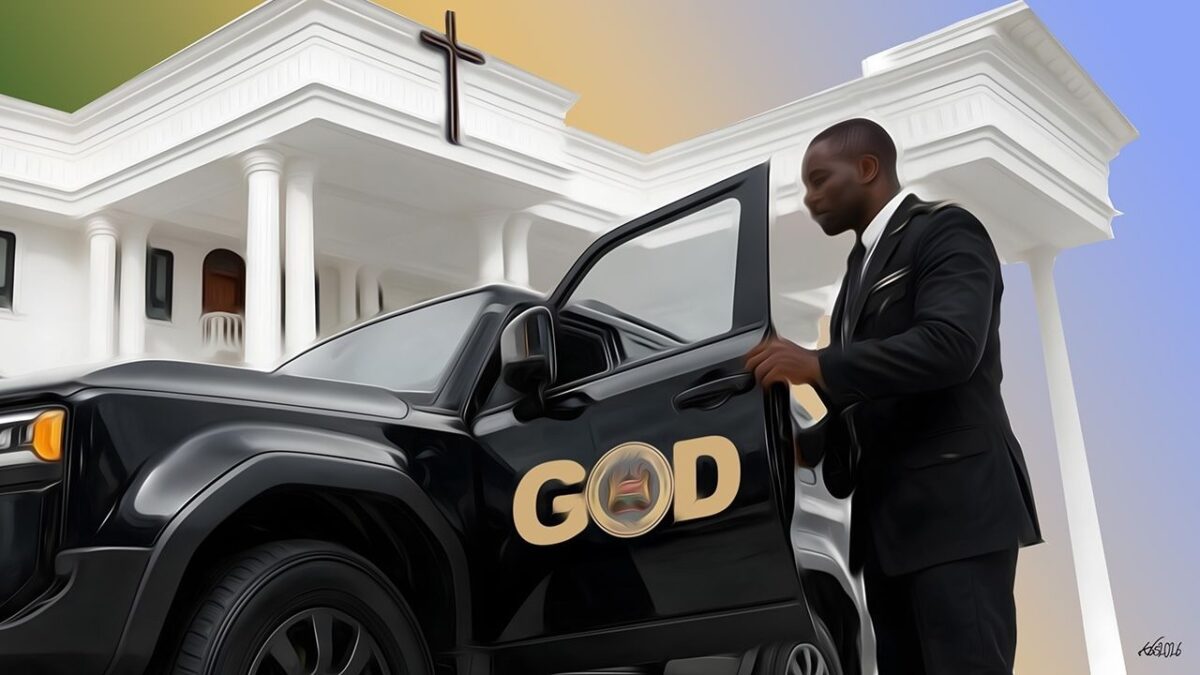
On 25 September 2022, less than two weeks after his inauguration, Ruto hosted an interdenominational Christian prayer and thanksgiving service at State House. He asked about 40 members of the clergy to remain behind to pray over and consecrate the premises and spoke of dedicating State House to God, whom he credited with bringing him to the presidency.
There is nothing unusual about a Kenyan president praying or invoking God. Nor does participation by clergy in a presidential ceremony, by itself, suggest a departure from democratic practice. What made the occasion notable was the way religious symbolism accompanied the transition into presidential office. Alongside an electoral mandate, the ceremony placed a language of providence around the new presidency.
In a religiously plural country, that symbolism carries institutional significance. State House is not a private residence; it is part of the institutional architecture of the Kenyan state. The issue is therefore not Ruto’s right to practise his faith, but what happens when the religious identity of an officeholder begins to shape the symbolism attached to the office itself.
The relationship between Ruto and Christian institutions has also taken more material forms. Religious leaders, including evangelical and Pentecostal clergy, have continued to engage the presidency, while other Christian institutions and leaders have criticized aspects of the government’s conduct. The relationship is neither straightforward political capture nor simple religious endorsement. Both sides retain interests, influence, and agency.
The tension becomes particularly visible when money is involved.
On 2 March 2025, while attending a service at Jesus Winner Ministry in Roysambu, Ruto pledged KSh20 million towards the church’s expansion and said he would mobilize friends to raise a further KSh100 million. The church subsequently clarified that the KSh20 million was a pledge rather than money it had already received and said the contribution followed a request from its leadership. It also noted Ruto’s longstanding association with the church.
The episode prompted debate over the boundary between private philanthropy and political influence. A contribution from a politician to a church is not, in itself, evidence of corruption. But when the donor is a sitting president, personal giving takes place alongside political access and the symbolic authority of office. That makes the boundary between philanthropy, patronage and influence more difficult to discern.
A related debate arose in 2025 over the proposal to construct a church at State House. Ruto said the project would be privately funded and would not use government resources; he also described it as an upgrade of an existing place of worship serving people who live and work within the State House compound. The proposal nevertheless generated a broader institutional debate about the place of a permanent Christian worship space within the grounds of the official residence and office of the Kenyan presidency.
The president may, of course, worship. The more difficult consideration is whether the symbolic and institutional character of the presidency should be capable of being marked by the religious identity of whoever occupies it. In a religiously plural state, that also raises a question of precedent: whether an institutional space shaped by the faith of one incumbent remains equally intelligible and available to those who occupy the office after him.
Ruto’s faith may be deeply personal; its political significance can still be examined. The two propositions are not mutually exclusive. What matters is the point at which personal conviction intersects with the symbols, relationships and institutional resources of political office.
And that is what makes Ruto’s presidency a particularly revealing case: not because he brought religion into Kenyan politics, but because his presidency makes unusually visible the point at which personal faith, religious institutions, and political authority meet.
The politics of moral certainty
The political significance of moral populism lies in what happens when political disagreement is recast through a particular understanding of moral truth.
Moral certainty, in this context, is not simply confidence in one’s convictions. It is the elevation of a particular interpretation of faith and its teachings into a claim of moral primacy – the assumption that one’s understanding of what is righteous should carry greater authority than competing interpretations and, ultimately, determine how political questions are settled.
The democratic difficulty arises when a moral position is presented not simply as one legitimate argument among others, but as the standard against which other positions are judged. Political disagreement can then acquire a different character. Those who oppose a policy are no longer merely advancing a competing political judgement; they can be cast as opposing what is righteous. Compromise can appear as moral weakness, while dissent can be recast as evidence of bad character or misplaced values.
This is where the politics of the evangelical right becomes relevant to Kenya. It is not necessary to treat Kenyan evangelicalism as a replica of the American Christian right or to assume that evangelical Christians share a single political programme. They do not. Nor is every politically engaged evangelical actor part of a right-wing project. The more specific concern is the political influence of particular conservative interpretations of Christian moral order, especially when they gain proximity to political power.
The significance lies less in the conservatism of these positions than in what happens when they acquire political authority. A conviction held by a religious community can legitimately inform advocacy and public debate. It becomes more consequential when access to political power gives that conviction greater institutional weight than competing moral or political positions.
This need not produce an explicitly religious state. It can operate more subtly, through the language used to define legitimate citizenship, responsible leadership, and acceptable political disagreement. A particular understanding of moral order can begin to function not simply as a religious conviction but as a political standard.
That is the point at which moral populism becomes democratically consequential. Democracy does not require citizens to agree about what is right, just, or good. It requires institutions capable of accommodating disagreement among citizens who hold different convictions about all three.
For Kenya, the issue is therefore not whether Christianity should have a place in public life. It plainly does. It is whether a particular interpretation of Christian moral authority can acquire sufficient political weight to make its understanding of what is righteous the standard by which democratic disagreement is judged.
The democratic cost
The democratic cost is not that elections disappear. It is that institutions can become less effective at doing the work democracy requires of them: scrutinizing power, distributing authority, and keeping political decisions open to challenge.
In a constitutional democracy, legitimacy remains provisional. Governments are elected, scrutinized, and eventually replaced. Their decisions can be defended, contested, and overturned without any side possessing a permanent claim to moral authority.
The danger arises when political and religious relationships begin to affect who has access to power, whose voice carries particular weight, and which institutions are treated as trusted arbiters of public life.
This is where institutional independence becomes important. Religious institutions do not need to withdraw from public life, and the state does not need to exclude religious actors from political debate. But both need sufficient independence to challenge the other. A church that asks a government to account for public money strengthens democratic life. A religious institution whose proximity to political power brings privileged access, resources, or influence may find it harder to scrutinize that same power.
The concern extends beyond any single church. In a religiously plural state, sustained political proximity to one religious tradition can create the perception – and potentially the reality – of a more favoured status for particular institutions. This matters not because religious institutions should be excluded from public life, but because the state must remain capable of relating to citizens and institutions without establishing a hierarchy of religious belonging.
Kenya’s next electoral cycle will again bring political actors into competition for the trust and reach of institutions beyond the formal party system. Churches will be among those sought out for their social networks, credibility, and capacity to mobilize communities. The democratic test will be whether those relationships expand civic participation and accountability or whether access to political power becomes a source of institutional advantage.
The more plausible danger, then, is not a sudden transformation into a theocracy. It is a gradual shift in the distribution of moral and political authority: some institutions become closer to power, some voices acquire greater legitimacy, and political choices are increasingly interpreted through moral affiliations.
Democratic erosion does not always begin by dismantling institutions. Sometimes it begins more quietly, when the relationships surrounding those institutions change the terms on which power is scrutinized and contested.
Faith and fury
Kenya’s challenge is not to choose between faith and democracy. It is to resist the temptation to make one the measure of the other.
A democracy will always contain citizens who hold their convictions deeply, sometimes as sacred. The democratic task is not to diminish that conviction but to ensure that neither political nor religious authority can claim the sacred as proof of its own legitimacy or use it to diminish the legitimacy of those who disagree.
That may be the real test of Kenya’s born-again politics.
Not whether its leaders pray. Not whether churches engage government. But whether, when the prayers end, and the politics begin, citizens remain free to question those who wield authority – whether that authority is political or religious.
Democracy ultimately rests on a modest proposition: no person or institution gets to speak for God on behalf of everyone else.
Perhaps that is faith’s most important democratic work: not to sanctify power, but to remind those who wield it that they remain human, fallible and accountable.