|
Getting your Trinity Audio player ready...
|
Introduction | Coordinated Jumuiya transnational repression
In the recent past, our Jumuiya’s democracy scales have been trembling with the impunity of human rights abuses and a worrying trend of transnational repression. One incident that chilled the conscience of all freedom-loving East Africans was the brazen abduction of Ugandan opposition politician, Kizza Besigye, on 16 November 2024 in Kenya by unidentified assailants who bundled him into a vehicle together with FDC (Forum for Democratic Change) member Haji Obeid Lutale, and drove him across the border to Uganda without any formal extradition process. After suffering the ordeal of being held in incommunicado detention, Besigye was arraigned before the General Court Martial and charged with offences relating to security and the unlawful possession of firearms and ammunition, which could attract the death penalty. In July of the same year, 36 other members of the FDC party had been arrested in Kisumu, Kenya, and forcibly deported to Uganda where they were charged with terrorism despite having lawfully entered Kenya with the necessary immigration permissions.
The Boniface Mwangi and Agather Atuhaire Torture and Deportation
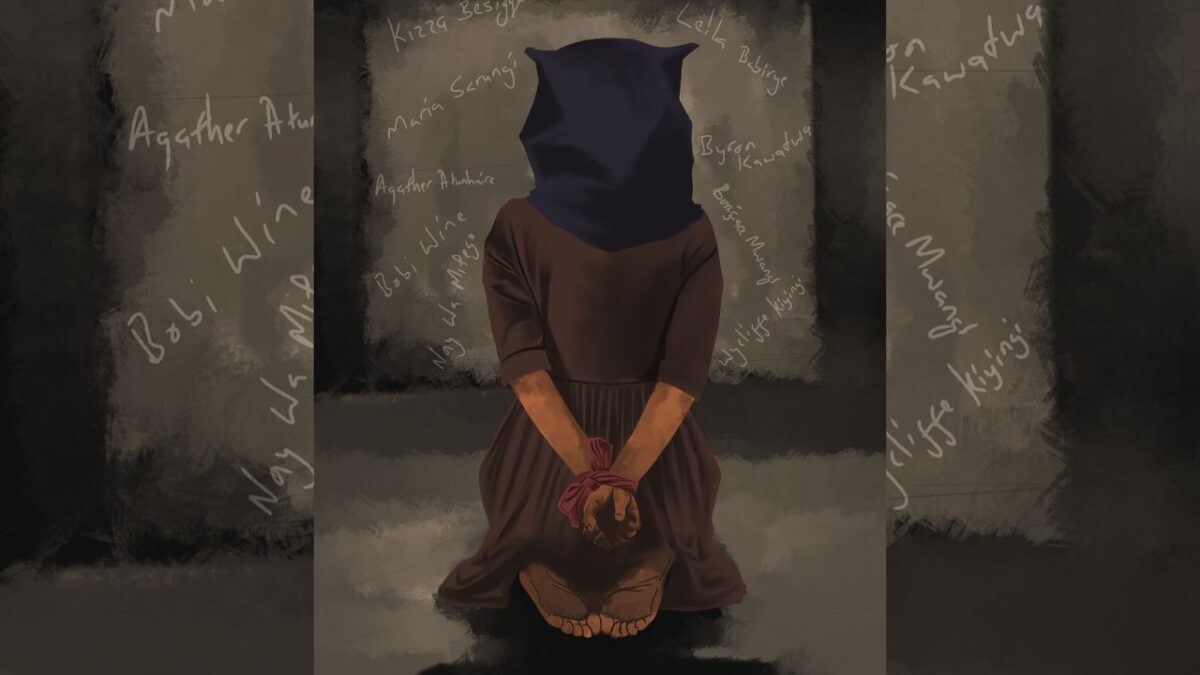
Six months after the kidnapping of Kizza Besigye from Kenya, Boniface Mwangi and Agather Atuhaire, who are prominent Kenyan and Ugandan human rights activists respectively, were abducted in Dar es Salaam, Tanzania, while expressing solidarity with opposition leader Tundu Lissu. There is a thread of consistency in the way all these major East African nations (mis)treat their opposition politicians and Activists. Like Besigye, Tundu Lissu faces treason charges ahead of contentious elections in Tanzania. Agather and Boniface not only endured days of incommunicado detention just like Besigye, but also reported suffering severe sexual torture, including rape and beatings by Tanzanian security forces.
Since the cross-border snatch-and-transfer operation happened almost a year ago, Besigye and his counterpart Haji Obeid have not received due process contrary to the African Charter on Human and Peoples’ Rights. Similarly, the enforced disappearances and ill-treatment of Agather and Boniface breached the human rights protocols of the East African Community and the International Covenant on Civil and Political Rights, to which all three countries are signatories.
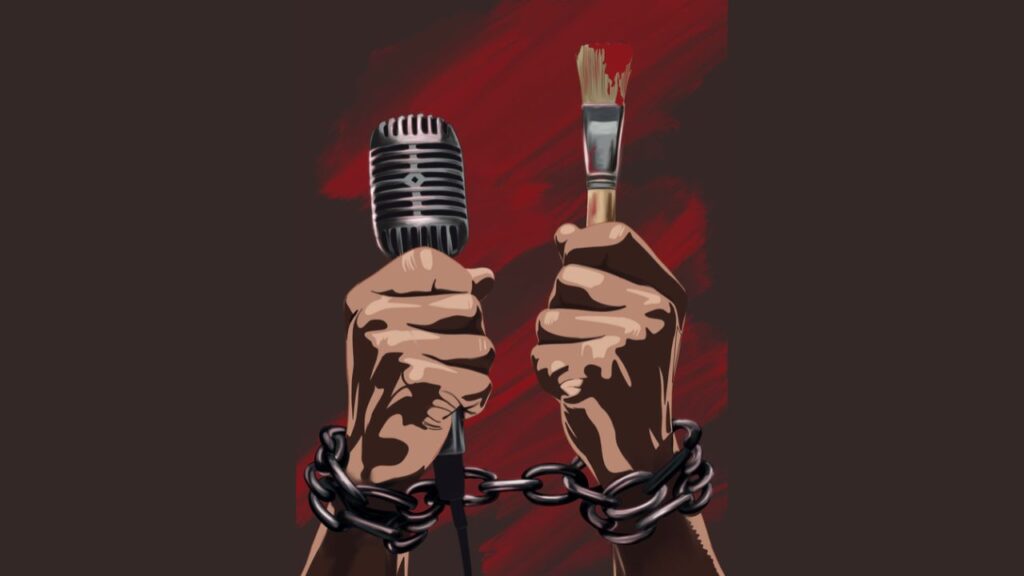
There is a complex historical origin of artistic censorship in Africa, partly stemming from colonial policy. The post-independence African states did not shake off the institutional legacy of colonialism, including the suppression of critical artistic expression. Through the use of draconian laws, censorship boards, and internet restrictions, more East African countries have registered excesses against the freedom of artists.
Across the region, from the early 2000s to the mid-2010s, there was a fusion of different forms of art, from graffiti and mural paintings to subversive visuals and performances by creative artists who defied authoritarianism.
Art Meets Gen Z Maandamano
In April 2025, the Kenyan police fired tear gas to disperse the audience that had gathered to watch Kenya’s national high-school drama competition. This followed the staging of a play, Echoes of War, by Butere Girls High School. Kenyan authorities could not stomach a play, produced by students, set in a fictional kingdom where the youth have lost faith in their leaders. The play’s author, Cleophas Malala, was also briefly detained by police.
Additionally, Kenya published the Statute Law (Miscellaneous Amendments) Bill 2020 in June 2020, with proposed amendments to the Film and Stage Plays Act 1962 (Cap 222). The intention behind this move is to increase the reach and grasp of the Kenya Films and Classification Board (KFCB) to bolster its capacity for censorship of artistic works deemed critical of the regime. The following month in the same year, Tanzania passed a new law, the Electronic and Postal Communications Act (EPOCA), on Online Content Regulations 2020, to tighten state restrictions on freedom of expression under the pretext of “morality” and national security. What the foregoing laws do is impose criminal prosecutions against grassroots satirists and online artists, further curbing dissent.
Although digital media provided a platform for political participation and democratic expression in the recent #GenZ protests in Kenya, when young people challenged the retrogressive Finance Bill 2024, it did not come without challenges. There were reports of the Kenyan government colluding with some of the digital platforms to use automated moderation and limit the visibility of protest art amid the Gen Z-led demonstrations.
Dictator Mama Samia
In Tanzania, although Chama Cha Mapinduzi (CCM), the ruling party, enjoys support from several prominent artists who compose praise songs for party leaders, it remains intolerant of any ounce of criticism from other critical artists. One of these is Nay Wa Mitego, a rapper who has been persecuted several times for his creative work. In September 2024, he was arrested after the Tanzania National Arts Council accused him of inciting against government abductions and slandering the president in his song, Nitasema (I Shall Speak). During President Magufuli’s tenure, he had also faced arrests, charges, threats, and bans due to producing music deemed critical of the government.
Into the bargain, in October 2023, three of Tanzania’s leading newspapers – The Citizen, Mwananchi and Mwanaspoti – were proscribed from publishing their online editions and had their licences suspended for 30 days after they ran an animation deemed critical of President Samia Suluhu Hassan. This followed the publishing of a video clip which highlighted the increasing cases of abductions and disappearances in the country.
BASATA’s Overreach
In November 2018, Tanzania’s national arts council, Baraza la Sanaa Tanzania (BASATA) banned Diamond Platnumz and Rayvanny’s popular song, “Mwanza,” and slapped the artists with a hefty fine, claiming the song was “too vulgar” to be played in the country. The board ordered the label Wasafi Records to remove the track from all digital platforms and ensure it is never played again on the radio or in clubs in Tanzania.
In 2023, Tanzanian music sensations Whozu, Mbosso, and Billnass were heavily fined and banned from participating in artistic activities for a three-month period, starting from November 4, 2023, over a controversial music video, Ameyatimba.
Maria Sarungi’s Abduction
Having left Tanzania for Kenya four years earlier following threats of arrest and the banning of her media outlet, Maria was abducted in Kenya in January 2025 and feared her assailants planned to force her back to Tanzania because of her critical social media posts. Ironically, The road where Maria’s kidnapping occurred is named after Charles Argwings Kodhek (1923-1969), the first native lawyer in Kenya and East Africa who was also an early nationalist figure and a member of the labour movement. Maria was freed and left on a “rough road, in a dark place”.
Mange Kimambi’s Activism and Exile
Another prominent Tanzanian activist, Mange Kimambi, who had been enlisted by the ruling Chama Cha Mapinduzi (CCM) party in 2015 to push for John Magufuli’s presidential bid, was later forced into exile after weaponising her platform against Magufuli’s regime for its crackdown on press freedoms. With over 2.1 million followers now, Mange’s Road to exile began around 2016-2017 amid escalating backlash for her determination to criticise the Tanzanian government’s corruption and service failures, culminating in her forced exile the United States.
Historical Roots of Artistic Censorship in Uganda
Some Ugandan artists may feel that the increased restrictions against their work today are due to the political emergence of Bobi Wine, a vibrant and disruptive opposition politician whose key to fame was music. However, they would be remiss to forget that some of the laws providing the pretext for blocking Bobi Wine’s concerts were passed during the British colonial rule! The government can ban performances, censure artworks, revoke work permits of creatives, arrest artists, and even shut down venues where artists are scheduled to perform by relying on a law passed in September 1943 by the British colonial authorities. The British also prosecuted any artist who practised their traditional dances and culture, which were deemed satanic and obscene.
However, this had not always been the case. Whereas some precolonial African societies had patronage systems and centralised censorship, whereby artistic works were commissioned and controlled by royal courts, artists enjoyed a considerable degree of freedom because art was integrated into daily life and was at the centre of spirituality and identity. Therefore, the limitations against artistic expression that were registered widely in the post-colonial era were largely inherited from the colonial legacy, which had weaponised politics against art.
Abuse of Artistic Freedom in Post-Independence Uganda
And so, it happened that in 1965, Wycliffe Kiyingi and the entire cast of his artistic radio show, Wokulira, were arrested, and the show was banned by Milton Obote’s government. For writing an article critical of the government in their literary magazine, Transition, Abu Mayanja and Rajat Neogy were arrested in 1968. For writing The Burdens and Covenant with Death, the playwright John Ruganda was forced into exile in 1973, fearing for his life. For producing his cryptic play, Amayirikiti, Robert Serumaga, another playwright of great stature in Ugandan literature, was also forced into exile following negative interpretations of the play by the Idi Amin regime. For staging the play, Oluyimba lwa Wankoko, Byron Kawadwa became a martyr of Ugandan literature at the hands of Amin’s rogue agents in 1977, because the play was interpreted as mocking the Amin regime through its depiction of a tyrannical rooster-king.
The Hybrid State of Artistic Freedom Under the NRM
Beyond combat, the National Resistance Army (NRA) War that shot President Museveni into power was cheered up by artists, some of whom formed higher and lower ranks of the guerrilla force, including Gen. Elly Tumwine and Sergeant Steven Kifulugunyu, respectively.
Outside of the NRA ranks, civilian artists also composed songs that decried the breakdown of social order and public service delivery under the Obote II regime, and supported the liberation struggle with songs of praise and encouragement for the fighters and their leader, Yoweri Museveni. One of these artists was Peter Baligidde, who composed Agawalajana Mulukoola, a popular song in the 1980s which President Obote’s regime had banned due to interpretations of its message that alluded to the degradation of political stability under the regime and applauded the struggle by the NRA guerrillas.
Upon taking power, there was widespread hope that Museveni’s National Resistance Movement (NRM) would respect human rights, especially the right to freedom of expression, since it was one of the reasons they had launched a protracted war five years earlier. According to Eckhard Breitinger, in 1986, more than 400 theatrical groups registered as members of the Ugandan Theatrical Groups Association, signalling the optimism with which cultural activists perceived this new era of unprecedented freedom of expression.
In its early days, the NRM seemed committed to protecting and empowering the freedom of artistic expression. It illustrated this by, among other ways, returning Wycliffe Kiyingi’s Wokulira radio serial. Through the Ministry of Gender, Labour and Social Development, and statutory bodies like the Uganda National Cultural Centre (UNCC, the government seemed to encourage and support the development of cultural and artistic activities. Through teaching Music, Dance and Drama (MDD), schools were also vibrant nurseries for artistic talent.
Creative arts also played a significant role in mobilising the Ugandan population to contain major national challenges, especially the HIV/AIDS pandemic and the restoration of peace and reconciliation in areas ravaged by civil war, especially in northern Uganda. Poems and songs were written and performed regularly by pupils and students about all those challenges. Therefore, the government had a direct benefit and critical incentive to promote the freedom of artistic expression.
However, over time, the NRM government has increasingly constrained the space for artistic expression in Uganda. Today, cartoonists like Jimmy Spire Ssentongo, a Ugandan academic who employs art to campaign against the widespread corruption in government, have reported threats against their lives. In the past, the government used to charge editors of newspapers that critically caricatured the president with sedition. In 2017, musician David Mugema and his producer Jonathan Muwanguzi were arrested and charged with offensive communication for disturbing the peace of President Museveni. This followed their release of a song, Wummula, which was interpreted as demanding that the president retire from his long stay in power.
In 2012, the Uganda Media Council suspended performances of State of the Nation, a play that highlighted corruption and poor governance in Uganda under President Museveni. The play had been produced to coincide with the 50th anniversary of Uganda’s independence, on 9 October.
Several artists have been arrested or suffered in some way due to the interference of the state against their freedom of artistic expression. One of the bright careers that were ended by the misapplication of the law by the state prosecutors was Producer Didi, who was arrested in 2014, and his studio equipment was forfeited by the government on account of producing the song Panadol Wa Basajja, which was claimed to contain pornographic content. Although Didi was eventually found innocent, his life has been ruined since.
Artistic Resistance and Innovation in the Face of Jumuiya Repression
Nevertheless, the high-handed and imperious abuse of artistic freedom by East African states has not gone without incident. Young, vibrant artists have evolved to invent new and bold forms of expression to surmount state censorship.
Leila Babirye, a queer Ugandan, is one of those young East Africans blending creative expression with political critique and human rights activism. When she realised that the space for sexual minorities to freely express themselves had been further constrained by the passing of the anti-homosexuality bill in Uganda in 2023, she ingeniously found ways to address the realities of being gay in Uganda and Africa in general through art. Her sculpture artwork turns everyday materials into objects that address issues surrounding identity, sexuality, and human rights. Leila collects debris from the streets of New York that has been whittled, welded, burned, and burnished, and chisels it into beautiful sculptures, symbolising the reclamation of the disgraceful treatment of LGBTQI identities in Africa. Through her artwork, she expresses herself in ways that the government cannot restrict, furthering the cause of human rights.
When the Ugandan government denied Bobi Wine access to any public venues for his concerts, limiting his right as an artist to perform and earn, he innovatively held digital concerts at his private beach and home, further escaping state limitations.
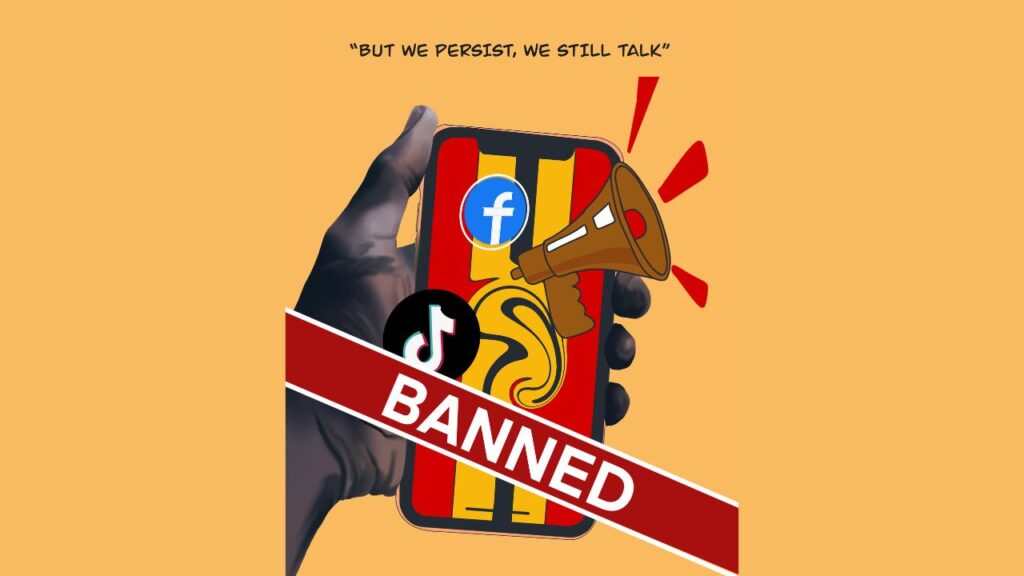
When Tanzanian authorities banned bloggers recently ahead of the 2025 national elections, Maxence Melo’s platform, Jamii Forums, resisted the blogger shutdowns. In Kenya, a subculture has evolved for self-expression and social commentary on matatus (public mini-buses), which are avenues for integrating hip-hop, graffiti, and reggae music that address socioeconomic, political, and cultural themes relevant to urban youth. Tanzanian youth creatives and initiatives like Wachata Collective’s urban murals have also adopted street art as an avenue for socio-political expression. Luta Ferdinand was a member of the Alternative Social Movement, a Ugandan pressure group. In February 2021, he publicly flogged an effigy, which came to be widely referred to as a makeshift dummy of the Ugandan President, Yoweri Museveni. Armed with a loudspeaker and a stick, he accused the effigy of electoral malpractice and punished it with disfiguring whips. Arrested, the police charged him with common nuisance under the Penal Code Act. A year later, Luta revealed to the media that upon arrest, he was tortured and later charged in a military court with having military stores before being remanded to Kitalya prison.
The law and politics are often weaponised against artistic freedom because art is rich with the capacity to express issues vividly and seriously, yet with creative entertainment. With his life-size effigy sculpture, Luta made a spectacle of a powerful political figure, rendering justice to a perpetrator that the formal justice system could not apprehend.
It is easy for Luta, the creative artist, to be overshadowed by his political activism. But in truth, it is his art that has the power to socially shame a public figure and bring them to account in the court of public opinion. However, African artists and activists persist in their pursuit of artistic freedom, recognising the transformative power of art in shaping societies. We should recognise the power of art to provoke thought, challenge conventions, and ignite social change. Africa is one of the most culturally diverse continents, and our artistic talents must be supported to continue vibrantly expressing our identity, history, and contemporary realities. Art is therefore political.