|
Getting your Trinity Audio player ready...
|
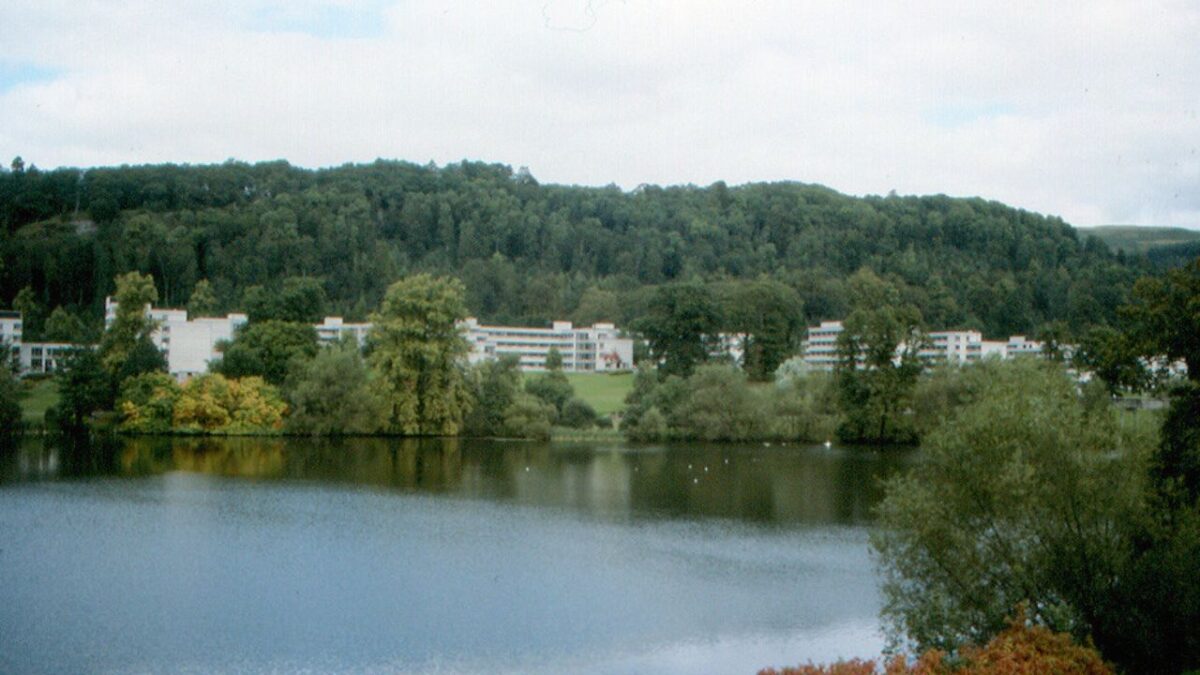
I was walking past the University of Stirling’s Airthrey Loch when I saw a young Scottish man fishing at its edge. As a son of the lake, who grew up next to Nam Lolwe, renamed Lake Victoria by the colonizer, I was automatically drawn to it. So when I saw the rod, the line, the stillness and anticipation of someone waiting for the water to dictate their next steps, I had to stop and join the man in this quiet business which our people consider sacred.
He was patient, almost signalling that he had done this many times. The rod was held loosely. His eyes were on the water, waiting, not pushing. Then the line went taut. It happened quickly. The rod bent. His feet shifted. Veins popped out of his neck and hands as his arms pulled against something that was pulling back. The fish did not come easily. For several minutes they argued about it. Then, by some combination of his muscles and his equipment, the fish came ashore. It was large and golden, a brown trout, solid and carnivorous, built for the cold Scottish water. It reminded me immediately of the mumi we used to catch as boys when the flooded fields of Kano brought them close, sometimes to our living rooms. Using torches, we would lure them close enough to grab them from the shallow water.
The young man set the fish on the bank and reached for a measuring tape. While it was twisting, gulping for air, he measured it carefully, noted the length, and made a record of it. No sooner had he laid it on the bank than a uniformed man, who looked like a security person, arrived. Cordial, unhurried, he asked to see the permit. A permit, to fish in a university loch, with a single line, for a single fish, on a weekday. He produced it with ease. He had collected it from the university before coming to the loch, because in this country a permit is simply part of going fishing, and you carry it the way you carry a fishing bag.
Then he put the fish back in the water.
That is the expectation here, at least in this loch. You catch it. Measure it. Record it. Return it.
A few minutes after he had left, I was still standing there, processing what I had just witnessed, especially as a man who was fresh in this country and had not been fully oriented in their ways, including this legislated kindness to animals.
In Kano, we fished in small rivers and tributaries because the fish was dinner. Here, the fish is the point. The eating is incidental, or absent entirely. And it made me think about this particular kind of prosperity that produces this, a society so far past the question of whether there will be food tonight that it has arrived at an entirely different relationship with the natural world.
But the same country that legislates this loch also has one of the largest fishing fleets in the world. British trawlers move through the North Atlantic and beyond, dragging nets across ocean floors, pulling up more in a single trip than a thousand Kano fishermen would catch in a lifetime. I wondered about that. About whether the careful angler and the industrial trawler can really be part of the same moral story, or whether one exists, in some quiet way, to make the other easier to live with. It also made me think about how the media routinely covers the floods of Kano and their devastating impact. But no one has asked why the fish stopped coming. Why only a foul stench now accompanies the seasonal floods.
It was late October, the tail end of autumn. The sky was grey and heavy over the Ochil Hills. The trees were losing their leaves. The darkness was arriving earlier each day, not yet the full winter dark, but you could feel it gathering. The University of Stirling sits on three hundred and sixty acres of parkland at the foot of those hills, built on the grounds of Airthrey Castle, an eighteenth-century estate whose giant redwoods, oak, beech and birch still line the paths between the buildings. Squirrels run between them without breaking stride. Swans move across the loch as if they own it, because in every way that matters, they do.
I had been noticing other things too, but I didn’t yet have the words to describe them.
Disturbing sheep is illegal
On the paths near a large farm estate near Bridge of Allan, there are signs warning that disturbing sheep is an offence and dogs found doing that will be shot. Standing next to one of those signs, I asked myself: who decides which animals get the sign? Who decides which people get removed to make room for the animals that now get the sign? How about the owners of the land? Do they deserve signs and dignity like these sheep?
And then I remembered Laikipia.
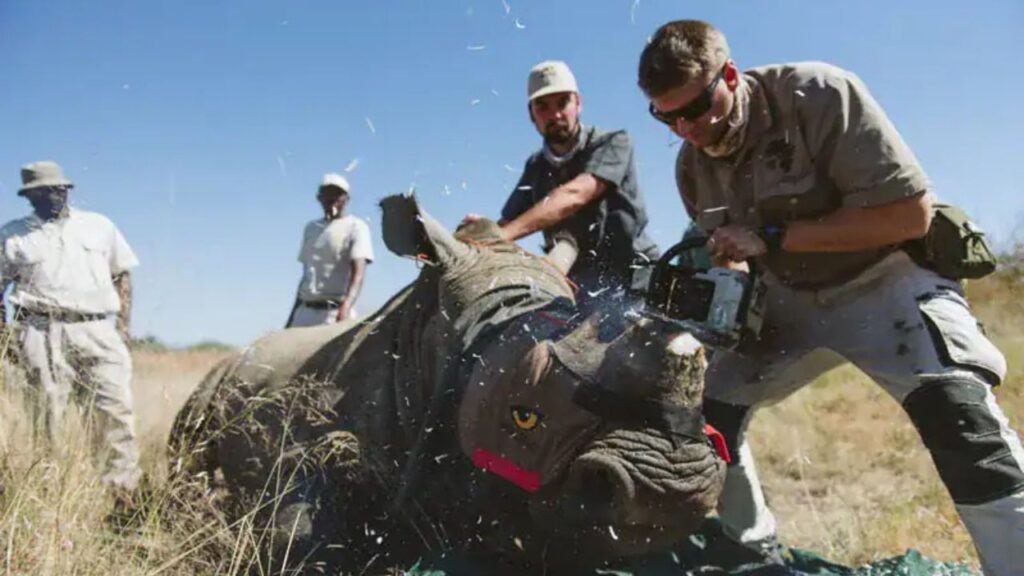
I first visited that beautiful county as a journalist covering a community sports, health and wellness event organized in partnership with the county government. We were hosted at Segera Ranch, a private 50,000-acre Big Five wildlife conservancy and eco-safari retreat. Our host put us in a quiet triple-floor rustic cabin built on the shores of one of the tributaries of River Ewaso Nyiro. At night, we congregated near the library, lit a fire, and told stories.
Today Laikipia covers approximately ten thousand square kilometres, two and a half million acres of some of the most ecologically rich land in East Africa. According to public records, 40.3 per cent of that land is controlled by just 48 individuals, which includes foreign investors, expatriates, and Kenyans of European descent who hold large ranches and wildlife conservancies. The 35,000 Maasai whose ancestors were promised that land in perpetuity are squeezed onto a fraction of what they once held. The largest private ranches – Laikipia Nature Conservancy, Ol Pejeta, Loisaba – are each larger than many Kenyan constituencies.
Many of these ranches now present themselves as conservation projects. Wildlife sanctuaries. Custodians of Kenya’s natural heritage. Whether they do real conservation work or not is contested. But the land on which that conservation happens was acquired through legislation passed in a parliament that had no jurisdiction over the soil, enforced by an army that had no business being there, and confirmed by courts that ruled they could not be held accountable for breaking their own promises. The people who managed this ecosystem for centuries before any European arrived to survey it were removed from it. Then they were told their removal was necessary to protect it.
The sheep of Scotland get the sign but the Maasai of Kenya got a fraudulent treaty.
Even though I knew something of the Scottish involvement in the British Empire’s colonial project, I grabbed my phone to look up the full extent of it, while standing next to Airthrey Loch in Stirling, where earlier that evening a fish had been captured, measured, and returned to the water.
The Scottish presence in Kenya began with a map. In the 1880s, Scottish explorer Joseph Thomson traversed Maasai land, producing detailed maps of territory that would become the blueprint for what followed. Sir William Mackinnon, a Scottish financier, was one of the founders of the Imperial British East Africa Company, which laid the economic infrastructure for British control before the formal protectorate even existed. The Church of Scotland Mission established itself at Thogoto in Kikuyu and in Tumutumu, ran schools, introduced what it called the gospel of work, and integrated Africans into the colonial labour economy. Scottish settlers moved into the white highlands in far greater numbers disproportionate to their share of the British population. Colonial administrators explicitly compared the rolling landscape of the Rift Valley to the Scottish Highlands and used that comparison to encourage more Scottish settlement.
The Caledonian Society of Kenya, a club founded by Scottish settlers to keep their own culture and traditions alive in the colony, held its first gathering in 1904, the same year British officials signed away the Maasai’s right to Laikipia.
And that is the complex and messy nature of the Scottish story. A people who had their own language banned, their own highlands cleared, their own heroes dismembered and sent to the four corners of a kingdom that wanted them erased, crossed an ocean and did versions of the same things to other people. They looked at a landscape that reminded them of home, and they stayed. And having stayed, they mapped it, financed it, schooled it, settled it, and named their social club after the country they had left. Scotland was not simply a bystander to the British colonial project in Kenya. It was one of its architects.
So I kept walking.
The pigeons
And then the pigeons.
Even though I am not an ornithologist, the first thing I noticed in Scotland was how big they are. These are not the pigeons I know from Kano or Nairobi, lean and alert and always one movement away from flight. These pigeons are large. They walk slowly, that side-to-side rolling gait that comes when a small body has been well fed for a very long time and has learned to store fat for a cold season. They forage along the paths between the campus buildings, heads down, unbothered. They don’t immediately fly away when you approach them. You can walk toward one of these pigeons, close enough to touch it, and it will glance at you and go back to eating.
A pigeon that doesn’t flinch when you approach is a pigeon that was never taught that lesson. Hunger was defeated here so long ago that being afraid of humans was never a lesson this pigeon needed to learn. Nobody hunts it. The country settled the fact over many years that it is worth protecting the biodiversity that feeds it. The worms are there because the tree cover is maintained. The food is there because that is what birds need. And so, across generations, the fear was never passed on.
A fat, fearless pigeon will tell you more about the country it lives in than many history books could.
It was here, watching these pigeons, that the tragic story of Kericho, which has formed a canopy over the green, lush tea estates and commercial timber forests, flowed back in. Stirling reminds me of Kericho. They share the same kind of landscape: green, hilly, cool, well watered, the kind of land that makes you understand immediately why the British chose the “white highlands” in Kenya. Fertile. Well-watered. Cool.
In Kericho, British soil tests found that the Kipsigis and Talai had been living for generations on land ideal for growing tea. The solution was simple: remove the people, subdivide the land, sell it to plantation companies. The Kipsigis were pushed off their agricultural land. But the Talai presented a specific problem.
They were not just a clan. The Talai clan, originating from a prophetic lineage that branched into both the Nandi and the Kipsigis communities, the Orkoiyot, the ones whose lineage traced to twin brothers believed to have supernatural abilities, rainmakers and healers and seers who could communicate with Asis, the singular creator of all things in the Kalenjin world. Their authority over the Kipsigis and the Nandi was sacred. And because it was sacred, it was the thing making it impossible for the colonial administration to build its railways through Nandi land and subjugate the people. This is the clan that produced Koitalel Arap Samoei, who resisted colonial rule before he was tricked into a meeting with the brutal colonial administrator Richard Meinertzhagen, who shot him point-blank while he expected a handshake and killed him in 1905. According to history, he was decapitated; his skull is alleged to be held in the Pitt Rivers Museum in Oxford.
Following the 1905 assassination of Koitalel, the British crushed the people through a brutal scorched-earth campaign that slaughtered between 5,900 and 20,000 Nandi, looted and starved over 10,000 cattle, and burned entire villages to the ground, initiating decades of systematic land theft and military confinement that culminated in the 1934 forced removal of the clan to Gwassi.
In August 1934, the British passed the Laibons (Talai) Removal Ordinance into UK law, identifying the Talai as an evil influence on the whole population. The playbook perfected over many years of subjugating other nations was swiftly deployed: criminalize a spiritual tradition by using the moral vocabulary of the colonizer.
On 22 October 1934, approximately 700 Talai, including 308 children, were rounded up across Kipsigis and Nandi territory by tribal police. There were beatings, rapes, and separation from their possessions. They were held in an open-air detention camp at Kiptere, near Kericho, for months. Then came the 14-day forced march to the tsetse fly-infested Lambwe Valley in Gwassi, near Lake Victoria.
The land was uninhabitable, thick with malaria-carrying mosquitoes, tsetse flies, poisonous snakes, and rampant sleeping sickness. Some British parliamentarians had warned against it. One called Gwassi a valley of death. Official British documents described the area as not suitable for human habitation. According to Kenyan historians, of the approximately 2,000 people sent to Gwassi, only 100 came out alive. Women suffered miscarriages. Their livestock perished. The colonial administration conducted an annual census, not to help the Talai but to count how many remained. Those taken to Burma and other theatres of the Second World War to fight for Britain were returned to the detention centres when the war ended. When Kenya became independent in 1963, the survivors walked back toward their ancestral land. They found tea estates.
In May 2022, representatives of more than 100,000 Kenyans from the Talai and Kipsigis clans delivered a letter to Prince William, seeking an apology and reparations. The letter said: Where we inherited the pain, you inherited the profit. The British government declined to engage directly. The Talai have been waiting ever since.
A birdsong
A few weeks later, at a Scottish Behavioural Science Conference at the same university, I sat in a room full of psychologists, economists, behavioural scientists and researchers from leading Scottish universities. I learned that the United Kingdom has maintained a repository of birdsong for over a hundred and twenty years. A hundred and twenty years of recorded bird sounds, catalogued, archived, made available freely on publicly accessible platforms. Over 250 distinct bird sounds you can listen to today, used to track species, verify rare sightings, understand disappearance before it becomes extinction.
In that room, I sat quiet, thinking about home.
Kenya, as a bounded territory whose borders were drawn by White men in European capitals, is 61 years old. The country that colonized us, Scotland included, was already recording birdsong before we existed as a political entity.
I sat with that for a long time.
There is something a country reveals about itself in how it treats the things that cannot speak for themselves. When it builds a road, does it find a way around the old, sacred ng’ou tree, or does it take the chainsaw and call it development? When it inherits a river, does it measure the fish and return them to the water, or does it run effluent through it and call that progress? Does it record the birdsong?
And when communities that have lived alongside wild animals for generations say they know how to take care of them, does it listen? Or does it write an ordinance, call those communities an evil influence, and march them at gunpoint to a valley of death so the land and the animals can be managed by people arriving later to arrogate themselves the title of custodian?
The answer, it turns out, depends entirely on which side of the ocean you are standing on.