|
Getting your Trinity Audio player ready...
|
As I read the opening chapter of The Big Conservation Lie, I found myself less interested in the catalogue of failures it presents than in the conditions that make those failures persist without consequence. Who is allowed to define what counts as protection, expertise, or success? Whose knowledge becomes most authoritative, and whose experience is treated as noise?
While many books on conservation are written to celebrate strategies or actors, this in particular is deliberately structured to provoke critical and even unsettling questions about environmental conservation, particularly in Kenya. As the title suggests, the book positions itself as an antithesis to conventional conceptualisations of conservation discourse, aiming instead to dissect the ‘lie’ embedded within prevailing conservation narratives (p.8).
In the beginning, the chapter signals that the conservation enterprise has largely been constructed as a white person’s domain (p.8). More often than not, it is associated with white actors who relish the thrill of conservation measures and are idolised as possessing the most codified and authoritative knowledge.
Such knowledge is deemed reliable, while other perspectives and forms of knowledge are regarded as inferior or insufficiently rigorous (p.9). However, to me the ‘white’ figure invoked here should not be understood strictly in terms of Western descent. Rather, it also encompasses those African actors who have internalised and reproduced colonial epistemic methodologies, substituting indigenous ways of thinking for modes of thought presented as more ‘scientific’ or ‘superior’.
I’m fascinated by the theme of ‘hero worship’, which is my main focus (p.7 – 31). By applying Fanon’s concept of the ‘white gaze’ to this particular theme, I offer some musings regarding the romanticisation of wildlife conservation.
From a Fanonian perspective, I recast the concept of the white gaze by noting that when the objectifier and the objectified stand facing each other, the objectifier perceives the objectified as an incomplete version of himself. Perhaps someone in need of instruction and correction to attain civilisation.
Simultaneously, the objectified internalises this judgement, coming to view himself through the objectifier evaluative frame. The objectifier is thus elevated to heroic status, imagined as the figure capable of rescuing the objectified from his perceived inadequacy.
Human beings have long been captivated by heroes, figures elevated above ordinary life, celebrated not only for confronting adversity but also for resolving dilemmas that society itself created or allowed to persist. The philosopher Thomas Carlyle famously declared that society is founded on Hero-worship, suggesting that cultures depend on the narratives of exceptional individuals. Such individuals are at times raised to a divine status to give coherence and meaning to historical experiences.
Yet this reverence often occludes the deeper structures that produce the very crises heroes are said to save us from in effect. Perhaps by praising ‘heroes’, admirers relay their own commitment to the values embodied in public acts of problem-solving. Sometimes this is irrespective of whether those acts address systemic causes or merely treat recurring societal symptoms.
In this light, hero worship becomes less an unalloyed celebration of moral courage and more a cultural mechanism that obscures collective responsibility, rewarding individuals for fixing failures that should never have been tolerated in the first place.
From Fanon’s perspective, the figure of the hero cannot be disentangled from the politics of recognition and the colonial gaze. In Black Skin, White Masks, Fanon demonstrates how subjectivity is produced through asymmetrical visibility, where the colonised subject is constituted not as a self-determining agent but as an object of interpretation, correction, and rescue.
Fanon captures the violence of asymmetrical visibility of the ‘white gaze’ in the now-canonical moment from a child’s refrain, ‘Look, a Negro! Mama, I’m scared!’ where the colonised subject is abruptly fixed within the coloniser’s gaze and reduced to a spectacle of fear, danger, and otherness.
In this instant, subjectivity collapses into objecthood; the black body is no longer a self-determining agent but a sign to be interpreted and managed. What is crucial here is not merely the fear expressed, but the authority embedded in the gaze that names and defines. The cry authorises intervention and control, while simultaneously positioning the coloniser as both victim and saviour.
Fanon thus reveals how the hero is constituted through the same epistemic violence that denies the colonised full humanity. The hero exists because the other must first be rendered frightening, or incapable of self-governance (p.17). This dynamic transforms domination into protection and insistence into care, a logic that persists in contemporary conservation narratives where local communities are framed as risks to nature…
Maybe hero worship, however, is not confined to conservation alone. I understand it as a broader social pathology that structures how authority operates across political life. In many contemporary societies, political actors are similarly elevated to heroic status, insulated from critique through narratives of progress and national salvation. I observe that large-scale public projects are often announced as successes long before their effects are experienced, with official assurances treated as evidence of efficacy in themselves.
Within such conditions, failure is not disproved but deferred, while dissent is dismissed as impatience or disloyalty. The hero’s declaration that a project ‘works’ becomes sufficient to foreclose scrutiny, even where lived experience suggests otherwise. What this reveals, to me, is that such projects may indeed ‘work,’ but not in the manner publicly proclaimed.
However, from my deconstructive analysis of the ‘hero’ worship syndrome and its self-serving schemas, it is prudent to realise that the worship of such figures to an extent of divinity brings about a scenario. A scenario in which public benevolence toward heroic figures functions less as recognition of virtue and more as a veil, obscuring meaningful progress while displacing truth and concealing self-serving conduct.
It appears true that the objectification of a black person’s body results as a devaluation of his being. However, I’m inclined to think that the normalisation of this objectification creates a standard where the objectified tries hard to please the objectifier in order to be accommodated in a world that excludes him.
This produces a principled mirror effect where the objectified looks toward the objectifier as a saviour, as somebody who can grant some sort of liberation, in short, as a hero. The consequence of this dynamic is epistemic imitation. The colonised subject begins to borrow the conceptual tools of the coloniser, often under the assumption that these will eventually yield liberation.
As a result, success is often measured not by indigenous standards but by external benchmarks. At times, even those regarded as knowledgeable supplicate other countries as models, with little appreciation that the concepts applied in those contexts are largely indigenous. They function effectively precisely because they are tailored to the societies in which they operate.
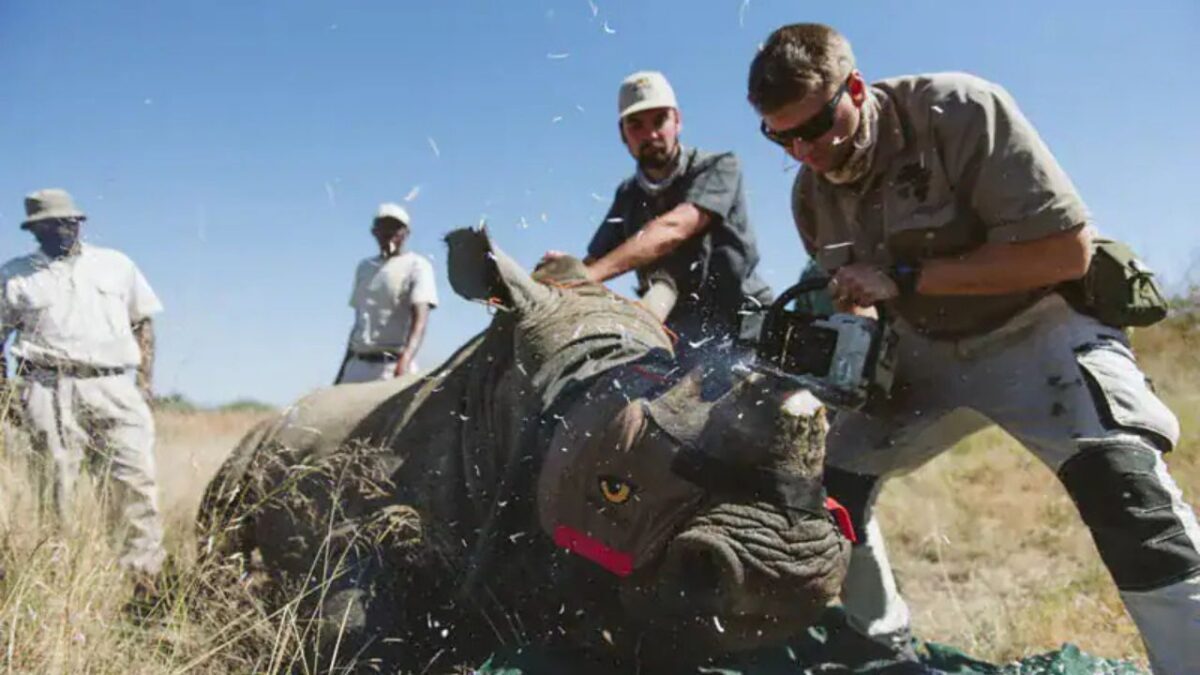
But what does wildlife conservation truly entail? Is it simply the protection of species and landscapes? In countries like Kenya and South Africa, these questions are inseparable from the racialized and economic hierarchies that structure conservation practices (p.15). Often, the same acts are judged differently depending on who performs them. The hunter, for example, may pay substantial sums to engage in trophy hunting or to harvest resources.
These acts are legitimised as part of conservation, framed as investment and deemed noble. In contrast, the individual who hunts or harvests the same resource without payment is often labelled a poacher. Often criticised and condemned for trying to reap from a practice that he has not ‘invested’ in, despite the acts themselves being materially similar.
This distinction reveals conservation not as a neutral ecological project, but as a moral economy structured by power and historical authority. What confers legitimacy is rarely the sustainability of the act itself, but the position of the actor, his proximity to wealth and institutional recognition. In this sense, conservation disciplines certain bodies while exempting others, all under the language of protection.
Applied to this scenario, the local hunter is apprehended not as a knowing subject embedded within an ecological relationship, but as a threat to be managed (P.17). His actions are read through suspicion and moral deficiency. By contrast, the white conservationist or paying hunter is endowed with intentionality and reason; his actions are presumed to be scientific, even benevolent (p.18). The gaze thus authorises intervention while denying reciprocity. The poacher is not only accused of harming nature, but of acting outside sanctioned knowledge systems.
Fanon’s white gaze clarifies how authority is not merely exercised but ‘seen into being’, through narratives that conflate domination with care and intervention with benevolence. In this light, hero worship does not simply celebrate ‘virtue’ but reorganises responsibility. Structural failures are reframed as opportunities for heroic intervention, while those subjected to governance are denied recognition as moral or epistemic agents (P.7-31). Perhaps my takeaway would not be a fixed position on heroism, but a differentiated way of thinking. A trail of thought that asks us to notice how quickly we accept some figures as heroes, without asking how that status was made possible in the first place.
–
This article was first published by ROAPE.