|
Getting your Trinity Audio player ready...
|
The river had swallowed him whole before anyone realised the danger. It was early October last year, in Kakamega. The Kenya Meteorological Services Authority (KMSA) had already issued a warning that heavy rains were coming, and it was the third day of heavy rains, pouring from late in the evening to well into the night. The alert had gone out on KMSA’s WhatsApp channel, and on television, radio, and social media. But when I spoke to a few members of the community near River Isiukhu in Madala village in Kakamega County, they said they had not heard the warning. Eight-year-old Baraka and his two friends were swimming in the river at around 10 am. They had stopped at the river on their way to the shop where Baraka’s grandfather had sent them. The water had surged and, moments later, Baraka was gone. His body was recovered more than three kilometres downstream, seven hours later, one of his hands still clutching the twenty shillings his grandfather had given him.
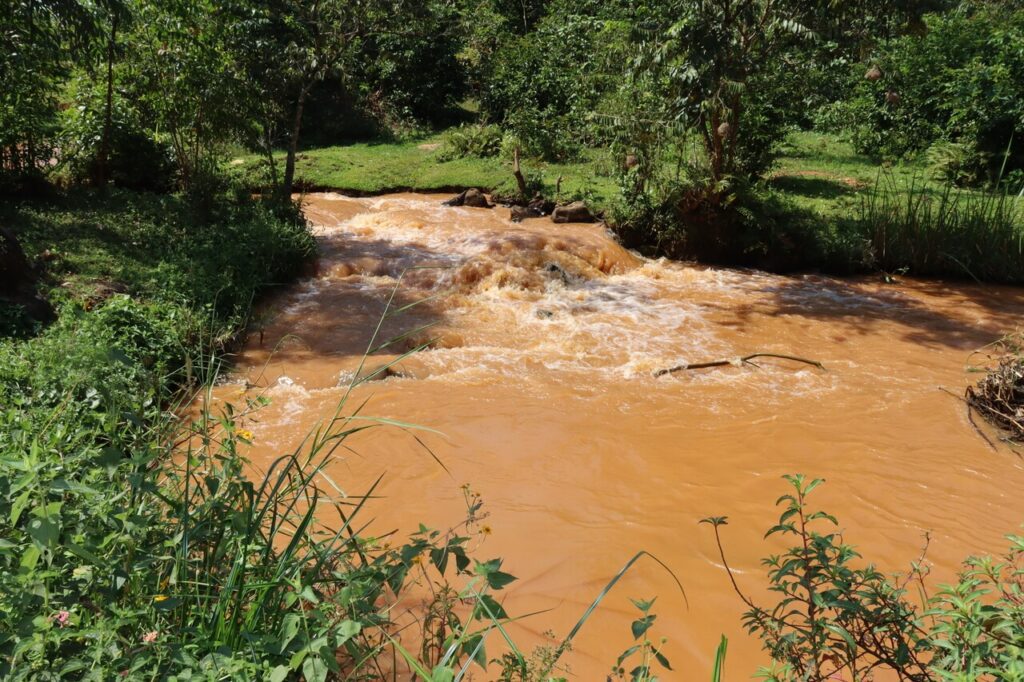
Less than a year later, in May this year, after days of heavy rains, the same river claimed another life. Lusula drowned, and his body was found more than ten kilometres from where he had gone under.
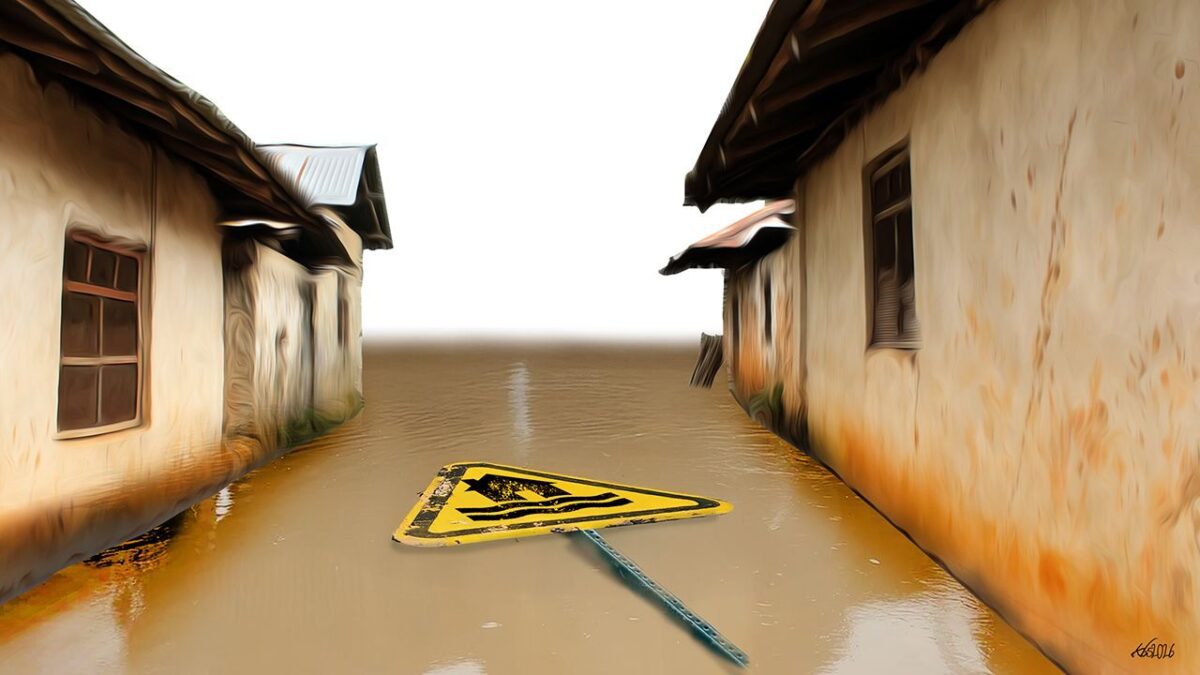
These deaths point to a problem that sits at the heart of Kenya’s disaster management architecture. It is not that the warnings are not being issued, and the science has never been better. The real crisis is in everything that happens, or fails to happen, in the space between the forecast and the community that will be affected by it.
A system built on better science
The Kenya Meteorological Services Authority (KMSA) operates a network of both manned and automatic weather stations across the country. Franklin Komolkori, Principal Meteorologist at KMSA, explains: ‘We get data from observations across all stations, sent to headquarters in Nairobi which is the telecommunication hub for central and southern African countries. The data is then transmitted to global processing centres, where it is blended with satellite information before being fed into forecasting models,’ adding, ‘When we get the data from all those global processing centres, we run the Numerical Weather Prediction models (NWP), and now with the coming of Artificial Intelligence (AI), we also generate forecasts using both the NWP models and artificial intelligence models.’
The output goes through internal review, with forecasters deliberating and checking whether the multiple models agree before being released down a government chain: the presidency, relevant ministries, the National Disaster Operations Centre, county meteorological directors, agencies like Kenya Red Cross, before reaching the public through media outlets.
‘Initially, there was doubt whereby forecasts would be given, but the event would not happen. Now we are in a place where forecasts are given, and the event happens as forecasted,’ says Peter Murgor, Disaster Risk Reduction and Cash and Voucher Assistance Manager at Kenya Red Cross.
The June-July-August period provides a live test of whether that confidence is warranted. A super El Niño is anticipated, with sharply differing implications across different parts of the country. Kenya Red Cross is already mapping the country by expected impact, distinguishing zones of flood and mudslide risk from those where above-average rains could produce agricultural opportunity. ‘In some areas we are giving advisories for farmers to go strong and go heavy, as that will be a very good buffer for food security. In others, the message is, your area is at high risk, and there’s likely going to be mudslides.’
Knowing isn’t the same as acting
The question is what happens next. For Murgor, the problem is well understood: ‘It is one thing to receive information. Now we go to the second level, which is the uptake of the information. Yes, we’ve been told it will rain, the rains will be heavy. How does that translate to preparing accordingly?’
Murgor identifies the first barrier: ‘By nature, we are people who like taking risks, people who will wait until the last minute. That is problem number one.’ Problem number 2, he says, is more structural. Even where the will to act exists, the capacity often does not. He recalls what he witnessed in Budalang’i, one of Kenya’s most flood-prone regions: ‘People in low-lying areas being told to move to safer ground start contending with a number of issues like, “How am I moving my belongings? Where am I moving them to? If I leave them, how safe are they?” Therein comes a socioeconomic aspect where the capacity to carry out these actions becomes a limiting barrier.’
The economic divide plays out in the most immediate, practical ways. ‘People who are rich can hire boats and move their belongings. Those who don’t have money try as much as they can, but when the event comes, their items are swept away. So somebody wants to stay until the last minute to protect their items.’
A third barrier is political: ‘There are places where you want people to move, but then a politician may make a statement like, “If you leave your items, they will be taken.” Then people become wary and say, “If my leader is saying this, I don’t want to move.”’
Murgor also recognizes a subtler dynamic: communities that claim they never heard the warning when they in fact did. ‘Nowadays, we don’t just take it on the surface when communities say they were not aware; they could simply be running away from responsibility, or the shame of saying, “You knew about this but did nothing.” It’s easier to say, “We did not even know this was going to happen.”’
An event is just an occurrence in a cycle
The deeper failure is that Kenya has never fully embraced the disaster risk management continuum: the cycle of mitigation, preparedness, response, and recovery that should run continuously, not only when disaster strikes. ‘The problem is when we look at the event in isolation from the risk management continuum. This event is just an occurrence in a cycle. That leads us to the question: how prepared are we on risk management or risk reduction? It should not be that when the alert is given, we are only then starting to think of where to move or how people will move,’ explains Murgor.
‘A properly functioning risk management mechanism is one where, during the mitigation and preparedness phase, a number of these factors would have already been addressed.’ Murgor also clarifies a commonly misunderstood concept: ‘We don’t talk about higher ground anymore; we talk about safer ground. You could be on higher ground but still not safe. Altitude does not guarantee safety from flooding; you may be on a high place but predisposed to mudslides.’
Murgor draws a comparison with more prepared countries. ‘In developed economies, communities are told, when designing their houses, to make sure there’s a safe area in the building: a bunker that is tamper-proof, weatherproof, stocked with food and supplies. They are told, “We don’t know when you will need it, but should there be an earthquake or a storm, run in there.” That is preparedness. The person is not confused about where to go.’
‘What is happening in our context? There is no conversation about, “Yes, it’s not flooding now, it’s not raining now, but because we know for sure we will have March-April-May rains, and there might be floods, what do we do in these other months?” Those are the periods where we should be having mitigation and preparedness activities linked to our infrastructure, our waterways, riparian lands,’ explains Murgor.
The consequences of that absence are sometimes fatal in unexpected ways. ‘We recently lost one of our responders to electric shock and cardiac arrest when trying to save a life, because illegal electrical connections were low-lying and looked like a dead thing in the water.’
On the recent flooding in Nairobi, Murgor is blunt: ‘A lot of what we saw in Nairobi recently was due to negligence, because we understand the land. There are very clear land use plans, and when you build pavement wall-to-wall, you create trappings for water. Where do you expect it to go when it rains?’ He highlights the particular danger of sudden-onset events: ‘That particular incident in Nairobi was rain of under two hours, but look at the massive impact. It gave no one warning; people were at work. It was a normal Friday, and people were planning to unwind over the weekend. At about 5:30, the story changed.’
Forecasting in a changing climate
Part of what makes preparedness harder is that the climate itself has become less predictable. Komolkori explains: ‘In the long rain season, it was very certain that the season starts from March, April, May, and people would start planting in March. But now the climate has changed, and we see that rainfall starts somewhere around April, and sometimes even May. The onset is shifting.’ KMSA is improving its longer-range forecasting capability, deploying AI in short-range forecasting up to seven days, with work underway to extend this further.
Dr Solomon Gebrechorkos, a research scientist at the University of Oxford working on climate, hydrology and agriculture, has spent years assessing how well seasonal forecast models perform in East Africa. Evaluating seven widely used models for their ability to predict drought events in Ethiopia, Kenya and Tanzania, he found probability scores hovering around 40 to 60 per cent – barely better than chance. ‘If the probability is about 80 per cent or 90 per cent, then you can say this will be a drier season or a wet season,’ he explains. ‘But when you have a probability of about 50 per cent or 40 per cent, this is very difficult. You can’t really tell people much.’
Getting the message to the last mile
Murgor explains dissemination at Kenya Red Cross, where the work of translating official advisories into community-level communication is deliberate and layered: ‘What we do is, we break down those messages to consumable messages so that it’s not very technical, and at times even interpret it into the languages that can be understood by communities.’ Channels include bulk SMS through the Rapid Pro platform, WhatsApp groups for community leaders, and close coordination with local structures on the ground.
Komolkori describes the dissemination architecture from KMSA’s side: ‘We have the representatives of the people, which is the government; when we give an advisory, we copy it to various ministries: the Ministry of Environment, Climate Change, and Forestry, and the Ministry of Interior and National Coordination. We also have the presidency, the Council of Governors, which goes to the counties, and the County Directors of Meteorological Services, who are stationed in all counties and can downscale the information to their local area.’
‘Without the media, the information cannot get to the last mile.’ Komolkori points to examples that have worked: ‘When there was a lot of flooding in Budalang’i, there was a station called Bulala FM in Western Kenya that was transmitting weather advisories and alerts. There was also a radio station in Kangema in Murang’a that disseminated information when there were a lot of landslides there.’
According to Murgor, the most effective channel is not any particular technology, but trust embedded in structure. ‘The most effective community channel is actually the community structures. I use that word deliberately, because different communities have different mechanisms. In Budalang’i, that means Bulala radio and traditional weather knowledge holders. In other areas, it is local leaders and opinion figures. What matters, Murgor says, is using whatever permanent structures already exist – like Nyumba Kumi, chiefs, community climate change committees – and layering them, not relying on any single channel. ‘It has to be layers,’ he says, ‘Starting from the grassroots and building upward is what ensures information reaches the lowest level.’
Murgor also advocates bringing communities into the design of the warning systems themselves, not just as recipients of information but as co-designers. ‘I want to really emphasize what we call co-developing and participatory scenario planning: collaborating with communities to understand how they receive climate information, and how they would like to be communicated to.’
Kenya’s weather station network remains a significant constraint. Methodologically, stations should be spaced no more than 50 kilometres apart; in Kenya, the gap can be 300 kilometres. Automatic weather stations have been deployed to help, but they come with their own vulnerabilities: vandalism in remote areas, and slow government procurement for replacements. ‘If the general public were educated about the importance of these systems for their day-to-day lives, they could own and protect them,’ says Komolkori.
The trust problem
There is one more gap that rarely features in policy discussions: What happens when communities receive a warning and simply do not believe it?
For Gebrechorkos, this is personal. ‘When I was in Nairobi in April this year, the rainfall forecast was about 20 per cent probability. My friend and I said, “Okay, let’s go for a walk. It’s just a 20 per cent forecast,” and we got completely soaked.’ The experience, he says, reframed how he thinks about communicating uncertainty. ‘After that, I will not ignore even a 10 per cent or 20 per cent rainfall forecast. I will prepare for it. And I think that is the mindset we need to help communities and decision makers adopt.’
The challenge is that communicating probabilistic information is genuinely hard. ‘Decision makers always ask, ‘How sure are you?’’ says Gebrechorkos. ‘When you tell them this percentage, they say, “If you are not sure, we can do nothing.” We don’t have models that predict 100 per cent, and we need to communicate that we have gaps, but that the models are still useful.’
Gebrechorkos argues that projecting false certainty to prompt action is worse. ‘If you tell people your forecast is very good, they will not trust you when sometimes you say it will rain and it turns out dry, or you say it will be dry and it rains.’ Rebuilding that trust, once lost, is far harder than maintaining it through honest communication from the start.
From response to readiness
‘Resourcing is a big one,’ Murgor acknowledges. ‘One of the best things happening in Kenya currently is that for the first time ever, we had the Disaster Risk Management Bill passed in the Senate and assented to by the Head of State, making it law, making it possible to allocate resources and have structures for risk governance in place. Majorly, the resources available right now are for response and emergency response but not risk reduction.’
‘There needs to be a concerted effort, moving from a reactionary perspective to taking action before the event occurs. The question should not be, “Is it going to occur?” but, “If it is to occur, how prepared are we?”’
A warning is only as good as what happens after it.
The Early Warning for All Initiative, a joint effort involving Kenya Red Cross, the UN, and KMSA, is built on the premise that a forecast that doesn’t reach people, or reaches them without enabling action, is not a warning at all. The initiative connects four elements that must work as a single chain: understanding disaster risk, monitoring and forecasting hazards, communicating that risk effectively, and ensuring communities have the capacity to act. ‘Early warning information without action becomes paralyzed,’ Murgor says. ‘It’s not about whether the forecast is accurate. It’s about whether people received it, understood it, and had something they could actually do about it, and whether the infrastructure was already in place to respond.’
Murgor also warns against the short memory that follows disasters. ‘In Nairobi, for example, people have stopped talking about the floods. There’s no action being taken on resilient infrastructure. If it happens again, it will be an “Oops, we forgot about this.” That should not be the case. We need to draw learnings, then take pragmatic action to invest in creating infrastructure that enables resilience and coping mechanisms against weather-related events.’
‘Weather information is very important. The main purpose of giving early warning, whether weather forecasts or climate information, is purposely to save life. Losing one life is losing many lives. Even a single life is very important, and that is why it is very important to heed the alerts being given. We are in an era where weather information is ignored at your own risk,’ Komolkori concludes.
In Kakamega, the river is still there, and the rains will come again. Whether the warning that follows reaches the right people, in the right language, with the right plan behind it, is the debt Kenya’s early warning system still owes the people it was built to protect.