|
Getting your Trinity Audio player ready...
|
This series was produced in partnership with the Pulitzer Center’s Artificial Intelligence (AI) fellowship.
Kenyan citizens who are caught between Kenya’s national registration system and the Profile Global Registration System (proGres) of the United Nations High Commission for Refugees (UNHCR) are known as double-registered persons.
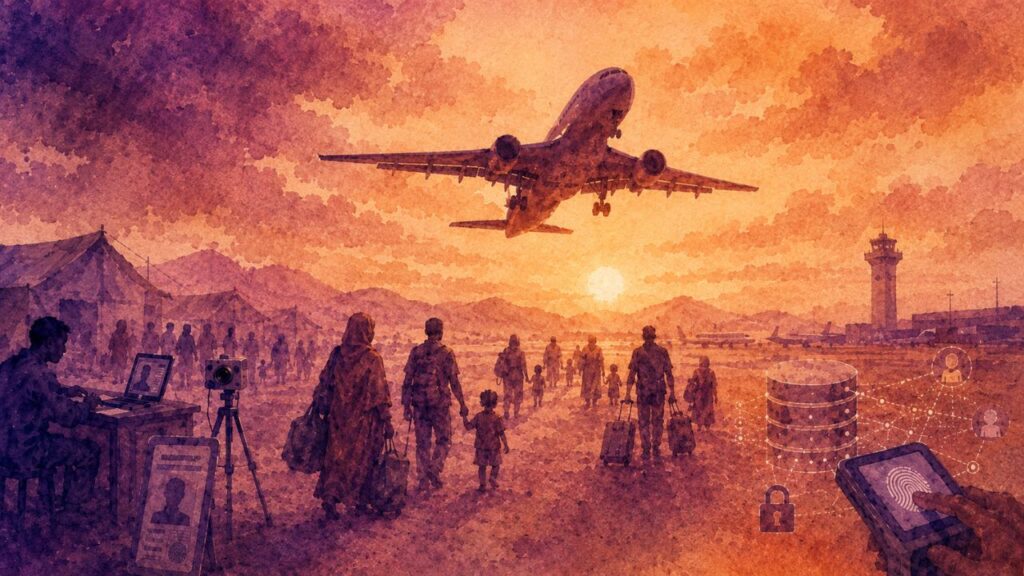
Double registered persons became de facto stateless persons after the UNHCR gave the Kenyan government access to its proGres database in April 2016 at the height of the insecurity and terror attacks that had rocked the country, and as part of the transfer of responsibility for the registration of refugees and asylum seekers and the undertaking of the Refugee Determination Status (RSD). The Live Capture Units (LCUs), first introduced in 2016 at Huduma Centres, capture biometric data and provide inter-connectivity between proGres v4 and Kenya’s national registration system.
Now, when a Kenyan citizen reaches the age of 18 years and applies for an ID as required by law (to fail to do so is a criminal offence), Kenyan authorities capture their fingerprints and check them against the Automated Identification System (AFIS). According to interviewees, fingerprints may also be queried against the proGres records. If their fingerprints are found in refugees’ records, the application may be flagged and subsequently rejected or denied.
UNHCR told The Elephant there was no cross-matching of refugee fingerprints in the proGres database during refugee registration. The government did not respond to questions on whether such biometric data is cross-checked between refugee registration systems and Kenyan national ID systems during ID applications.
AFIS is an automated management system managed by the National Registration Bureau (NRB) to identify people using their fingerprints. The system stores fingerprint records of all registered citizens, refugees, and foreigners. The NRB, which also maintains biographical records, is the Kenyan authority responsible for issuing identification documents to citizens and refugees. Kenya is in the process of upgrading AFIS to the Automated Biometric Identification System (ABIS), which will incorporate fingerprints, facial, and iris recognition.
In processing ID applications, the NRB relies on both AFIS and the Integrated Population Registration System (IPRS), Kenya’s National Master Population Database that consolidates civil registration data, including records of births and deaths, national ID data, passport and immigration records, and refugee registration information.
While the IPRS validates biographical data and civil or legal status, the AFIS confirms fingerprint biometrics and detects duplicate or fraudulent registrations. Together, the two systems form the backbone of identity verification within Kenya’s national registration framework. A former NRB worker who did not want to be named told The Elephant that the “IPRS cannot work alone.” The system must work “together with AFIS, to ensure the data is accurate”.
Under the government’s current digital identity reforms, this framework now operates within what officials describe as the Maisha Integrated Identity System. Officials say the new system is not a replacement but an extension of existing infrastructure. One official from the State Department for Citizen Services added that the government opted to upgrade the system rather than build a new one and recollect data. In this configuration, the IPRS serves as the central reference database underpinning the issuance of the Maisha Number—a unique lifetime personal identifier—and the Maisha Card, which replaces previous generations of national ID cards. Rather than constituting an entirely separate database, the Maisha system layers new credentials and numbering architecture onto the existing IPRS–AFIS infrastructure.
Biometrics are automated systems that identify and verify an identity by analysing unique physical, physiological, or behavioural characteristics. They consist of scanners or cameras that capture either fingerprints, the iris, the voice, or facial features, software that converts digital images to templates, and a biometric database that stores the templates.
To verify the identity of an individual, a new set of fingerprints is taken and matched against the fingerprints in the records held in the database. Biometrics rely on deep and machine learning algorithms – both techniques of artificial intelligence (AI) – to capture and process biometric data to extract features, to create templates or codes, and to compare and match the biometric data against templates stored in a database to verify identity
The UNHCR, the World Food Programme (WFP), and the International Organization for Migration (IOM) rely on data as the cornerstone of their operations and programmes, and this investigation has established that these three agencies of the UN are the driving force behind the use of biometrics in the aid sector.
Considered influential and powerful by some experts and non-governmental organisations like the Engine Room, the three agencies advocate for the use of biometrics and have established the standards governing how humanitarian and migration work should be undertaken. The UNHCR also uses AI, predictive analysis, blockchain technology, and chatbots.
“They set the agenda in terms of prioritisation when it comes to humanitarian innovation and technological development [and] get to designate spaces of technological experimentation with little oversight or accountability,” says Petra Molnar in the “Walls Have Eyes”. Molnar is a lawyer specialising in migration and human rights. This is largely because, experts say, they enjoy privileges and legal immunity and thus cannot be subjected to judicial process in national courts for acts performed in their official capacity.
Project Profile investigates the harms of deploying biometric recognition technology in the aid sector. We look at how the UNHCR deployed biometrics in Kenya in partnership with the private sector, and the agency’s data gathering and sharing practices, including with host and donor governments, and the resulting harm.
The reporter travelled to Garissa and Wajir counties in the marginalised and underdeveloped north-eastern Kenya and interviewed more than 50 double-registered persons, some of whom had had their applications for IDs rejected, while others claimed that the IDs they had obtained years prior had been revoked/deactivated.
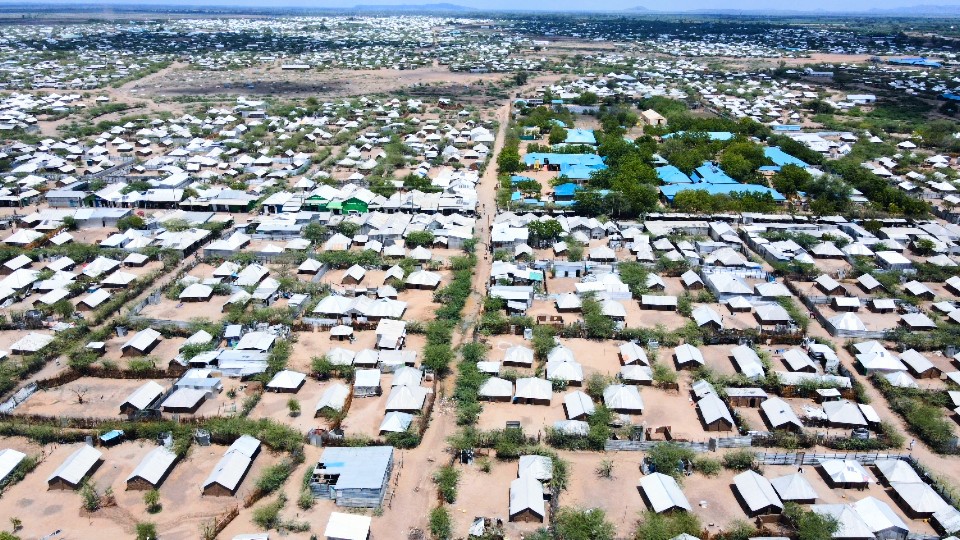
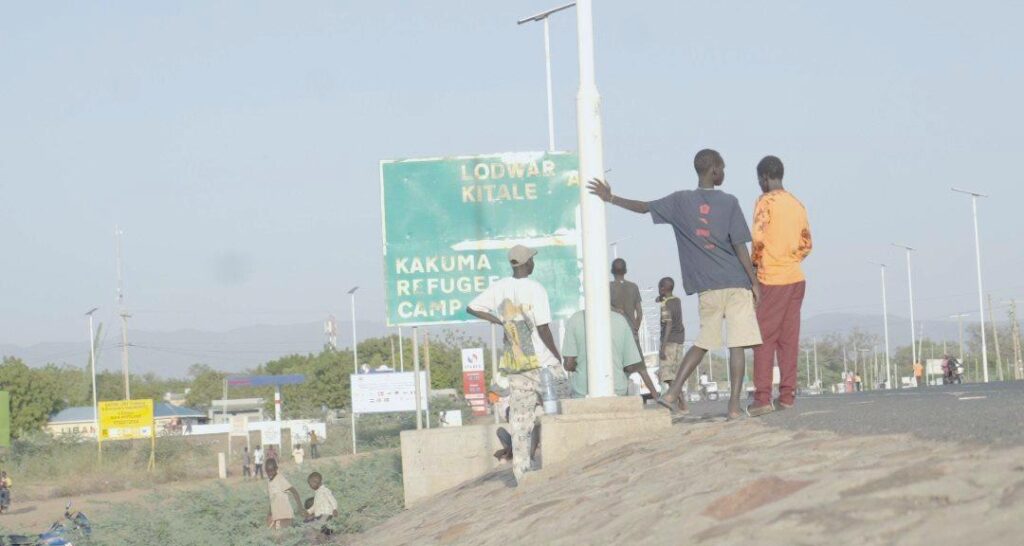
The reporter also travelled to the Dadaab Refugee Complex and to the Kakuma Refugee Camp, which encompasses the Kalobeyei settlement scheme that is designed to integrate refugees into the host community, and also interviewed refugees living in Nairobi (some living without legal documents) who asked not to be named.
Interviews with Kenyans and refugees were mainly conducted through translators.
Interviews with aid workers, present and former government workers, rights defenders, and security experts were also conducted. This report also draws from a review of hundreds of pages of documents, including cable leaks, company presentations, court documents, calls for proposals, financial statements, and audits, among others. The Elephant sought responses from relevant government agencies and humanitarian bodies, including the UNHCR, the WFP, and the IOM, but the government did not respond to repeated requests for comment.