|
Getting your Trinity Audio player ready...
|
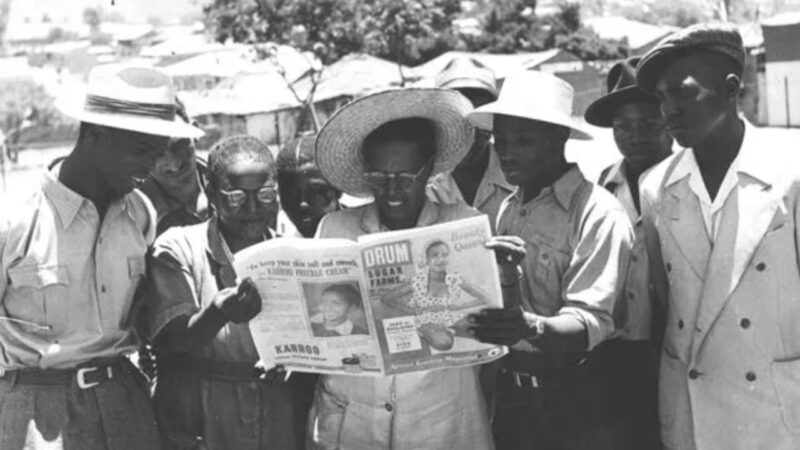
When I worked at the Nation Media Group (NMG), there was a running joke about the immortality of Taifa Leo, the Swahili newspaper printed by the media group that 20-year-old Prince Karim had bought in 1959 when he became the Fourth Aga Khan.
From this £10,000 purchase from British officer and former District Commissioner Charles Hayes, the group would grow to control the largest circulation of newspapers, and television stations and websites across East Africa.
Over time, the Swahili paper did face dwindling audiences as demographic changes produced a more cosmopolitan youth who found reading news in grammatical Swahili a hard sell and was more inclined to consume short video content online.
Despite this handicap, Taifa Leo owes its longevity to the sentimental connection to its founder, His Highness the Aga Khan. For its survival, it also relied on punchy yet witty headlines, humorous angles, and Bi Taifa, a cover model featured on one of its pages that was primarily produced by Taifa Leo photographers. If you hung around these photographers long enough, you would get to see how the allure of appearing on the tabloid would create new customers looking out for their photos.
Then the Fourth Aga Khan died, and Taifa Leo’s business model was finally facing the test of succession, a shift in the media landscape, and an uncertain future under Tanzanian billionaire Rostam Aziz who may share the paper’s Swahili heritage but not the paper’s founding ideals that had inspired its punchy headlines.
Succession
The Fourth Aga Khan’s strategy with Taifa Leo was to create a sustainable, independent, and influential media platform that would inform the public and strengthen the fabric of the newly independent nation.
A younger Aga Khan had borne the cost of the loss-making venture in its first decade and had fought off attempts by the family of Kenya’s first president, Jomo Kenyatta, to gain control of the media house and turn it into an organ of state propaganda.
But as the Aga Khan grew older and gradually relinquished his stake to other shareholders and to a professional board, this legacy of defending the sanctity of media freedom began to wane.
Under the younger Kenyatta, the old Aga Khan’s legacy project gave in to state interference in what could be linked to privileges and immunities granted to the Aga Khan Development Network (AKDN) and its affiliated agencies, which were classified as philanthropic, charitable and non-profit-making.
But even tax exemptions and the economies of scale of running Aga Khan’s conglomerates across East Africa could not save the businesses’ fortunes and their decline in profitability would lead to divestments under his son, Prince Rahim Al-Hussaini, the Fifth Aga Khan, shortly after the patriarch’s death.
Shifting landscapes
I owe a huge part of my journalism career to the late Prince Karim Aga Khan, having worked at Nation Media Group where I learned the trade until I transitioned into private practice a couple of years ago.
But even as I transitioned out, I was still a beneficiary of his benevolence when I enlisted for a course titled “Beyond the Newsroom” that aimed to help journalists move on following the job cuts that had become the norm in the industry.
This programme demonstrated that the Aga Khan understood the dynamics of our evolving media industry and had chosen to help incubate future media start-ups through the Aga Khan University Graduate School of Media and Communications.
I found myself sitting in a lecture hall where two of the trainers now teaching journalists how to cope beyond the newsroom had been the managers who had hired me into the profession.
David Aduda had hired me at the Nation Media Group in 2013, then three years later, Joseph Odindo poached me to join Standard Media Group. But they were now both with the Aga Khan University School of Media, providing sponsored training to the scores of journalists made redundant by the decline of traditional media.
Golden age
I muscled my way into journalism as a fresh graduate from Maseno University, moving to the capital and into a profession that was brimming with opportunity.
In 2013, Kenya was undergoing a rather calm political transition and the world had forgotten about the financial crisis. Anything seemed possible, including printing money.
I first interned at the NMG when it was making KSh13.3 billion in revenues and netting KSh2.5 billion in profits. You can imagine my surprise when, after undergoing intense interviews, psychometric tests, and questions about quantitative easing (the new name of printing money), I was handed a KSh7,000 contract.
But I believed in the calling. I remember visiting the Kenya Television Network as a member of the Debate and Journalism club while in high school, and the Nation Centre when I was a university student, and telling myself that one day I would work where once Whispers had worked; he fascinated me when I was young. I lived in a derelict building somewhere in Kariobangi where the rent was KSh5,000, but I still signed on the dotted line and then convinced my father and my sister to underwrite the risk.
It paid off; I walked into a vibrant newsroom and got to meet and work with Ken Walibora. I sat in that part of the newsroom known as “Migingo”, the desks nearest those of Ugandans Onyango Obbo and Daniel Kalinaki. Back then the newsroom was so vibrant it scouted universities for the best talent to bring into its media lab programme – writers like Jacqueline Kubania, Cornell Ngare, and Waga Odongo.
Decline
I tell anyone who cares to listen that I have witnessed the industry transform. At the time, we interns were not assigned computers, so we would hang around, sitting on the chairs meant for the group’s drivers, waiting for “Mayor of Migingo” John Ngirachu to leave for parliament, or for some other senior journalist to go for an assignment, and pounce on their desks to write those little briefs whose authorship no one knew.
But by the time I left the newsroom, I was surrounded by four empty desks; I could have written an introduction at one and concluded my story at another of those unused workstations where once such and such a colleague used to sit. Where are they now?
I met some of them while attending the Beyond the Newsroom training; right in front of me on the very first day were Aduda and Odindo. They had transitioned themselves and were now passing on their wealth of experience to us.
I had attended Odindo’s leaving party and had felt at the time that this was what media success looked like; the charming speeches celebrated him, and he seemed almost agreeable to what was an inevitable goodbye.
Business convergence, digital reorganizations
Since then journalists have not been given such lavish send-offs. Their departures have instead been announced by internal memo or through the regular cycles of redundancies, business convergence, and all manner of digital reorganizations. Exits have become a source of industry anxiety; the despair, the uncertainty and the anger at having loved a dog’s life and being rejected via a cursory letter, a phone call, a disabled email address, or a cancelled entry pass.
It turns out Odindo took it just as hard as the rest of us when we left the newsroom. He made a short return to the industry at the Standard before joining the Aga Khan Media School as a trainer. Through it all, the lesson for the veteran had been to remember who he really was – a good editor who did his work diligently, managing other editors and overseeing a newsroom over the years – and therein lay his strength.
And as he sought himself in the shock therapy that is retirement, digging through piles of old documents, the words of a distant headmaster on his report card saying, “Joseph is capable of much more” lent him the courage to try new things.
But tell that to a pack of depressed former journalists thrown into the tailspin of sudden joblessness – the struggle to pay rent and school fees, learning to take rejection from job applications, being worried sick about lacking insurance and, above all, losing the power and privileges that come with working for a huge news organization. Journalism is a strange profession, built around the façade of the glamorous television anchors, powerful owners, backed by human rights defenders and international patronage. But once you step off, the entire network freezes you out.
But even in the midst of this despair, a group of journalists attending the training found solace in each other’s company, sharing their experiences, their unvoiced emotions. As we shared our stories and learned the limitations of our mindsets to our present careers, the opportunities available to our skill sets and, really thinking about our industry, it became apparent why the Aga Khan’s initiative to help transition the industry was so important.
Structured monopoly
Prince Karim Aga Khan, who grew up in Nairobi and founded the Daily Nation in the 1960s, has for decades underwritten media freedom and its success in Kenya, using his financial muscle to shoulder the capital-intensive business and leveraging its power to support his massive business ventures in hospitality, energy, agriculture, insurance, and finance.
The newspaper model had, over the years, become archaic, relying on central printing and physical distribution through an expensive logistical network. This costly structure acted as an entry barrier, making the industry a near monopoly for those who could afford to own it.
The internet completely disrupted this distribution model, replacing the newspaper with a mobile telephone and a computer screen that virtually made anyone with an internet connection a potential journalist. This happened at a time when America was printing money through quantitative easing, which was funnelled to tech companies to finance experiments on customer targeting. The social media model that allowed companies to study the individual and influence their behaviour changed how advertising was done and the role of the media as gatekeeper of audiences. Social media ate legacy media’s lunch, and as advertising revenues dropped, the cost of maintaining media operations became increasingly high. Media houses reacted by cutting costs and trimming staff numbers.
The Nation Group’s profits have been in sharp decline, falling from KSh2.5 billion when I joined the company in 2013 to a loss of KSh308.6 million in 2025. In the same period, the group’s staff nearly halved – from 1,980 to 1,100 – due to the annual ritual of rationalization that has only served to heighten anxiety in the newsroom.
“We were too busy doing the traditional thing. We knew about the disruptions from technology but were engrossed in the product to make money for the employer that we ignored digital. We were so engrossed in competition for the little space doing what we had done for so long,” Odindo told us during the training.
Now digital is viewed as the magic bullet even though newsrooms know that the same technology is spelling their end.
“Notwithstanding the operating performance for the period, the gains recorded in digital and broadcasting underscore the Group’s sustained pivot toward a scalable digital business and optimization of the growth headroom in broadcasting. Therefore, the Group continues to invest in unified technology to enhance customer experience across our platforms, diversify audience demographics and accelerate monetization of our expansive digital assets,” the Nation’s board of directors said in its 2025 results outlook.
Business interests
It is not from the benevolence of the butcher, the brewer, or the baker that we expect our dinner, but from their regard to their own interest. As the media business shrank, so did the interest of its benevolent founder.
Even as the newspaper model began to collapse, the Aga Khan’s interests shifted elsewhere – to his multiple businesses that include the Aga Khan Hospital, the TPS Serena hotel chain, Jubilee Insurers and Diamond Trust Bank, IPSK and Farmers Choice, and power stations. He sought to secure tax concessions for them at the expense of media independence.
Inevitably, politicians took advantage of the dire straits in which the media found itself, using advertising revenues to leverage friendly coverage. The government weaponized media revenues, using its power as the largest advertiser to accumulate invoices that crippled the newsrooms and then withholding advertising altogether before negotiating the cost of advertising downwards by having the leading newspapers carry the government’s MyGov pamphlet as an insert.
As the handshake extended beyond the elbow, so did the pressure to push out dissenting journalists like Dennis Galava and Godfrey Mwampembwa (Gaddo), which gave the Aga Khan a bad press for what was seen as giving in to the demands of a government averse to criticism.
Like the Children of Gebelawi, we wondered what the Aga Khan thought as he watched the empire that he had built over decades go into decline.
Last man standing
After President Daniel Moi left office, fortunes at the Standard were not good either. Between 2024 and 2015, the firm only made profits twice in a decade as the losses widened to over a billion in the last years (KSh1.1 billion in 2024). In newsrooms, the Standard Group’s losses were glossed over while the company struggled to pay correspondents – contract writers who are paid by the length of each published article. The silence continued even as the late payment of salaries finally hit permanent staff and the industry slid slowly into the practice of not paying journalists on time and sometimes not at all.
The Standard newspaper blamed its troubles on the state’s non-payment of outstanding bills despite the fact that its owner, Gideon Moi, was part of President Uhuru Kenyatta’s inner circle in Azimio.
Despite the dip in fortunes, the paper has maintained its relevance through bold headlines critical of President William Ruto’s regime to recover falling circulation. The newspaper gives Gideon Moi leverage in shaping public opinion. He is reported to have turned down an offer from Ruto’s allies who had been seeking to acquire a stake in the struggling Standard Group.
According to Africa Intelligence, President Ruto then turned his sights on NMG, having bagged The Star to start building a media empire through which to control the narrative ahead of the 2027 presidential election.
With the Aga Khan Fund for Economic Development agreeing to sell its entire shareholding in NPRT Holdings Africa Limited to Taarifa Limited, which is owned by Tanzanian Business Magnate Rostam Aziz, many see this as the takeover of East Africa’s most powerful media house by politically linked patronage. It is expected that Aziz’s business and political interests will either rapidly reshape the editorial line or cull the paper’s ranks much in the manner that Jeff Bezos did at the Washington Post.
Nation Media Group has already reorganized its board of directors and shaken the editorial team, pushing out senior editors to subsidiaries across the region and replacing them with acting managers. With rumours of incoming fresh blood to replace some of the senior team members, those in acting roles will be under pressure to be more pliable in fronting the state’s narratives.
Owning the public square
Traditionally, Kenyan newsrooms have suffered rifts among editors as elections draw closer. But when the newsrooms were full, you could mediate interests because no one could capture all the editors, and both sides of the story got to be told. But as the job cuts did away with the fat flesh and came close to the bone, the newsroom grew smaller and became easier and cheaper to capture.
The editors who should have seen this coming were busy fighting each other in a battle for survival. Editors conspired to push each other out in a game of musical chairs that made it a slippery climb to the top deck.
With fewer and fewer journalists to deal with, the political class was better able to manage the media. Politicians also saw an opportunity to turn prominent media voices that used to keep them in check into tools for propaganda. They are now hiring scores of former journalists to sing their praises as they further weaken the fourth estate.
I believe that journalists still have a chance to save the profession if we can see our demise and organize quickly to build alternatives. The industry needs a large enough shared space that can safeguard media independence, underwrite the security of journalists, and leverage having several journalists offering a range of public opinion that is not controlled by large corporates or politicians.
In the end, storytelling is immortal notwithstanding the channels and models through which it is delivered through time.