|
Getting your Trinity Audio player ready...
|
A Sesotho proverb says, “Those who eat people, cry; those who eat a crocodile, laugh.” This proverb shows that reactions and alignments shift entirely based on whose interests are affected (we grieve when our friends are harmed, but rejoice when an adversary is neutralized).
Conversely, Lord Palmerston, a 19th-century Anglo-Irish nobleman and statesman who was UK prime minister, is reported to have said, “We have no eternal allies, and we have no perpetual enemies. Our interests are eternal and perpetual, and those interests it is our duty to follow.”
Incoming US Ambassador to Kenya, Henry Wooster, who was unanimously confirmed by the US Senate at the end of September, less than a year ahead of what promises to be an unpredictable and highly volatile electoral contest, claims the US has no skin in the Kenyan game other than support for a peaceful and stable process.
Wooster would say that, of course; he is a career diplomat. He is coming to Nairobi to replace former ambassador Meg Whitman, a corporate executive appointed through political connections and seen by many observers as unusually close to President William Ruto for a diplomat. Kenyans will soon find out whether the new man picks up the old script, rewrites his own, or practices what he preached to the Senate confirmation committee.
Nevertheless, it’s fair to argue that over the last six decades Kenya has hosted its fair share of what some might call “interfering US diplomats”. As such, it would not be unusual for Wooster, who previously served as the chargé d’affaires at the US Embassy in Port-au-Prince, Haiti, managing operations amid severe security challenges, to change his tune once he hits the ground between mid-November and early December 2026.
As a former US Army Reserve and Special Forces officer who also worked as a foreign policy adviser for the US Joint Special Operations Command, he’s likely familiar with last-minute changes. From what I understand, military culture broadly relies on rapidly issuing adjustments to an existing plan. I suppose observers like myself will have to wait and see if the state hands-off policy survives.
At this juncture, I feel it may be instructive to look back at a few instances where the US was not as laissez-faire in Kenyan politics as they might wish us to believe.
As unpalatable as foreign influence on our politics is to many progressive Kenyans, the reality is that, as things stand, it is almost unavoidable.
History shows that international interest in Kenyan elections typically intensifies in the years leading up to the polling date, and foreign envoys actively seek early ties with emerging leaders.
Just look at how Western diplomats have been sniffing around Nairobi Senator Edwin Sifuna, who has emerged as a potentially strong contender in the 2027 presidential election.
In August this year, Sifuna held closed-door meetings with several Western diplomats and high commissioners, chief among them the British High Commissioner, the outgoing French ambassador, the EU ambassador, and the German ambassador.
In fact, the only major Western power whose ambassador hasn’t met with Sifuna is the United States. This is only because, as we have seen, President Trump’s pick as Washington’s man in Nairobi has yet to present his credentials officially, signalling his assumption of office.
This is not to say that the US has not got its beady eye on Sifuna. In January, he met with Susan M. Burns, Chargé d’affaires of the US Embassy in Nairobi, as well as US Deputy Secretary of State Christopher Landau, with whom he discussed expanding American business investments and creating jobs for Kenyan youth. Later in March, Sifuna met with Deputy Chief of Mission Marc Dillard at the US embassy in Nairobi.
As much as the meetings with other Western diplomats show their curiosity about Sifuna, perhaps the most influential meeting, if it happens, will be with Ambassador-designate Wooster. Depending on how it goes, and what Burns, Landau, and Dillard collectively make of Sifuna and his chances, such a meeting could signal that the West has found another person they could “do business with”, to coin a phrase.
Meanwhile, Sifuna is not alone in attracting the USA’s attention. All current Kenyan presidential hopefuls, including President Ruto, have either already visited the United States or are planning trips there. As reported in the Sunday Nation’s Weekly Review section recently, they ostensibly aim to tap into diaspora financial support, lobby foreign policymakers, and “elevate their international standing ahead of elections”.
This last part usually means that their itineraries include several tiers of official meetings. Access varies by current political standing, diplomatic protocol, and the efforts of their hired lobbyists.
This is usually where the US spooks and their associates join the chat. Depending on their influence, candidates often secure meetings with senior officials at the US State Department or the National Security Council (NSC). For instance, during past election cycles, top contenders like Raila Odinga and William Ruto (before he became president) held closed-door briefings with US diplomats and security agencies to discuss the stability and fairness of Kenya’s upcoming elections.
Members of the US intelligence community are often involved in these interactions, though they take place behind closed doors and follow strict operational boundaries.
Of course, when a major presidential candidate visits Washington, they rarely meet formally and publicly with the Director of National Intelligence or the CIA. Instead, intelligence community personnel participate indirectly through “Track II” diplomacy.
According to the Centre for International Relations and International Security (CIRIS), while “Track I” diplomacy involves official, public meetings between sitting presidents, ambassadors, and diplomats, Track II utilizes non-governmental intermediaries to build relationships, share sensitive information, and gauge political intentions without the pressure of official state protocol.
When a Kenyan candidate speaks at a Washington organization like the Centre for Strategic and International Studies (CSIS) or the Council on Foreign Relations (CFR), the public event is just the surface. The real Track II work happens in the private, off-the-record roundtables before or after the speech.
These gatherings draw retired diplomats, former intelligence directors, academic researchers, and current government analysts or intelligence officers who sit in as “observers”.
The US government engages with these candidates because Kenya is Washington’s key strategic, counter-terrorism, and economic partner in East Africa. By meeting with both the ruling government and potential future leaders, US officials ensure they maintain strong diplomatic relationships and stable continuity, no matter who wins the ballot.
Those with an eye for history will therefore be aware that this involvement of spooks is the main way the US has unsentimentally shifted its backing for Kenyan leaders over the last 60 or so years, based on its needs at the time.
Since Kenya’s independence, for instance, observers would have noticed US support shift from their first “project”, to use a word from the Kenyan political lexicon, Tom Mboya, to the country’s second president, Daniel arap Moi.
The US shift in support from Mboya to Moi was a pragmatic transition driven by the fact of Mboya’s declining political leverage and his eventual assassination in 1969.
For years, Mboya was Kenya’s primary US ally, famously coordinating the “Kennedy Airlifts” to educate Kenyans in America. However, his value to Washington began to wane in the late 1960s for several reasons.
For a start, Mboya’s primary American backers were the brothers John F. Kennedy and Robert F. Kennedy. Their assassinations in 1963 and 1968, respectively, left him without his most powerful international patrons.
Meanwhile, by 1967, Mboya was increasingly isolated within the Kenyan cabinet. The so-called Kiambu Mafia around President Jomo Kenyatta mistrusted him and viewed his rapid political ascent as a threat to their succession plans.
Mboya’s assassination in Nairobi on 5 July 1969 removed the US’s “obvious successor” to Kenyatta from the board entirely, forcing a search for a new stable, pro-Western partner.
Enter Daniel Toroitich arap Moi.
As Mboya’s influence faded, US intelligence and diplomatic circles pivoted towards Moi, who had been appointed Vice President in 1967. Moi was seen as a “moderating factor” who could help Kenyatta suppress the left-leaning wing of the ruling party (KANU), specifically the faction led by the Soviet-aligned Jaramogi Oginga Odinga.
Unlike Mboya, a dynamic and potentially disruptive “visionary”, Western powers viewed Moi as a safe, predictable choice who would maintain the status quo and keep Kenya firmly in the capitalist camp. When Jomo Kenyatta died in 1978, Western powers unanimously backed Moi to take over, marking the final consolidation of this shift.
Moi proved his reliability to Western interests early on. For example, at the height of the Cold War, he deeply integrated Kenya into the American security network by signing a 1980 military accord. This agreement authorized the US Rapid Deployment Joint Task Force to use and expand Kenyan air and naval installations, most notably granting the US Navy strategic maritime access to the port of Mombasa to monitor the Indian Ocean and Persian Gulf.
At the US’s urging, Moi also helped lobby other African nations to boycott the 1980 Moscow Olympics.
Moi leveraged Kenya’s pro-Western foreign policy to serve as a buffer against neighbouring, Soviet-aligned socialist states. During his state visits to Washington, he detailed the regional threats posed by Eastern Bloc-backed governments in Ethiopia and Tanzania.
A decade later, things had changed, and relations, at least through a US/Western lens, no longer felt so cosy or necessary.
Whether support for the Kenyan opposition in the early 1990s constituted a “regime change mission” remains a subject of significant debate among historians and political analysts.
Indeed, while the US successfully pressured President Daniel Arap Moi to end one-party rule, its actions were often characterized by strategic ambiguity rather than a singular goal of removing him from power.
This modus operandi echoes revelations by former agent-turned-whistleblower Philip Agee in his groundbreaking 1975 exposé, Inside the Company: CIA Diary.
In subsequent interviews, including this one highlighted by Mint Press News on Facebook, Agee asserted that the CIA “didn’t give a hoot about democracy. I mean, it was fine if a government was elected and would cooperate with us, but if it didn’t, then democracy didn’t mean a thing to us, and I don’t think it means a thing today. The true goal of the United States government is control (…) The principle of government by the people, for the people, by the people, that is just, that’s just silly”.
With the Soviet Union no longer a threat, the US abandoned what one might call its “friendly dictator” policy, viewing Moi as an outdated liability to the new global goal of exporting Western-style market economies and democracy. Through the bulldozer diplomacy of journalist-turned-Ambassador Smith Hempstone, the US actively sought to replace Moi with an even more Western-aligned, modern democratic administration. Until this point, Kenya and Moi had been useful allies in the US anti-communist containment policy and had received substantial aid.
Through this lens, events like the fall of the Soviets led the US to shift its agenda, claiming to back democracy and anti-corruption, which made Moi’s government hostile to its old friends and protectors. This ultimately led to the 1991 Aid suspension, Western pressure for multipartyism, and increased direct support for various aspects of civil society taking on a Star-Spangled Banner hue.
At a Paris meeting in November 1991, the US led an international coalition of donors, the Consultative Group, to suspend US$350 million in new aid to Kenya until it implemented political and economic reforms.
At the same time, Washington used its hegemonic position to force Moi into repealing Section 2(A) of the constitution in December 1991, which had previously made Kenya a de jure one-party state.
While the government froze aid, the US continued to fund private humanitarian agencies and NGOs pushing for electoral reform and human rights. However, the US and its Western allies did not speak with one voice. Some in the Western axis, such as the British, argued for reforming Kenya’s system rather than replacing it. They feared that a sudden collapse of the Moi regime would lead to regional chaos.
Declassified CIA reports from the era reveal deep anxiety that if Moi were overthrown, he might be replaced by a “radical” or socialist military regime that would cancel critical US military access agreements at Mombasa and in Manda Bay.
Nevertheless, as calls for political pluralism grew in Kenya, one of the most outspoken proponents of change was Ambassador Hempstone. At the time, he came under intense fire from the Kenyan government and pro-establishment figures who wondered why Hempstone, a diplomat, was openly agitating against the government of the day, the same government, incidentally, to which he had presented his credentials.
Some argue that the US, particularly through Hempstone’s “bulldozer diplomacy”, actively sought to replace Moi with a more Western-aligned, democratic administration. Others contend that the US cared more about reform than replacement, fearing that a sudden collapse of the Moi regime would lead to regional chaos.
In the end, the US State Department often took a more cautious tone than Ambassador Hempstone, saying it did not wish to “prescribe the form of government” but simply favoured pluralism, allowing it to continue working with Moi if he survived the transition, which history shows he did.
The Moi and Hempstone show echoed the drama during and after the term of William Attwood, the first US Ambassador to Kenya, from 2 March 1964 to 1 May 1966.
This tour of duty witnessed the first significant diplomatic rupture between the US and Kenya, culminating in the 1967 publication of Attwood’s book The Reds and the Blacks: A Personal Adventure.
While serving in Kenya, Attwood’s deep involvement in local politics led to accusations of interference that resembled intelligence operations. In his book, he revealed detailed knowledge of internal power struggles, including an alleged plot by Vice-President Oginga Odinga to overthrow President Jomo Kenyatta. The Kenyan government felt his book read more like an intelligence report than a diplomatic memoir. His exposure of private political dealings and “Cold War tactics” led Kenyatta to ban the book and banish Attwood from Kenya, viewing him as a compromised figure who had misused his position to gather sensitive state secrets.
Like Hempstone decades later, Attwood was an “editor-diplomat” who used his journalistic skills to gather information and his diplomatic cover to conduct high-stakes, secret missions for the US government.
Although the book, published after his term as ambassador, caused temporary diplomatic fallout, US-Kenya ties recovered relatively quickly because of shared Cold War interests and strategic realignments within the Kenyan government.
In the years after Moi left office in 2002, the US shifted its attention to Mwai Kibaki.
When Kibaki’s National Rainbow Coalition (NARC) won the historic December 2002 election, ending 24 years of Daniel arap Moi’s authoritarian rule, the US celebrated it as a triumph for African democracy. However, because the US was in the middle of its post-9/11 “War on Terror”, Washington’s immediate focus quickly shifted to security. This led to what the Daily Nation described as “a highly enthusiastic but transactional partnership, heavily defined by a ‘democracy vs counter-terrorism’ push-and-pull”.
Towards the end of the Kibaki administration, the US opposed the UhuRuto ticket of then-International Criminal Court (ICC) suspects Uhuru Kenyatta and William Ruto, while appearing to be pro-Raila Odinga. Who can forget the famous “choices have consequences” warning issued by US Assistant Secretary of State Johnnie Carson ahead of Kenya’s March 2013 general election?
Nevertheless, being somewhat pragmatic in these matters, the US supported President Uhuru before eventually taking his successor, William Ruto, into its bosom, even letting him sit in then-US President Joe Biden’s chair at the Resolute Desk in the Oval Office during his May 24, 2024, state visit. This widely publicized event generated significant public attention and debate in Kenya.
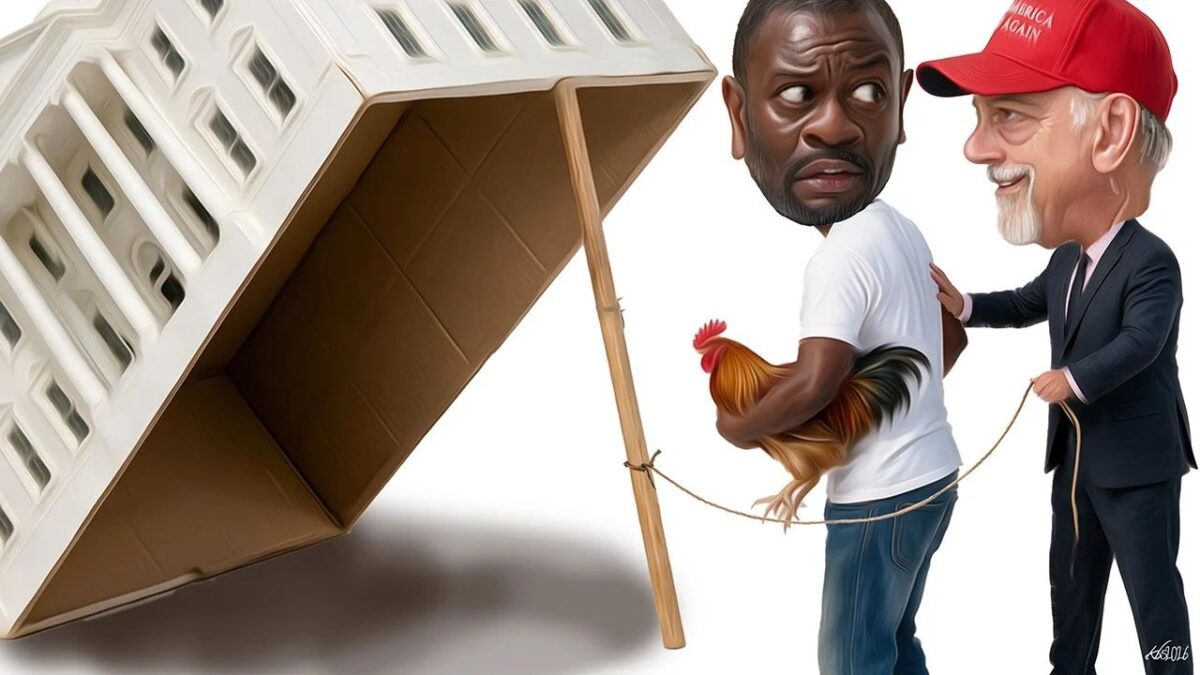
The trouble for Sifuna and those of his supporters who are allergic to foreign interference is that if the US were to shift its geopolitical alignment in Kenya and throw its weight behind Nairobi Senator Edwin Sifuna rather than the incumbent, President Ruto, the senator would probably discover that American political support comes with rather more fine print than a campaign slogan.
Sifuna has built considerable political momentum ahead of the 2027 election around a populist economic message, opposition to punitive taxation, and a promise to ease the financial burden on ordinary Kenyans. His appeal largely stems from widespread economic discontent, particularly among younger voters. Yet to win Washington’s confidence as an alternative to Ruto, he would need to make uncomfortable adjustments to the very positions that have helped build his political brand.
The first would concern the economy. Sifuna’s political messaging has emphasized economic relief, reducing government borrowing and rolling back what he regards as excessive taxation under the Kenya Kwanza administration. Such a platform resonates with a population already struggling with the cost of living.
Washington, however, has a different concern: fiscal stability. The US is deeply invested in the international financial architecture represented by institutions such as the IMF and the World Bank. Kenya’s substantial debt burden and fiscal pressures mean that any government taking office in 2027 would have limited room for fiscal experimentation. A Sifuna administration seeking American confidence would therefore have to temper its anti-tax and anti-austerity rhetoric and accept continued fiscal consolidation, including revenue-raising measures and potentially unpopular reforms demanded by international lenders.
In other words, the candidate promising Kenyans tax relief could find himself negotiating the realities of a national balance sheet that has little sympathy for campaign promises.
The second challenge would be social policy. Sifuna has cultivated a reputation as a progressive and outspoken politician, particularly among urban voters and the younger generation. His political persona is closely associated with constitutionalism, individual freedoms, and a willingness to challenge established social and political orthodoxies. American support would complicate that positioning.
The US has traditionally placed considerable emphasis on human rights and LGBTQ+ rights in its foreign policy. Kenya, meanwhile, remains a deeply socially conservative society where religious and cultural values strongly influence electoral politics.
If, as some hope, the US eventually steps back from the Trumpian way of doing politics and diplomacy and returns to how it used to look at the world, Sifuna would find himself having to navigate an increasingly narrow political corridor: maintaining diplomatic compatibility with Washington while avoiding positions that could alienate the conservative majority at home.
The third, and perhaps more consequential, compromise would involve foreign policy.
Ruto has positioned Kenya firmly within the Western strategic orbit. Under his administration, Kenya became a Major Non-NATO Ally of the United States and became deeply involved in the US-backed international security mission in Haiti.
If Washington viewed Sifuna as a preferable successor, it would presumably want assurances that a change in president would not mean a shift in geopolitical direction. Sifuna would therefore have to demonstrate that his administration would preserve Kenya’s existing strategic and security commitments, including those involving the US.
That could prove politically awkward. Foreign deployments such as the Haiti mission have already drawn criticism from sections of Kenya’s opposition, which argue that the country should first direct its security resources toward problems closer to home.
Then there is China.
Kenya has long sought to balance relationships with the United States, China, and other global powers, particularly on infrastructure, trade, and development financing. A Sifuna administration might initially seek greater strategic flexibility, exploring partnerships wherever it believes they offer Kenya the best economic return.
Washington, however, increasingly views its relationship with Africa through the wider prism of competition with China and, to a lesser extent, Russia. American support for a new Kenyan administration would therefore almost certainly come with expectations that Nairobi remain firmly within the Western strategic orbit.
Sifuna could consequently find his freedom to pursue major Chinese infrastructure or investment deals constrained by geopolitical considerations. American capital, technology and investment would likely receive greater priority, while large-scale agreements with Beijing could attract considerably more scrutiny.
The greatest compromise, however, could be political rather than economic or diplomatic.
Sifuna’s appeal has been built partly on his image as a combative anti-establishment politician willing to challenge powerful interests and confront the machinery of government. That persona is useful on the campaign trail. It is considerably less convenient inside State House.
A politician backed by a major foreign power would be expected to provide predictability, institutional stability, and continuity. Washington would want reassurance that a change of government would not descend into political retribution, institutional upheaval, or an assault on established economic interests.
Sifuna would therefore have to make the uncomfortable transition from political firebrand to system player. The rhetoric of disruption would have to give way to the language of diplomatic reassurance. Promises to dismantle entrenched interests might have to be softened. Some political enemies might have to remain precisely where they are. Established business interests, state institutions, and elements of the political elite might have to be accommodated rather than confronted.
This presents a fundamental contradiction.
The very qualities that make Sifuna an attractive alternative to the establishment are the qualities he might have to moderate to become acceptable to the Washington establishment.
In such circumstances, American support would therefore be less a blank cheque than a political mortgage. Sifuna might gain a powerful international ally, but the price would be ideological, economic, and diplomatic flexibility.
The question for Kenyan voters would then become rather simple: would they be voting for Sifuna the insurgent, or Sifuna the statesman?
Because once a politician enters the international game, the rules change. The man who campaigns by promising to disrupt the system eventually discovers that the system has a seat reserved for him. It may even come with a very comfortable chair.