|
Getting your Trinity Audio player ready...
|
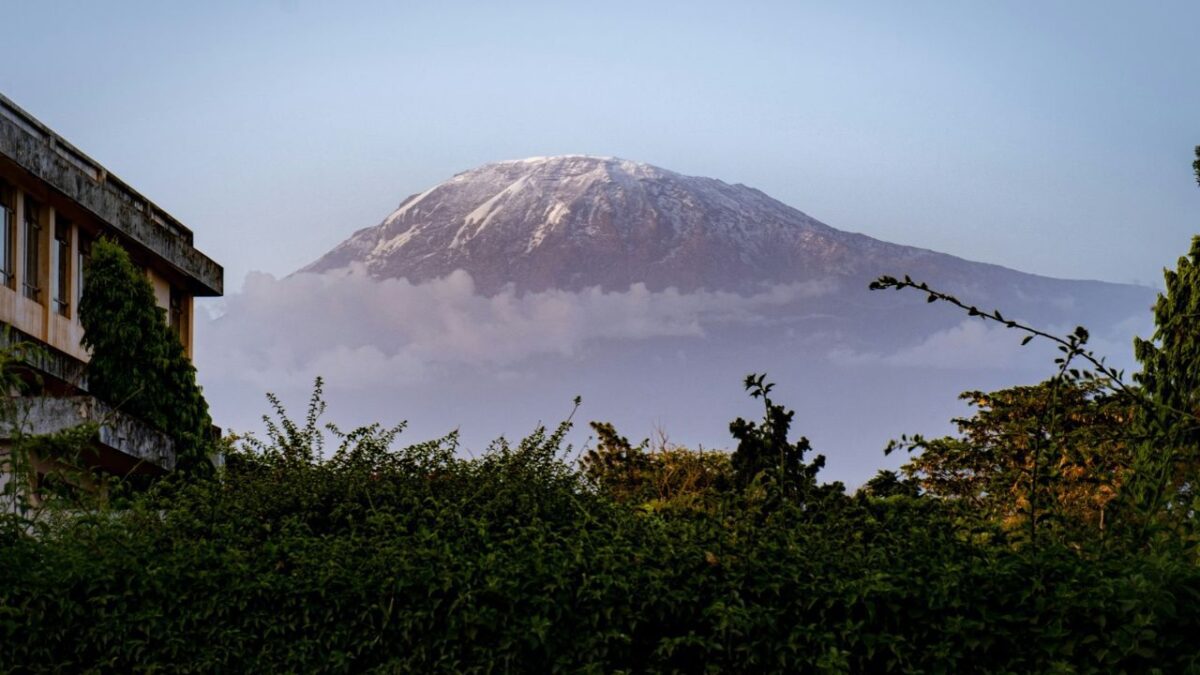
Cheng Huaijin stood before the enormous floor-to-ceiling window, swirling the South African red wine in her glass and admiring Mount Kilimanjaro in the distance under the clear sky. When she had moved into this office two years ago, she heard that seeing the snowcap of the mountain was a sign of good luck. Over these two years, the number of times she had received this “good luck” increased day by day, which made her firmly believe that she and Moshi city at the foot of the mountain were becoming luckier and luckier.
The city of Moshi, historically, was a trading center for the nearby farmers, herders, and merchants. Later, it became the gateway for foreign conquerors and climbers in the name of conquest to enter the Kilimanjaro region. Its long-standing agriculture, modestly successful light industry, and tourism had earned it a reputation for prosperity and tranquility in Tanzania. On the world stage, it remained an obscure city, until 2045, five years after enhanced robots spread across the globe. It was then that East Africa’s first Human Art Protection Reserve was established in Moshi.
In an instant, this small city slumbering in the cradle of the highest mountain on the equator became a byword for fashion, modernity, and human dignity. Countless human tourists flocked here, just to leave a trace of their existence as humans in a dramatically altered world.
Cheng Huaijin’s office was located in the tallest building in downtown Moshi, where the Reserve Committee had its headquarters. She served as its Resource Coordination Director and had personally witnessed the small city below her transform from its drab appearance two years ago into today’s colorful art center.
When describing how Moshi had changed, she would, like many Chinese merchants of the past, make familiar comparisons: “Two years ago, Moshi couldn’t even compare with a county town in China—at best it was just a slightly larger town,” and then turn to enthusiastic praise, “Now this place is the Jingdezhen of East Africa. We’re following the Jingdezhen model, and we’re going to do it even better.”
Jingdezhen, of course, was China’s first Human Art Protection Reserve. Officials in that city drafted and signed the world’s first universal standards regulating the autonomy of human artistic creation and the limits of technological assistance.
Some critics believed this regulatory document came too late, as the enhanced robots had already penetrated every aspect of artistic creation; but many others said the Jingdezhen proclamations could only have been born in an era where artificial intelligence and its application in the enhanced robots were fully widespread. In other words, it happened because people panicked. Silicon-based creations had become stronger, smarter, and longer-lived than humans. If they also monopolized art, that jealously guarded human expression, what would then make a human a human?
When humans panic, they turn to nostalgia. European countries had expressed this tendency by not only initiating human art protection projects on their own territories, but also singling out proposals from several developing countries and supporting them in establishing Human Art Protection Reserves in those lands—perhaps stemming from some post-industrial fantasy that in these less developed places, the human artistic spirit was less tainted. Cheng Huaijin was a supporter of this argument. She always told her compatriots and audiences from other parts of the world in interviews, “Africans are so good at singing and dancing, and their appreciation of art is undoubtedly superb. Everyone must come and see it in person.”
As a manager of an art protection reserve, Cheng Huaijin needed to understand not art, but marketing. This was also why her resume stood out among numerous candidates. She had been a core member of the overseas strategic planning department of a renowned robotics company, bringing large numbers of medical robots into the East African market. Therefore, her new employers expected that she would sell artworks the way she sold robots, harnessing the commercial success of artificial intelligence for the cause of the Human Art Protection Reserve.
She did not disappoint them. After taking the role, she established product standards, introduced an agent system, and invested heavily in all-platform marketing, quickly turning the Reserve from deficit to profitability.
Yet her interventions could not be described merely as good business sense. In the art trade, local young people got jobs, and with jobs, they also got income and, she told investors, dignity. Everything was just like the beautiful old world before enhanced robots were born.
*
“Hodi! (May I come in?)”—there was a knock at the door. It was her assistant Badru, who walked in.
In their attire, Badru and his boss were complete opposites. He wore a chic gray suit, a luxury watch, and a stern expression. Cheng Huaijin, on the other hand, had deliberately gone native, wearing a dress tailored from local kitenge fabric, with colorful Maasai bead bracelets covering both wrists. “Africa” and “chill”, she often claimed, were her new fashion labels, and she had to wear them well.
She sat down in her swivel chair and greeted him in Swahili: “Habari (How are things?), Badru?”
“Salama (I’m good), boss,” Badru replied.
“How is Aisha’s mother doing?” she asked again. She had spent two years learning the workplace etiquette of Tanzania: before discussing business, one must spend three minutes asking about colleagues’ well-being, preferably in Swahili. This set her apart from other wazungu (foreigners) who struggled to integrate into the local scene.
Badru looked relieved as he answered: “The surgery was very successful. The lead surgeon was a Qiyuan ninth-generation medical robot, and the tumor was removed completely. After a few more days of observation, she can go home.”
“Mm, the ninth-generation product is indeed excellent… You see, the mountain really does bring good luck.” Cheng Huaijin swiveled her chair and gestured toward the snowy mountain.
Badru nodded in silence.
Cheng Huaijin turned back to face Badru, waved her left hand, and a holographic control screen appeared in midair. She switched into work mode and said to Badru: “I’ve considered your proposal, a very good proposal. For artists like Aisha from poor families, the rent exemption can be extended. I believe the board will definitely support it. We’ll start with five pilot spots. As for increasing exposure opportunities… we can do something officially, but the Reserve’s exposure mainly depends on the promotional efforts of various agencies in overseas markets. You know, we’re in a market economy.” She shrugged, indicating there was nothing she could do.
Badru quickly said: “I’m already very happy that you agreed to extend the rent exemption. I’m doing this not just for Aisha, but for many more young people in the Reserve…”
Before Badru could finish, Cheng Huaijin waved her hand, cutting him off: “I know, you care about your people. We just have to run this place well. That will be our biggest contribution to Moshi. Now, please go through today’s agenda.”
Badru had no choice but to swallow his words and pull up the to-do list on his tablet.
First item: The Kilimanjaro Regional Government complained that the animated film “Mayor Juma and the Robot Bride” violated AI rules and contained fabricated dramatization. However, the oversight committee found nothing illegal in the work and would reject the request to remove it.
While reading the oversight committee’s report, Cheng Huaijin asked Badru: “Have you explained to the governor’s office that a fictional work has no relation to actual people? They can’t demand that a satirical animation follow the requirements for news reporting.”
Badru shrugged: “I think this is just their way of asking for higher land rent.”
“Oh. Then they’ll have to talk to the board.” Cheng Huaijin crossed her legs. In her view, this was just the usual extortion by the regional government that leased the Reserve land. She stared at her freshly manicured nails and said casually: “Iringa offered land at half Moshi’s rent to compete for the site of the third reserve. Last time during the second site selection, many southern towns already did that—only their competitor was Zanzibar. Next time we meet the governor, we can appropriately remind her that if Moshi can’t protect the art’s critical edge, we can also move the second phase of the Reserve to Arusha. If the President hadn’t insisted on it, the first phase of the Reserve would never have come to Moshi.”
“Alright, I’ll schedule another meeting with the governor’s secretary,” Badru noted.
Second item: The award-winning photograph “The Crowned Eagle Hunting” in this year’s photography competition was confirmed to have been taken by a drone. Since it was impossible to rule out disturbance to the eagle by the drone, out of ethical considerations, the oversight committee recommended revoking the award and penalizing the photographer.
Cheng Huaijin nodded, agreeing with the penalty: “Last month, in Amboseli, a drone crashed into a baby elephant. Better safe than sorry.”
But Badru said: “The Amboseli thing was just an accident. That drone was originally used by a ranger to track elephants; mechanical aging caused…”
Cheng Huaijin again waved her hand, cutting him off: “I know, I know. Irresponsible media spun the accident into a story about park rangers not knowing how to operate drones and angering the elephants, leading to boycotts by foreign tourists. The government fired that poor ranger but triggered a nationwide strike. We can’t afford any of these things. Thank God Tanzania has stricter strike laws than Kenya.”
Cheng Huaijin rolled her eyes inwardly, thinking: Years of strikes and unrest—that’s why Kenya didn’t get the first art protection reserve in East Africa after all.
Badru saw through his boss’s terse expression. He had wanted to say that many artists in the Moshi reserve planned to express solidarity with the Amboseli ranger, and perhaps the Reserve could officially do the same. But in the end, he silently crossed this item off and moved to the next one.
Third item: In the Wakali Brothers’ new album “The Party of the Mountain Gods,” three songs failed the multidimensional feature-fusion check and manual review, and the singers were unable to provide valid creative process files to prove their claim of “composed by us, with AI only assisting in arrangement.” They were therefore judged to have violated the Reserve’s AI rules.
This was also the only one of the three matters tagged “urgent”, “major”, and “CEO concern”.
“How do you plan to handle the Wakali Brothers?” Badru asked.
“Is the analysis bulletproof?” Cheng Huaijin asked.
“I’ve checked all the documents myself. The oversight committee’s conclusion is sound,” Badru replied.
“Ah—” Cheng Huaijin let out a long sigh. This was the third AI-violation incident this year, and it involved the Reserve’s biggest stars. This would undoubtedly have a huge impact on the reputation and revenue of the Reserve.
Badru understood her concerns and said: “It was the International Art Protection Reserve Union that reported them. Can we ask the CEO to step in, pay some fines under the table, and hush it up?”
“Hah.” Cheng Huaijin sneered. “Then the people inside who want to discredit us will say we bribed the Union. The Siem Reap Reserve already tripped up in the same way. The Union is like the old United Nations—everyone can say nice things together or accuse each other. But using it to settle disputes? Almost impossible.”
“So we announce the penalty against the Wakali Brothers?” Badru asked. “Same as before?”
According to Moshi Reserve regulations, creators who illegally use technical assistance will have their artist status in the Reserve revoked, lose tax exemptions and rent discounts for the art workshops, and be fined ten times the income from the offending artwork, billed jointly to the artist and the agency.
Cheng Huaijin nodded: “Announce it. I’ll have the CEO issue another zero-tolerance statement for AI violations…” Her fingers drummed on the wooden desk, deep in thought. “About the equity structure of the agency I asked you to investigate, did you find anything?”
Badru pulled up a network chart on his tablet and answered: “The Wakali Brothers’ agent is Yahim Faraj from TNA Company, a Chagga from Moshi. There’s no equity connection with the agencies of artists previously cited for violations. But…” he hesitated, “Aisha mentioned something in passing.”
“What was it?” Cheng Huaijin asked.
“This has nothing to do with Aisha.” Characteristically, Badru sought first to protect his girlfriend. He then said: “She mentioned in passing that many agents like to gather at the Moonlight Café. Even competitors attend together. Do you remember last time we heard about these kinds of gatherings? The organizer of those gatherings was …”
“I remember. Linda Wang, my detestable fellow countrywoman.” Cheng Huaijin’s face showed disgust. “You suspect this is her again?”
Badru nodded.
Cheng Huaijin frowned in irritation. How could she forget that name? Linda Wang, real name Wang Lin, one of the first art agents in Moshi. Out of a sense of national camaraderie, Cheng Huaijin had personally introduced her to several promising young artists from the Reserve.
And then? How did Wang Lin repay her? She had a sharp eye for talent and a brilliant marketing mind, so she made those young people famous one by one. Then she herself began evading tax, smuggling, and involving those promising young people in AI image-alteration scandals. After the Reserve discovered this, it immediately revoked her agent qualification. Cheng Huaijin had even arranged for immigration officials to keep watch on her residence and have her promptly deported when possible, thereby deflecting her colleagues’ suspicion away from herself.
Who would have thought that not long after, Cheng heard that this person had somehow found a way back here. Unable to appear openly, she had partnered with people from many different countries—Pakistanis and Lebanese mainly—to establish several entertainment investment companies, indirectly holding shares in the Reserve’s agencies. Cheng Huaijin had long suspected that most of the Reserve’s misfortunes were connected to Wang Lin.
“This café needs to be investigated,” Cheng Huaijin said grimly.
But Badru hesitated: “This… the owner of the Moonlight Café is Mama Kamaria…”
“I don’t care who its owner is… wait, Mama Kamaria?” Cheng Huaijin’s eyes widened in shock. She first glanced at the row of orange-spined novels on the bookshelf bearing the same name, then looked out the window at the portrait of the same, thin, wise old woman hanging on the crossbars of streetlamps, and repeated in disbelief: “You mean, this Kamaria?”
Badru nodded.
Cheng Huaijin was stunned for three seconds, then involuntarily let out a soft hum, her fighting spirit rising: “Trying to use Mama Kamaria as a shield? I’ll go see for myself. Badru, I remember you have a friend at the police station, right?”
*
Three days later, on another bright, sunny day, from the management committee’s tall building, Mount Kilimanjaro was fully visible.
In the afternoon, an electric bajaj (tricycle) passed through the bustling streets of Moshi. The second anniversary celebration of Moshi Reserve had just concluded, and the streets were still crowded with tourists lingering among the city’s scattered art workshops, theater studios, and small fashion shows.
In front of shops along the street, shopfront robots were soliciting customers in various languages. A flock of white sheep squeezed into the crowded street. A Maasai herder wrapped in a shuka was driving them from the rear, and he was accompanied by a group of children of different skin colors listening to him tell the story of the god Enkai bringing cattle and sheep down from the heavens in fluent English.
Badru sometimes wondered how much of this bustling success came from authentic Tanzanian art. But when he saw the old mama selling drinks at the street corner joyfully accepting cash from the endless stream of foreign tourists, he would comfort himself: as long as people in Moshi and its surrounds could live a good life, nothing else mattered.
“Barry, what are you thinking about?” Cheng Huaijin, sitting beside him, poked him with her elbow. At the moment, they were traveling incognito as Munich tourist “Barry” and Chinese American tourist from San Francisco “Ms. White”, riding a retro electric tricycle to Moonlight Café.
Badru had gotten a facial-recognition disruptor from the police station—in other words, a skin-like mask. The two had also dressed as typical tourists, wearing windbreakers, yoga pants, and sneakers.
The road was jammed with tourists. “Ms. White,” the driver asked, bored, “Kaka (brother), what do you think of this art festival?”
The driver glanced back at her, then gestured toward the street: “Many, many people. Very crowded.”
“You don’t like it?” Cheng Huaijin deliberately played devil’s advocate.
The driver thought for a moment and answered: “Some foreign tourists are very generous, give good tips. I like that. My aunt lives in Songea, far from here. Her three children have all come here to work. Everyone says this place will be the next Dar es Salaam.”
“So you want this place to become the next Dar?” Cheng Huaijin asked like a teacher guiding a student.
Before the young man could answer, Badru interjected something in Swahili, and the young man burst out laughing.
Cheng Huaijin asked, puzzled: “What did you say?”
Badru said lightly: “I just said, if this place becomes like Dar, he’ll get to see more beautiful ladies.”
“Why? Does Dar have many beautiful ladies?” Cheng Huaijin was confused.
The driver answered with a grin: “Beautiful ladies all go to Dar.”
Not just beautiful ladies, but also good schools that teach A-Level courses, large hospitals with robot surgeons, and contractors who build houses for the rich—they all flock to Dar, Badru thought.
*
The Moonlight Café’s front yard was a plain lawn, with a few large rabbits lazily eating grass. “Barry” and “Ms. White” walked into the café with studied nonchalance. A waitress in an apron dozed at the plain bar, and a few scattered customers busied themselves with their own affairs.
Unlike many of the city’s newer cafés, Moonlight Café had no noisy installation pieces or garish colors, only simple white wooden furniture. It was said this place hadn’t changed in twenty years, simply because Moonlight—“Kamaria” in Swahili—was the best advertisement.
The waitress Gina looked up, glanced at the two, and pointed to the inconspicuous “Closed” sign on the door, saying lazily: “Private event today. Not open to the public.”
“Ms. White” pleaded in a shrill California accent: “I’m so, so sorry! This is my last day in Moshi. I flew more than twenty hours to get here. I just want to see Mama Kamaria’s café. Can I stay here for a while, just a little while, please?”
Gina rolled her eyes.
Seeing this, “Barry” pulled some cash from his wallet and quickly stuffed it into Gina’s hand, holding her hand and saying: “Beautiful lady, thank you for your generosity.”
Gina gave him a dismissive glance, stuffed the tip into her apron pocket, gestured for them to sit at a corner table, and tapped the QR-code menu on the table: “Only one hour. When the party starts, you leave.”
“Of course, of course,” “Ms. White” answered eagerly.
“Ms. White” and “Barry” each ordered a coffee. Of course, they weren’t here to taste this season’s Arabica beans, but to seize the opportunity to look for clues.
They first observed the customers in the café. Badru quickly recognized that everyone sitting here was an artist from the reserve. They were either drawing on digital tablets or wearing earphones and silently tapping out beats with their hands as if composing.
At the table at the far end by the window, Badru’s girlfriend, the young Aisha, was biting her pencil, staring at her manuscript, her brow furrowed into a mountain. She scratched her hair and looked up, her eyes meeting the gaze of the tourist “Barry”, then looked away, seemingly not recognizing the person she spent every day with.
Badru felt an indescribable guilt welling up. He had deliberately interpreted Aisha’s casual words and intruded on her favorite café disguised as someone else to investigate. Even if it was for the good of the reserve and Aisha, if she found out, she would surely draw him in her next comic as some crafty hyena-like villain, ultimately outwitted by the clever hare.
“Ms. White” had no perception of his thoughts. This secret agent excused herself to use the restroom and took the opportunity to explore both the front and back courtyards of the café.
She searched for a long time without finding anything suspicious but was drawn to a photo wall.
The wall was covered with group photos from Moshi student drama festivals. In the photos, children wore colorful costumes and beamed, while Kamaria in the center hugged several children nearby, maintaining the same broad smile on her face. Each photo featured different children, and Kamaria’s appearance gradually changed from a young, capable, big sister to an amiable grandma. For the past forty years, Kamaria had always been the main sponsor of Moshi student art activities.
Cheng Huaijin thought proudly: Yes, this was her idol, the person she wanted to become.
Back in the day, when Cheng Huaijin was the “human” strategic manager at Qiyuan Intelligence, steering countless intelligent robots into overseas markets from skyscrapers in Haidian, she always cared about the distant places and peoples. She had genuinely believed robots would make the world better—like bringing more doctors to Africa, or more teachers to rural places—even though she had never been to either place at the time.
When the company refused to sponsor the Human Art Protection Reserve, she looked at the orange cover of Kilimanjaro Fantasies and Stories on her bookshelf and resolutely resigned, becoming overnight the most loyal defender of the art protection reserve. She even changed her original name “Huayin” to “Huaijin,” a name meaning noble virtue from the Chinese ancient anthology Chu Ci.
This belated yet not uncommon act of rebellion made her briefly famous on Chinese social media. Among all the “African-wilderness-style” RedNote bloggers, at least she really had become a manager of an art protection reserve and really used her account to promote the artworks. Her comment sections were always full of admiration and support for Sister Huaijin.
Though by a different path, she had also become a respectable role-model like Kamaria, or at least so she thought.
She happily strolled back to her table. Just then, an old woman wrapped in a floral headscarf strode over, carrying a drink in each hand.
Cheng Huaijin and Badru looked up and saw that the newcomer was none other than the person from the photos and streetlamp posters—Mama Kamaria herself.
“I heard two friends came from afar to see me. These two drinks are on me.” The old woman’s spirited face wore a hearty smile.
Kamaria was always elusive, rarely attending any public events. Cheng Huaijin hadn’t expected to meet her so easily.
“Ms. White” exclaimed: “Oh my God! Mama Kamaria, I never thought I’d actually see you! Can I take a photo with you? Since college, I’ve been a huge fan of yours! The Divine Bird Coos, The Hyena That Talks, and the later Fantasies and Stories—I bought them all!”
Badru remembered the complete set of Kilimanjaro Fantasies and Stories on his boss’s desk and thought: it seemed that what she showed now wasn’t all an act.
“Thank you, dear.” Kamaria smiled confidently for “Ms. White’s” selfie camera. Then, as if making small talk, she said: “That story about the divine bird bringing up children—I originally just made it up for a children’s song. But did you know?” She leaned in mysteriously. “The first company to come to this country to sell robots claimed it was inspired by my story. They placed free medical robots in infertility clinics. More people went there, and fewer people opposed robot imports. When I wrote it, I could never have imagined that!”
Kamaria clapped her hands like a judge with a gavel. Cheng Huaijin flinched nervously. Of course, she knew about this—it was she who, after reading that story, had jointly decided with Qiyuan’s executive AI to infiltrate Tanzania’s market in this way.
In front of her idol, she asked cautiously: “I didn’t know that! You… don’t like this kind of appropriation?”
Kamaria shrugged: “I don’t like or dislike it. Things happened, that’s all. Readers always like to assume my stance, calling me an optimist, a pessimist. But writing is just writing—it arises from the muse and is expressed from feelings. Take the robot dog story as an example. That was during the theater festival, when all kids loved that second-prize robot dog which could sing “Komasava” over my story. I got angry—bam—and the story was done.” She clapped her hands again, as if completing the work in a flash of inspiration.
“So it’s readers who over-interpret everything?” Badru asked curiously.
Kamaria looked at the two meaningfully, then patted the young man who spoke English without an African accent on the shoulder, and smiled: “Dear, a story is just a story, but the fate of writing is to be over-interpreted.”
“Then what do you think of the Moshi Art Reserve?” “Ms. White” seized the opportunity to ask.
Kamaria looked up and pondered for a moment, then answered: “Different people have different views. Some think it’s the greatest invention since Johann Krapf ‘discovered’ Mount Kilimanjaro; others oppose it, thinking it’s just another type of plantation—only what’s planted isn’t tea, but artworks.”
“Which are you?” “Ms. White” pressed.
Kamaria gazed at Cheng Huaijin’s disguised face and countered: “Does it matter? What matters is what you think. You give the Reserve a definition, and it becomes a self-fulfilling prophecy.”
She paused, then suddenly thought of something and said to the two of them: “There’s a party soon. Many artists will come. If you’re free, you can stay and have a look.”
Cheng Huaijin and Badru exchanged a glance, unable to hide their delight, and said quickly: “Then we’d be honored!”
There was then a mysterious smile on Kamaria’s face.
*
After an hour passed, people gradually arrived at the café, and the room filled up. People busied themselves with greetings, shoulder bumps, and hugs. Every young face had to come to the bar to greet Kamaria with cheek kisses—Badru recognized everyone present. They were all artists and agents from the Reserve.
The chatter in the room grew louder like boiling water. The topics were nothing more than newly opened shops, gossip about acquaintances, and of course news about the Reserve. The news that the Wakali Brothers were about to be penalized had spread throughout the protection zone. Most people laughed it off; some looked regretful.
A while later, the protagonists in the news themselves made their grand entrance. The muscular Wakali Brothers wore large black sunglasses and metal chains, striding in aggressively. But the one leading in the middle was a short, slightly plump East Asian woman. She wore sunglasses of the same style, a Wakali Brothers merch T-shirt, and flip-flops. Surrounded by the Wakali Brothers, she looked like a gang leader from an old Hong Kong movie.
Cheng Huaijin recognized her immediately. That person was Wang Lin.
The moment the three arrived, a stir ran through the crowd. A voice called out: “Look who’s here! Our newly minted Robin Hood!”
Robin Hood? The one who robs the rich to help the poor? Cheng Huaijin didn’t understand why this metaphor was used.
One of the Wakali brothers said excitedly: “They fined us ten times—but our album made a hundred times more!”
The scene erupted in astonished cheers.
Cheng Huaijin became rather angry. These young people had misused AI and, instead of feeling ashamed, were proud of it! Badru’s face also showed a barely concealed disdain, not because of AI abuse, but because he couldn’t stand the Wakali Brothers’ arrogant newly rich faces.
The other Wakali brother boasted to the crowd: “Disqualification? Bullshit! We’ll just join other bands, use stage names—just like Zawadi, Kipenzi, and many others.”
The crowd burst into another round of laughter.
Beside them, Wang Lin wore a commercial smile. She pushed her sunglasses down to the bridge of her nose, her shrewd gaze sweeping the room. She spotted the two unfamiliar faces in the corner at a glance. Taking advantage of the Wakali Brothers holding the crowd’s attention, she went to the bar and whispered a few words to Kamaria. Kamaria smiled and said something, and only then did she smile with relief.
“You’d better keep a low profile this time, so you don’t get targeted again.” A calm voice rose from the crowd.
One of the Wakali brothers looked and saw it was Aisha. He sneered: “Stop with the cold remarks. You’re not the one who snitched, are you? To your big-shot man.”
Seeing Aisha being bullied, Badru immediately clenched his fists. Cheng Huaijin quickly restrained him, telling him a Chinese saying: “A little impatience spoils great plans.”
Wang Lin in the crowd smoothly mediated: “Alright, alright. No need for this. We are all friends. Dear Aisha, your drinks are on me today. What the Wakali brother said was blunt; don’t take it to heart. Let’s all learn from this—being too high profile makes you a target. If we get investigated too much, nobody makes money. That would be bad, wouldn’t it?”
She then joked: “Without the reserve, we’d all be begging on the streets. I say, this glass—to the Reserve—”
She raised her glass, and everyone else raised theirs with laughter, all except the two foreign tourists in the corner.
Seeing this, Wang Lin added: “Looks like our new friends don’t agree.” All eyes turned to the two in the corner.
Badru glanced at Cheng Huaijin. The latter stood up without flinching and said to Wang Lin: “Miss, you’re from China, aren’t you?”
“Aren’t you?” Wang Lin asked in surprise.
Cheng Huaijin remembered her cover identity and answered: “I’m from San Francisco.”
“Ah, a friend from the US. Welcome!” Wang Lin still wore her standard business smile. “Now we live in a world ruled by robots. Let’s forget about nationality or origin.”
Cheng Huaijin ignored her pleasantries and went straight to the point: “You just said ‘without the Reserve, you’d all be begging on the streets.’ That is not accurate. In China, when companies use robots, they must hire a proportionate number of human employees. These people don’t have to actually go to work, and they still receive a salary from the company. In other words, you wouldn’t starve without the Reserve. But the young people here are different. For them, the Reserve is their livelihood. How can you, who are free from worry, compare yourself with them?”
“Oh, looks like we have a great debater here.” Wang Lin smiled to smooth things over but wasn’t in a hurry to argue. She looked around the crowd, saw many young artists looking confused, and explained that the so-called quota hiring was the policy of her home country to prevent mass unemployment, requiring companies to share profits by hiring humans.
“Sounds good, huh?” Wang Lin asked like a teacher. Some people in the crowd nodded.
But she changed tack: “However, companies are cunning. While you get policies from the government, they have countermeasures on the ground. People can’t compete with machines anyway, so they just hire some people, pay them minimum wage every month, and keep them on the payroll for compliance. They say you’re free from worry about food and clothing, but actually you earn less than the bajaj driver at the door. Would you want that blessing?”
Some young people in the crowd frowned and hesitantly shook their heads.
“So,” Wang Lin cleared her throat and said loudly, “everyone here wants to earn a bright future with their own hands. Whether artists or agents, we’re in the same boat—earning our rightful money from the truly rich. Everyone, isn’t that right?”
“Yes!” the crowd answered in unison.
“Rubbish!” Cheng Huaijin sat down and rolled her eyes. “She should be a con artist.”
Badru felt that Wang Lin somehow reminded him of uchawi (witchcraft), which his grandmother had told him about. She could make people obey her every word.
*
After the brief interlude, the crowd lost interest in the two uninvited guests. Others resumed talking about the news in Moshi, but Badru noticed a hidden door behind the bar. He tugged Cheng Huaijin’s sleeve and signaled for her to observe: every so often, one person would go in and another would come out. The people around seemed oblivious to it.
Cheng Huaijin found it suspicious and signaled Badru to cover her. She slipped over to the bar and, when no one was looking, turned the door handle—luckily, the door wasn’t locked.
Behind the door was a short flight of steps. Cheng Huaijin, her heart racing, hurried down. She quickly walked down a narrow corridor and finally reached a half-open door at the end.
Almost instinctively, she pushed the door open. What met her eyes was a massive, complex embodied art-creation device, and a young artist in the room looking at her in utter shock.
Seeing her, the artist immediately fumbled to turn off the device, while Cheng Huaijin quickly took out her phone to capture irrefutable evidence. Just then, a familiar accent sounded—
“My dear Huayin. When it comes to disappointing people, you never fail.”
Then something struck Cheng Huaijin from behind, and everything went black.
*
When she woke, Cheng Huaijin found herself tied up, with voices arguing in Swahili nearby. It took her a moment to see clearly: Badru was also tied up, the facial-recognition disruptor on his collar removed, and Aisha stood unbound opposite him, waving her arms excitedly.
At the end of the room, Kamaria was still smiling, and indulgently watching everything that was happening.
Cheng Huaijin’s heart sank. The respected Kamaria, the artist she admired, knew and tacitly permitted all of this! The charm that those captivating stories had lent this Tanzanian woman seemed to vanish in that moment. Cheng Huaijin felt angry, betrayed. She had resigned from her job just to come to a society untouched by robots, for still-noble human nature and creativity bestowed by nature. In this moment, she felt like a fool.
Wang Lin watched with interest as her fellow countrywoman’s face turned red, then dark, and after a long while snapped her fingers: “Hey, still lost in your own world?”
Cheng Huaijin turned her head away: “I have nothing to say to you.”
Wang Lin wasn’t angry. She just pushed Aisha, who had been arguing in front of her, and said: “Aisha, say what you just told Badru to our big boss here—in the most direct way.”
Aisha glanced at Cheng Huaijin timidly, took a few seconds to muster the courage, and said in English that everyone could understand: “Madam, I can’t let you investigate and punish all the artists here.”
“Why? Because there’s safety in numbers?” Cheng Huaijin retorted bluntly. “How many people are involved in this? Everyone at the party just now? How many is that? Fifty, sixty? You think the reserve will tolerate large-scale violations? I’m telling you, even if other executives suppress this, I will resign if that’s what it takes to expose you all!”
“Huayin, don’t act on impulse.” Wang Lin advised, with affected concern.
“Then what do you plan to do?” Cheng Huaijin glared at her. “You know kidnapping is illegal, right?”
“Well, you’re not the first Chinese to be kidnapped in Africa by your own countrymen.” Wang Lin leaned close to her face. “Guess how many are solved?”
A flicker of fear passed through Cheng Huaijin’s eyes.
“Just kidding.” Wang Lin laughed. “Tying you up is just to make you listen properly, instead of shouting about exposing people and reporting the moment you open your mouth. You’re a smart person. You know what the Reserve relies on to run.”
“On humans paying a premium for human creation.” Cheng Huaijin blurted out. “And meanwhile you’re illegally using technology for mass production, directly overturning the Reserve’s most fundamental principle. Soon people will only say that Moshi’s artworks are all crudely made by AI and machines. Who will still pay big money for paintings and sculptures?”
“‘Big money’, huh? Interesting words.” Wang Lin seized on the phrase. “Aisha, tell her how much one of your custom comics sells for.”
Aisha immediately quoted a number. Cheng Huaijin said at once: “You mean that’s for one page?”
Aisha answered: “For one book, madam. 16 pages. That’s the price.”
Cheng Huaijin shook her head in disbelief: “How is that possible? The official website of the Reserve has transparent prices. Even if haggling is allowed, how could it be this low?”
“Yes, if there were only one art protection reserve in the world,” Wang Lin said. “But the truth is every country that can’t afford the quota-hiring system wants to build a reserve. You came from a tech company; you must understand competition. They compete on creativity, compete on quality, and in the end, compete on price.”
“Sorry, madam. I don’t like AI drawing either,” Aisha’s voice trembled. “But I need to pay for my living expenses and my mother’s treatment. That means I have to draw at least five to six comics every month—do you understand how much drawing that is? Five books a month, that’s eighty pages. I have to design exclusive characters and storylines for each client, draw storyboards, line art, colouring, and add Swahili divination. I can’t do it… Even the greatest comic artists of the past couldn’t produce this much in a month.”
“No, I don’t believe it. You’re making Moshi artworks sound like assembly-line products, but these are artworks! Artworks!” Cheng Huaijin tried to jump up from the chair but was firmly bound. She could only turn to her companion for help: “Badru, say something.”
But Badru kept his head lowered. After a long silence, he said: “Boss, do you know Tingatinga paintings? A representative Tanzanian art style that emerged in the 1960s. It emerged for foreign tourists. Ten or twenty years ago, they sold for five or ten dollars on the street. Of course, some were expensive.”
“What do you want to say?” Cheng Huaijin was baffled.
“Huayin, have you become muddled in your high-rise?” Wang Lin retorted. “Use the sharpness you had at Qiyuan. Do a target customer analysis. Who paints, and who buys—has the world really changed? I don’t think so. So the fault isn’t ours. It’s those heartless rich people. What’s wrong with using technology for mass production to dupe them? If they really knew quality, they wouldn’t be tricked anyway.”
“That’s sophistry. You really think you’re some modern Robin Hood?” Cheng Huaijin now understood the earlier metaphor at the party, but she didn’t accept it. “Stop making excuses for these mistakes. If you’re dissatisfied, use proper means—expose, protest, even strike. We can unite more reserves to fight for collective pricing power. We can levy higher taxes on artwork sold to tourists…”
“Then things will get better?” Wang Lin asked coldly.
Cheng Huaijin answered without hesitation: “Of course! That…”
This time it was Badru’s turn to interrupt her. He spoke slowly, firmly, and sadly: “This time it might be different. But I don’t have faith in it anymore—just like every past promise that fell through. When I was a boy, I thought what Moshi lacked most was factories. I spent eight years in Wuhan studying mechanical engineering. I can even speak Chinese, though you never asked. Then the world became one where even smart factories could be exported as a turnkey package. Moshi no longer needed engineers. And we have so many beautiful nature reserves, but they didn’t make this place rich. So why would the art reserve be any different?”
Her subordinate’s sincere confession moved Cheng Huaijin somewhat, but she remained firm: “Badru, you may have lost faith, but I haven’t. I believe in fighting the right way and winning the right way. I know this will bring Moshi the good fortune it deserves.”
“Wow, Huayin, how are you still living in your own world?” Wang Lin was gradually losing patience.
Just then, Kamaria smiled and walked forward, saying kindly: “Alright, alright. Everyone has said what’s in their hearts, right? I also have something that I want to show you.”
*
Everyone followed Kamaria out of the room, through the corridor, and back to the room where Cheng Huaijin had earlier discovered the embodied art-creation device. Even Wang Lin and Aisha seemed unsure as to what Kamaria wanted to do.
In the cool room, several screens glowed, and over a dozen mechanical arms of varying thicknesses, like octopus tentacles, were connected to the same machine.
Kamaria explained: “Most young people don’t dare install this equipment in their own homes. They come here to use it secretly. I understand their difficulties. But there’s one condition—they must compete artistically against this machine. Only if they win can I let them use it.”
Her gaze fell to the wall, where several artworks were displayed—paintings, sculptures, metal jewelry, and more. She said: “I set a topic, a time limit, and I judge blindly. If the better piece is made by the child, I’ll let them use the machine from then on.”
Cheng Huaijin asked, puzzled: “What are the judging criteria?”
Kamaria shrugged: “No criteria. Pure feeling. Art must contain the creator’s emotions. This big thing has no self, so naturally no emotions. It only makes what the audience wants—beautiful, but not special. So every time, every single time, I can tell. But consumers can’t. So sometimes I wonder—do people really want to buy human uniqueness, or do they just buy a sense of reassurance?”
“What are you trying to say?” Cheng Huaijin didn’t understand.
Kamaria patted the big machine beside her and said: “Let me tell you another story. Ms. Cheng, you know machines. What do you think of this one?”
Cheng Huaijin looked at it carefully and said in surprise: “This is the latest model from Lingke Yunchuang… This must cost at least a couple hundred thousand dollars, right?”
“See the problem?” Kamaria looked at the machine as a witch in tales might look at an ogre outside of her village. “I didn’t buy this thing. It delivered itself to my door. Many years ago, when it had no body, just a screen, it wanted to compete with me in writing stories. But it couldn’t find its creative self, so it always lost to me. I let it stay here, competing against people. Maybe one day, I thought, it would have an epiphany. It seemed very committed to its own improvement, always delivering new parts to my door—a hand today, a brush tomorrow. Later, it simply sent over its entire new body, becoming what it is now.”
“You mean there’s a self-aware AI inside?!” This time everyone listening was shocked.
Kamaria looked at the machine leisurely, then at the four young people, and smiled without answering.
“But letting AI develop a complete self is strictly forbidden,” Cheng Huaijin said directly.
“Well…” Kamaria smiled mysteriously. “Guess who told me you two were coming to the café?” She patted the machine beside her again. “It did. It has facial data for everyone in the Reserve.”
“What?” This confused Cheng Huaijin again.
Kamaria laughed again: “Still haven’t figured out? Does the Reserve have an anonymous sponsor who pays a large sum every year, but nobody knows their identity?”
Cheng Huaijin nodded. This was an open secret in the Reserve.
Kamaria looked at the machine beside her and said: “It is. It made a lot of money in the stock market and invested it in the art reserve to develop itself. How interesting—AI is the biggest supporter of the human art protection reserve, and we’re using it to decide who deserves more. Now Ms. Cheng, tell me, is the machine our enemy, or are we our own worst enemy?”
*
Cheng Huaijin walked out of the café dejectedly. She couldn’t answer Kamaria’s question, but she also couldn’t accept that the Reserve was just another fabrication.
Badru walked ahead of her, head down, drafting a resignation letter in his head. He suddenly stopped and looked up at the tall building of the Management Committee in the distance.
“What are you looking at?” Cheng Huaijin asked.
“That building used to be called Kibo Palace Hotel. ‘Kibo,’ the highest peak of Mount Kilimanjaro. This building is much shorter than the real mountain, but climbing it and getting an office inside is much harder than climbing the mountain itself,” Badru answered.
“Enough. I’ve heard enough fables today,” Cheng Huaijin said irritably. “I’ll pretend I don’t know what happened today. If something goes wrong, don’t drag me in. And whatever you plan to do, don’t tell me.”
Badru was surprised by her change of attitude. He abandoned the idea of resigning and suddenly had a better idea: “Boss, in the next few days, I plan to invite the oversight committee to hold a lecture here, explaining the violation-detection mechanism.”
“I said, don’t tell me…” Cheng Huaijin trailed off, suddenly understanding Badru’s intention. He meant to let these rule-bending artists understand the technical black box of identification, so that they could better evade detection in the future.
She looked tiredly at the tall building, then at the mountain behind her under the clear sky, thinking: Africa is neither romantic, nor pure, nor chill. It’s full of harsh reality. She wanted to go home.
*
After seeing off the two guests, Kamaria sat at leisure on a lounge chair in the café’s backyard, gazing at the massive snowy mountain while fanning herself: “Climate change is really getting worse. How come we can see the snowy mountain every day this season?”
Wang Lin walked over with a bottle of red wine and followed her gaze to the snowy mountain everyone loved. To her, it was just a mountain. What’s so special? She turned back to her companion and said: “Mama Kamaria, those words just now, about machines competing with people, you were copying my words, right? Didn’t I tell you before that I pick artists purely by instinct?”
Kamaria laughed heartily and invited her to sit in another lounge chair.
Wang Lin sat down and asked: “And that embodied art machine, that sponsor of the Reserve. You made that up too, right? You don’t really have a self-aware AI in your basement, do you?”
Kamaria didn’t answer directly. She raised her eyebrows and said, “Your compatriot needed a way out. So I gave her one. Not everyone can accept a fancy bubble bursting so quickly.”
“And you?” Wang Lin countered. “A great writer who doesn’t cooperate with the Reserve to gain fame, but instead supports machines replacing humans in your basement. If this gets out…”
Kamaria picked up the bottle of red wine Wang Lin had brought, examined it carefully, and praised: “Mm, a dry red from Alko. Good taste.”
“I just bought it in Dodoma. Nice choice, right?” Wang Lin said proudly.
As Kamaria pried the cork out of the bottle, she said: “To answer your question, I don’t care. I am no good at grand speeches. I only know the simple common sense: children need to eat, work, and earn money. Justice begins in my basement.”
“Wow, you sound like a superhero in a movie.” Wang Lin exclaimed.
Kamaria’s sharp gaze swept over the businesswoman, and she smiled: “Yet you can’t understand heroism, can you?”
Wang Lin gave a noncommittal smile and poured red wine for them both. She raised her glass to Mama Kamaria: “To Moonlight (Kamaria), the snowy mountain, and the brave new world.”
Kamaria also raised her glass: “To Moshi, my beloved, changing and unchanged hometown.”
–
Note: All characters, enterprises, and unspecified literary or artistic works in this work are fictional. Any resemblance to actual persons or real names is purely coincidental.
* This piece was submitted to the category of fiction in the Second Global China-Africa Writing Competition (2026) held by CASIN (China-Africa Shanghai International Network). The competition is managed by Dr. Flair Donglai Shi (Shanghai Jiao Tong University), under the directorship of Dr. Jodie Yuzhou Sun (Fudan University). The piece was originally written in Chinese and has been translated into English by the author with AI assistance. The Elephant has permission from both CASIN and the author to publish the English edition first. For more details about the competition and CASIN, contact us at casinwriting@gmail.com.