|
Getting your Trinity Audio player ready...
|
“Between religion and my black skin there shall be a sky’s distance until the day I hear the call to atonement.”-Yvonne Adhiambo Owuor, The Dragonfly Sea
I feel like a fraud writing about religion. I feel so because I am an African who was Christian, yet I know very little about African Christianity. My (initial) faith was mostly informed by Western Christianity. It was embedded in the Seventh Day Adventist Church. I was born into, schooled in, and had lived by the Adventist teachings for most of my life. It is a denomination I am still indoctrinated by. If you know nothing about the Adventist Church, here is what you should know: It is a faith that is to date rooted in doctrines that have remained static over the years. Their command and church manual is universal and whereas context and culture should be considered in every religious practice, the Adventist Church regards them as inapt. Their global governing body is known as the General Conference and has its offices in Maryland, United States. This General Conference, you should know, has never had a black president since it was founded in 1863. To its staunch members, questioning the doctrines is perceived to be pillorying the church. The ultimate consequence of this is excommunication.
I give this background as a backdrop to why I am never confident writing about religion. Frankly, I have very little stake in what happens in the Church. I left Christianity half a decade ago and I have identified as agnostic ever since. I am agnostic, not atheist, because I understand that religiosity is a spiritual reality I cannot escape. “We are all religious beings,” Kenyan writer, philosopher and theologian Joe Kobuthi says. Joe proceeds to explain that the questions of life and meaning – existential questions – are all theological questions. I agree with Joe. My life, as I continue to experience it, is theology. My consciousness and temperament are grounded in biblical teachings. Much of the gospel is inductive to my life.
My quandary with religion and faith and belief continues to cause a disquiet in my spiritual life. The closest I can come to explaining this internal crisis is by using the words of Mahatma Gandhi in his work, “The Missionary and the Mission” where he states: “I am becoming humble enough to say that I cannot adequately represent the religion I practise by speech and pen. Language is a limitation of the truth which cannot only be represented by life.” Gandhi’s disconcert might be limited to language and truth; my prejudice as an African extends further. Further because of the infusion of imperialism and colonization in the theology that has been passed down to me. This prejudice has overarching currents. It stays with an individual, a society, a culture and has led to a shift of indigenous moral pillars in African communities, as Dr Mwikamba has argued in his paper “Changing Morals in Africa”. It is a tragedy that many Africans, me leading, cannot articulate what their true theological truth is.
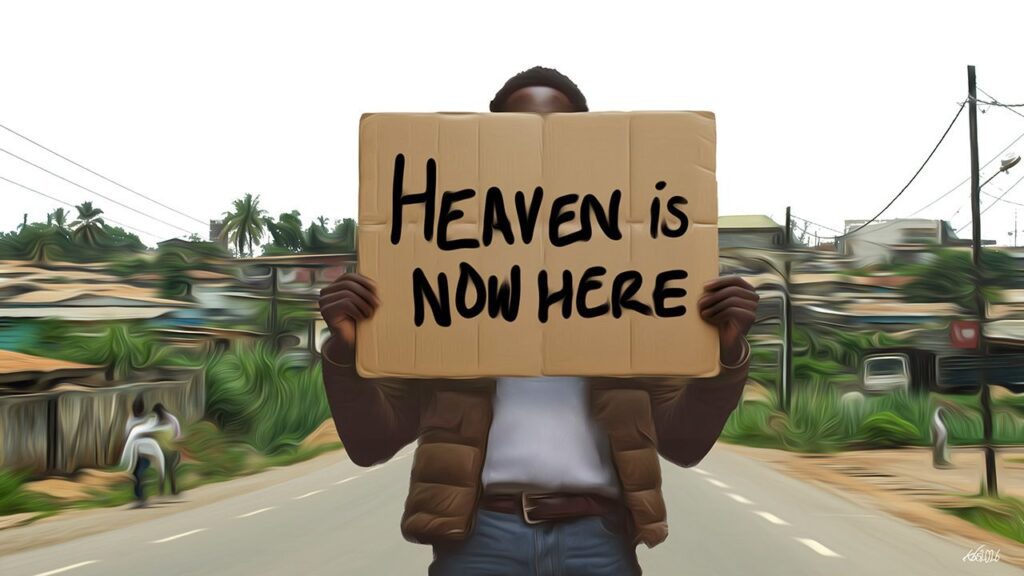
Anytime I see congregants gathered, praying in piety, I am reminded of how staunch I once was. I recall how I registered for outreach, attended fellowships, went out for mission work. These ministries gave me a tribe. It always felt like we were disciples of the same body, plighted by the same agony of bringing the lost back to Christ. We went out, our hearts devoted to The Great Commission: “Go ye and make disciples of all nations.” I have not lived in that desire for the last five years. It is a desire that I have shelved in my soul as I try to figure out what theology is practical in my reality. “Something repels the heart deeply in most organized forms of religion,” observes South African writer Bessie Head. This has been my struggle with organized religion: Its near cultic grip repels my heart. I am also occupied by the dilemmas of how to translate The Great Commission into my daily life. “We are too focused on heaven that our faith has no earthly relevance,” a pastor once said.
***
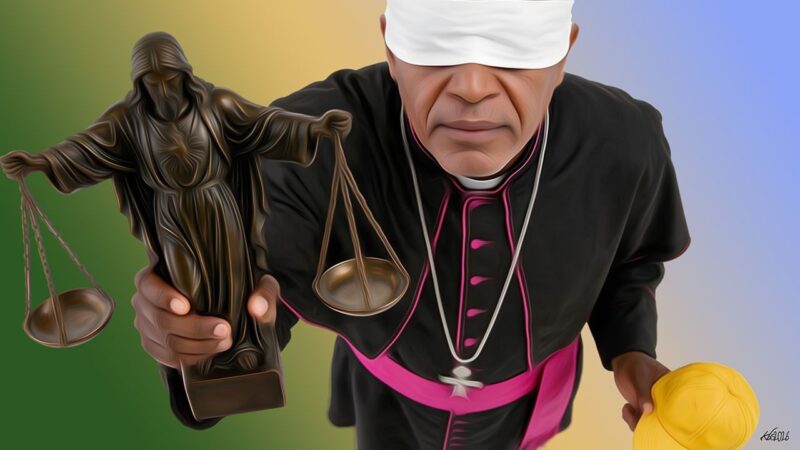
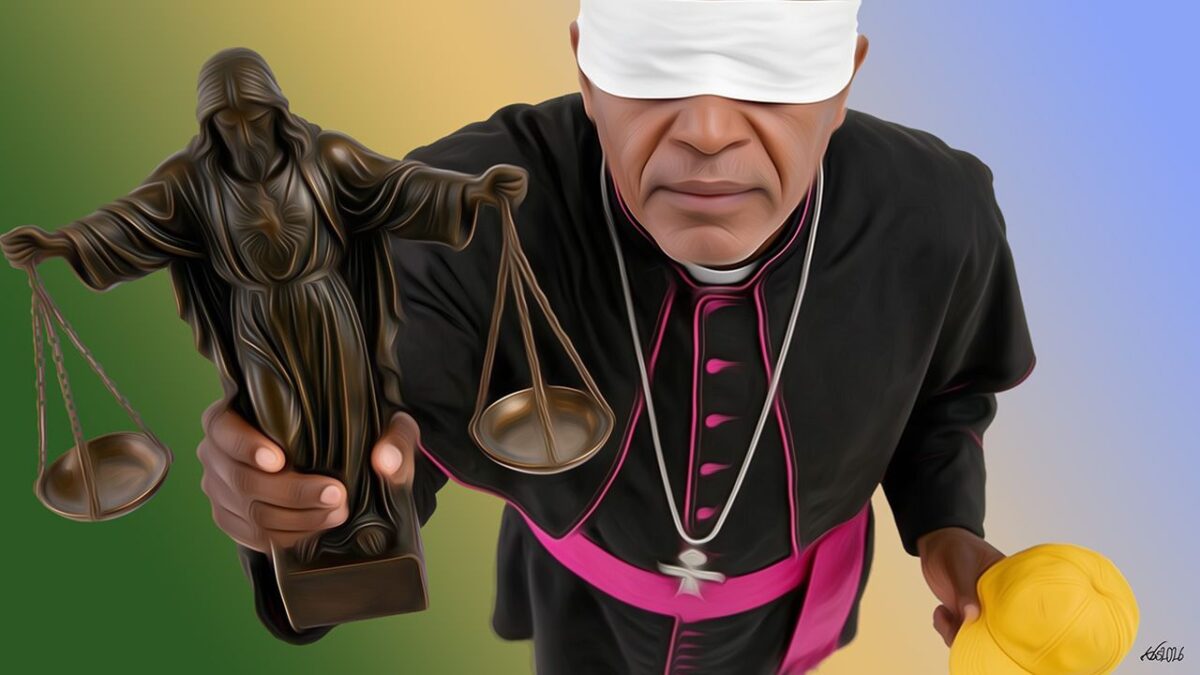
The late Kenyan bishop and theologian Henry Okullu, in his essay, “Church and State”, opens by stating that, “One of the great issues in East Africa on which there is much confusion concerns the relationship which exists, or which should exist, between Church and State.” Bishop Okullu, who championed pluralistic democracy and human rights, continues to write that every time the issue of the Church and State emerges, both politicians and Christians are always quick to refer to Romans 13 – a scripture on submission to authorities. This scripture and a couple of others have often been used as light veils thrown over interrogations on the silence of the Church in holding the State accountable. The crossfire of religion and politics, Church and State, is not new, we know. What is frustrating in all this is the continued dalliance between the two even when it is clear that the Church should take the higher moral ground.
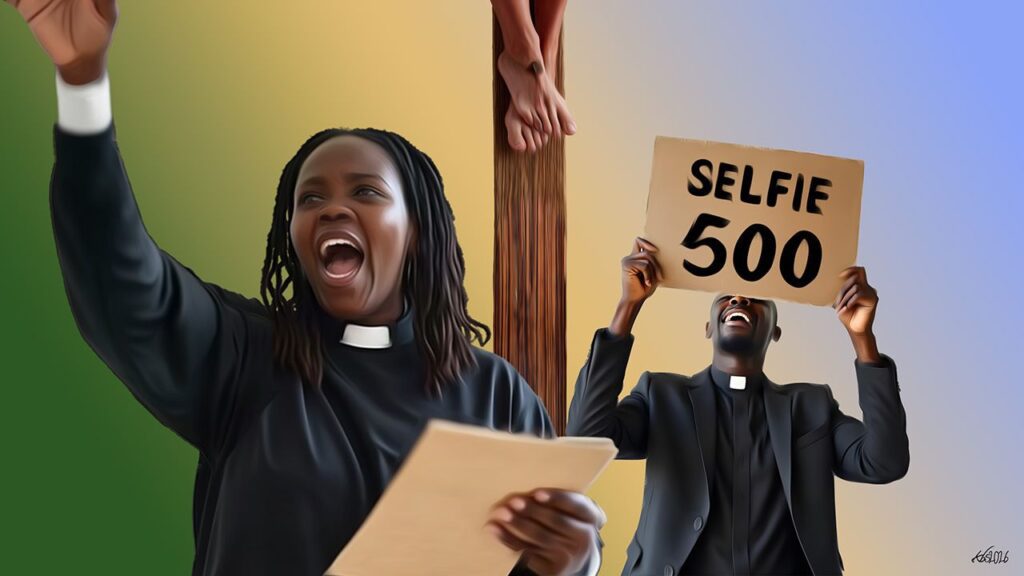
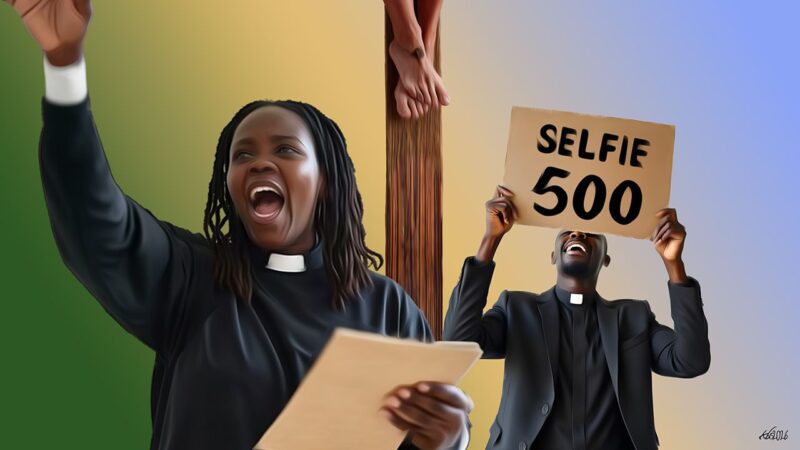
More than once, we have had a recast of the Fifth Commandment (Exodus 20:12) when a younger generation is rising to question an older generation on their abuse of power. More than once, we have heard politicians use 1 Timothy 2:1-2, urging us, the citizens to pray for the president and those in authority even as they continue to plunder our country’s future. The citing of biblical verses is a manipulative tactic that they use to turn our eyes from their failures. The connivance of the Church and the state in this conspiracy against the citizen is leading to a repression of the civic space. Gone are the days when the Kenyan clergy would be vocal on the brutality of the State. The Church has recoiled, sat to watch the politicians bring our country to her knees. The clergy has become as baleful as the state in times when the public protests against impunity. Their silence is no longer surprising. With the politicians having taken over the pulpit, contaminated its holiness, it is clear that the Church has abdicated its role of actively fighting injustice, defending human dignity and standing with the poor and the oppressed as envisioned by Bishop Desmond Tutu. Where can we find another Timothy Njoya, Henry Okullu, Alexander Muge, David Gitari, and others, all men of the cloth who fought against autocracy and political oppression in the ’80s and ’90s? Why is the current crop not saying anything about the socio-economic-political situation of the people? Is it that they are clueless, careless, blind to the plight of the citizens as Dr Wandia Njoya observes?
What joy are they finding in bowing to this bunch of rogues?
Are the handouts they receive a trade-off for their silence?
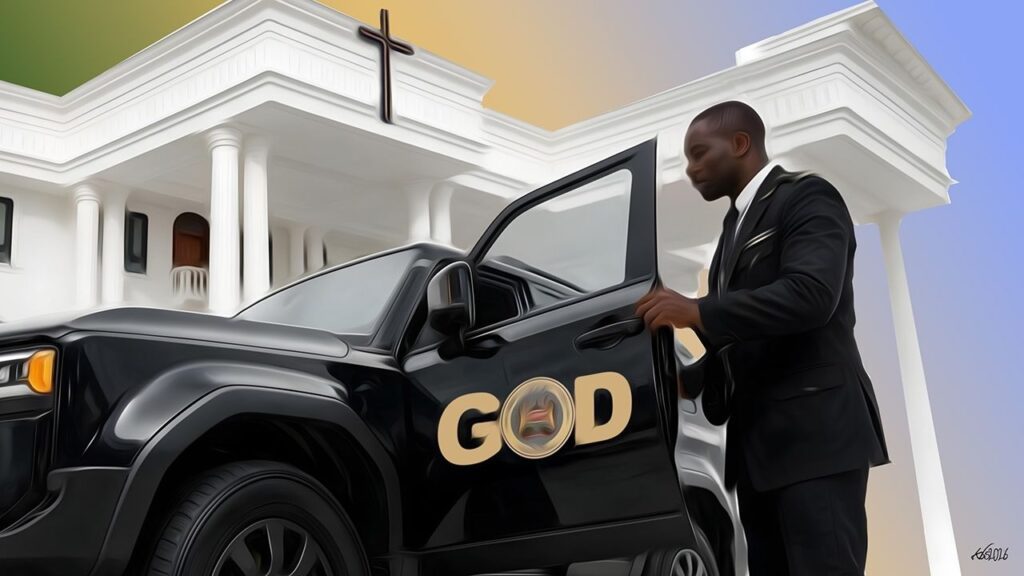
They are not asking about the source of the large sums being donated in their churches during Harambees. Their appetite is endless. So endless that some of them would rather host a president at a time of public agitation over politicians taking to pulpits, accept his donation, then audaciously pit their congregations against citizens. Bishop Edward Mwai did this in March 2025. He received 20 million shillings from a hand that has been accused of authoring the murder of innocent Kenyans. I wonder what he teaches about Judas the Iscariot; his was betrayal too.
It is also not new that Kenya’s political shortcomings are always blamed on the devil. “Shetani amewaingia” is a colloquial phrase that was used to scold my generation during the 2024 revolution. I recall being in a citizen’s assembly once, around that time, when an older man dressed in a yellow Legio Maria kanzu took to the floor to pray for the few of us who were attending, with conviction that his supplications would exorcize our anger and agitation. I snort at this memory – at how a grown man would think prayer is the answer to the dissatisfaction of a generation. “People are desperate to explain why there is so much hardship and adversity in their lives, but their problems have more to do with politics than with the devil,” said businessman SK Macharia after he was named a devil worshipper by the commission set up by President Daniel arap Moi in 1995 to inquire into the cult of devil worship in Kenya.
President William Ruto is a known hypocritical quantity. He has been this since the late ’80s and the ’90s when he doubled up as a Christian University Leader at the University of Nairobi while yet actively involved in Youth for Kanu, the ruling party’s youth wing that was accused of meting violence on those who were against Moi’s re-election. His campaigns have always involved large donations to the Church, and his rebuttal to those who demand to know the source of the millions he donates is that he himself is a product of giving. At other times Ruto slams his opponents by quoting Galatians 6:7, a verse about reaping where you sow. In an attempt to understand Ruto’s double face Kenyan journalist and writer Christine Mungai observes:
“The connection between Ruto the public Christian and Ruto the rich/generous/corrupt man, is not incidental. If you follow the histories and logics of the Christian project in Kenya – and how it links power and piety – you will arrive at a place where eternal glory is a commercial property, convertible to cash, and tradable like shares in the stock market. You might even arrive at a strange place where brazen pillaging is justified as an actual act of faith.”
Judging from his commitment to the Church, one would think Ruto is a keen Christian. He is so devoted that the current majority whip of the National Assembly and Member of Parliament for South Mugirango constituency, Silvanus Osoro, revealed in a recent interview that Ruto decreed Wednesday a fasting day in his office, both when he was deputy president and as president. We have seen Ruto weep while praying in church. There is a viral image where he is captured with his closed eyes welling up, his wife by his side, her arms linked with his in support, both standing at the pulpit. The photo was taken following Ruto’s 2013 general election victory and at a time when he was facing allegations of crimes against humanity at the International Criminal Court. For Ruto to have dropped his emotional guard to that extent can only mean that he believes in the ennobling power of prayer. And God. The same God who teaches that love is the greatest commandment. How then can it be that a decade later, when Ruto is the commander-in-chief of the armed forces, we witness the killing of tens of my peers for protesting against a finance bill that we were peacefully rejecting? Where is the love when we are getting abducted, recovered as lifeless bodies in dams, quarries, forests? School children being tear-gassed?
My generation has a problem with this. We have a problem with the fact that all this can happen and still the likes of Evan Mwai will open their doors and allow their pulpits be used. You ask why we are leaving the church. It is because of such contexts that we are seeing how religion is losing its significance to us.
In her article, Christine Mungai lays emphasis on the problem of lacking a Kenyan liberation theology that can help us break free from the grip of extractive ideologies perpetuated by predatory politicians posing as (teetotalling) Christians. Mungai provokes us to think of the ways in which theology is being weaponized to exploit the weak, the poor, the vulnerable. Perhaps the implications of this exploitation have caught up with my generation.
***
It is hard to think of ways in which religion, particularly Christianity, can be used as a resource for democratic practice. The Christian God is barely an emblem of democracy. His domain is referred to as a Kingdom because of its absolute nature. The absolute command in the scriptural truth(s) proves that the metaphor of the kingdom is not a theological error but rather a depiction of his strict authority, which my generation, Gen Z, finds restricting. His commands lack persuasion. I have read the Bible, and it gives off that kama-hautaki-si-uende attitude. The Victorian respectability and the patriarchal structures that are common phenomena enabled by religion do not align with our contemporary aspirations. Religion as it currently stands has lost its agency.
The Church has abandoned its role in the transformation of societies for the better. The Church leadership is hardly ever seen holding press conferences to rebuke the state for its abuse of democratic rights. Msingi Trust founder Carol Ng’ang’a jokes that the clergy only appears in press conferences to talk against LGBTQI+ issues but seldom on matters of human rights and democracy. Unfortunately, this joke is true. Is there room to imagine a religion that is a social philosophy, fierce enough to assert that every life matters? The Church has contributed to democratic recession; If we are to destroy the systems that have long oppressed us, then we must start by defying the repressive orders of the Church.
Community organizer and activist Sungu Oyoo has a chapbook titled Abolish Everything: A Poetry Manifesto From Last Evening in which he suggests that in the formation of a new Kenya we should dismantle everything. Aspirational as his manifesto might be, this is perhaps the reset we need in order to achieve a new Kenya. Caesar has taken the Church. Rather, the Church has chosen Caesar. As long as this remains the case, then I have to steel my heart, brace myself to the unfortunate truth: the Church will not be that quarter that speaks against my, our, oppression.