|
Getting your Trinity Audio player ready...
|
Whenever I tune into a Kenyan life story, be it an Engage Talk, a podcast, or a memoir, I wait for the Alliance moment. Teaching at Alliance. Joining Alliance. Failing to make the grades or to pass the interview to go to Alliance. Making friends with those at Alliance. Not being interested in going to Alliance.
Whether it is the boys’ high school or the girls’ high school, referencing Alliance – in whatever form – seems to be one of the ways in which we prove our Kenyanness in these stories that we tell (ourselves) about who we are and how we became those people. We may be waving it around as a badge of honour, weeping over missing it, or shrugging it off to prove how outstanding our accomplishments but the point remains that referencing Alliance demonstrates how intensely that institution occupies the national imaginary. It is like a geo-locator that points out one’s coordinates towards prominence.
In this regard, Asaph Ng’ethe Macua’s memoir stands out. Macua joined Alliance High School (AHS) in 1947, but he experienced that school very differently from most.
“I have read about and heard of the happy recollections of many students who studied at Alliance High School. I can’t say that all my experiences at Alliance match theirs for joy because I struggled to get through many activities. My health was deteriorating…”
“My days at Alliance were coloured by a variety of discomfort – some physical, others emotional; some arising from my weak body, others initiated by those around me.”
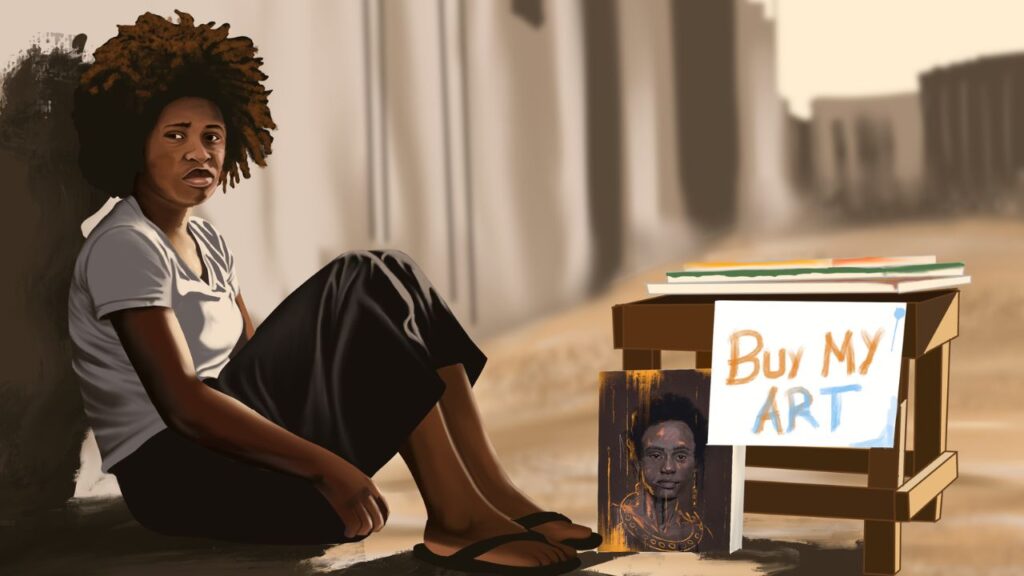
Macua’s only moments of joy at Alliance came from his Art classes. At Makerere University, which he joined in 1951 – in the same cohort as Mwai Kibaki and Nicodemus Muriuki – Macua pursued a road rarely taken. He studied for a degree in Fine Art, with just four other students in his first year. And yet, he was happy there.
“There was a warm feeling of belonging at Makerere, which I found very different from my years at Alliance. I felt at home, and the future looked promising.”
His first job after graduation from Makerere was at the Department of Community Development in Uganda. Macua went on to serve as Chief Artist of the East African Literature Bureau until 1977, when the East African Community became defunct. He was reassigned to the position of Senior Artist in Kenya’s Ministry of Education. In 1980, when the Kenya Literature Bureau was established, Macua was again appointed Chief Artist, in charge of all book illustrations. Against many health-related odds, Macua has lived to tell the story of his “years of misery at Kabete and Alliance”.
Not every student who faced health-related challenges in their youth was averse to Alliance. Take Gerald Nathaniel Kalya. His challenges are flagged by former Deputy Speaker of the National Assembly, Samuel Ng’eny, in his endorsement of Kalya’s authorized biography. Kalya, who was “dogged by a recurrent, poorly diagnosed illness missed school for long periods of time. He beat all odds to make it to the prestigious Alliance High School in 1949”. Indeed, when Kalya “sat the Kenya African Preliminary Education (KAPE) examinations [he] emerged the best student in Nandi”. Alliance was his salvation in more ways than one. The headmaster secured treatment for him at Kikuyu Mission Hospital, where “three penicillin shots (…) became the panacea that had eluded Kalya for many years”. His recurring illness was completely cured.
In May 1963, Kalya was elected the first Senator for Nandi. With the dissolution of the Senate, at the start of 1967, Kalya became the Member of Parliament for Mosop and was appointed Assistant Minister for Cooperatives and Social Services. He successfully defended his seat in December 1969 and was appointed a Deputy Minister in the East African Community.
In the gloom of the aftermath of the December 1974, which he lost, Nathaniel Kalya “was cheered by the good news that his son Wilson had passed so well that he was admitted to his father’s old school, Alliance High School”. This moment marked another kind of social mobility in the senior Kalya’s life – legacy building. Further mobility of this kind occurred yet again when “Two of Wilson’s sons [Glenn and Kiptenai] also went on to merit admission to Alliance High School, completing a family ‘hat trick’ to have three generations successively joining Alliance.”
The reputation
Biographers contribute greatly to the reputation of Alliance as a place of excellence. Kalya’s biographers stress “merit” in the admission of successive generations. This emphasis gives legs to the mythology of Alliance as a headquarters of geniuses who beget geniuses.
In the days of Ng’ethe Macua and the seniormost Kalya, going to Alliance meant you were being prepared to join the highest echelons of Kenyan society, moving from peasantry to political elite in one giant leap. The biographers of another famous alumnus of that era, Jeremiah Nyagah, underscore that “At this time in the development of Kenya, saying you were a student of Alliance High School would have opened many doors. Upon successful completion of secondary education, the employers came for you at the school.”
Indeed, in Jomo Kenyatta’s 1963 Cabinet of 15, nine of the ministers had roots at Alliance. That is a 60 per cent batting average for Alliance. How many of the decisions they made favoured Alliance? One would be equally stunned to learn how many Alliance alumni served in other senior ranks in the civil service in the first 30 years of Kenya’s independence, holding positions such as Under Secretary, Deputy Secretary, and Permanent Secretary. How many were senior officers in the old provincial administration – District Officers and Provincial Officers? Further proof of Alliance’s high batting average is found in the autobiography of the prolific historian Bethwell Allan Ogot, who taught mathematics at Alliance between January 1954 and August 1955. Ogot explains that “between 1926 and 1953 Alliance High School sent 222 students to Makerere College; Kabaa/Mangu sent fifty-seven, and Maseno twenty-seven”.
Evidently, from its inception in 1926, Alliance was a ticket for upward mobility. The arrival of Edward Carey Francis to head the school in 1940 transformed it from a two-year vocational institution. It started to produce more than teachers, carpenters, and agricultural officers whose work positioned them to build village networks that propelled a good number of them to political leadership. At the end of a very expensive World War II, maintenance of the colonies became tenuous so the British primed Alliance to train a cadre of civil servants who would, in the words of the school motto, be “strong to serve”. Serve who? The interests of the colonizer?
“Most of the future leaders of the country pass through our hands,” Carey Francis wrote in a letter dated April 24, 1944, addressed to Reverend H. M. Grace, of Edinburgh House. Ngugi wa Thiong’o, who joined AHS in 1955, explains the school’s drive to mould model Africans. Carey Francis “likened Alliance to the Interpreter’s House, where the dust we had brought from the outside could be swept away by the law of good behaviour and watered by the gospel of Christian service”.
For Ngugi, joining Alliance was an improbable “dream in a time of war”. His elder brother, Wallace Mwangi, had enlisted in the Mau Mau war of resistance. This family connection jeopardized Ngugi’s entry into Alliance even though he was “the only one in the entire Limuru area who had been admitted to Alliance High School that year”. But a government-appointed headman came to Ngugi’s aid and rallied the village to send Ngugi to the sought-after school.
With the war raging, his home razed, his family moved closer to the Home Guard, and his brother’s role making him anxious that he might be outed in the village, Alliance became Ngugi’s “sanctuary”, his “window”, his “filter”. “Alliance would protect me from harm.” The AHS uniform became his “protective armour”. It shielded him, on his way to and from school, from menacing white colonial officers. White colonial officers who discounted the evidence of the AHS uniform were, in the words of Carey Francis, “scoundrels”.
The power, privilege, and prestige that going to Alliance has been, historically, cannot be gainsaid. In part, it is the power and privilege that come with being aligned to a government. It is the prestige that comes with pioneerism. Time and time again in Kenyan life-stories, you hear that the author/subject was “the only one” in their year, and very often, “the first ever” from the entire village/location/district – admitted to AHS.
There is also prestige that accrues from AHS’s reputation for excellence. “The reluctant academic”, Dr Benjamin Edgar Kipkorir, outlines that excellence. “In academics, Alliance had no equal in Kenya, even when compared with the European students in their exclusive schools… Every year we outshone them, taking particular pride in beating them in the English Language papers.”
To add to these triumphs, nearly all those who moved from Alliance to Makerere, and/or to famous universities in the West, went on to prove their exceptional excellence by earning other pioneering feats. “The deeds of those who had left, their antics, their exploits, their successes, even their very names, were the stuff of legends.”
Four examples will suffice here: The first Kenyan to qualify with a PhD – Julius Kiano, University of California, Berkeley, 1956; “The first East African to be awarded a degree in Science, an Oxford M.A. degree in Zoology” – David Wasawo, 1951; The first woman Cabinet Minister, Nyiva Mwendwa, 1995; First woman Head of the Public Service and Secretary to the Cabinet – Dr Sally Kosgei, 2001.
Pioneering had its uses in our decolonizing years. It proved equality between races. It confirmed equality between genders. It restored dignity. The snowballing of prestige that pioneering creates explains why, to this day, people say, #IWentToAlliance with such immense pride. Some even go so far as to recite their school admission number with the solemnity of one who is taking an oath. Indeed, we learn from Jeremiah Nyagah’s authorized biography that “the student entrance number was not a mere identification symbol. It was a status symbol and all the men who went to AHS in his day kept this number to their last day on Earth”.
Hanging on
But if social, economic, and political mobility have always sat at the heart of this place of transformation called Alliance, what does it mean when alumni keep up the backward-glancing refrain #IWentToAlliance? Is it a declaration of advancement or a sign of stasis? How is the promise of mobility disavowed by the perpetual broadcasting of this old achievement? What other work does this boast do? What identities does it envelope? What ways of being does it suggest? What are the alumni hanging on to? What do they sustain with this announcement? What do they shut out when they wield it?
To begin with, the boast #IWentToAlliance is not a conversation starter. Instead, it is performed to end a debate, to halt inquiry. Once stated, this boast takes up the space of queries by filling the air with a deluge of unsaid but implied qualifications that lend the speaker stature: I am exceptional. I am brilliant. I am a pioneer – whether first in my family or first within a 0.5 km radius. I am eligible. I am owed – because pioneerism breeds entitlement.
#IWentToAlliance, though appearing to throw a longing gaze into the past, works to dramatize that mobility sometimes requires one to engage the reverse gear in order to race ahead. The pronoun “I” in the boast does not isolate the speaker. It does the work of summoning predecessors and successors at Alliance, both the living and the dead, to demonstrate one’s secure belonging to a revered group; in the same manner that the life-stories parade lists of prominent classmates. A special group of nation-builders, cultivated by a school motto and by dormitory legends to serve governments. Saying #IWentToAlliance thrusts one into an arena of authority, a place of privilege. It stamps an emblem of excellence.
The boast sustains a reputation for excellence. It allows one to share in the glory of cabinets, famous parastatal heads, luminous politicians, top-performing technocrats, top-flight medics, engineers, lawyers, academics, and educationists. It ushers in an expectation that doors will open, the old school tie will find favour, and foster this alumnus or alumna for state appointments, political pull-ups, and corporate contracts. In Kenya, we have always been quick to read nepotism through the lens of tribe. A lot more would be illuminated if we located the old school tie at work in state and state-adjacent (s)elections. And those networks have a way of circling right back to the empire and its interests.
I am reminded of a fascinating anecdote in Frank Njenga’s autobiography, City Boy: Chronicles of a Nairobi Life. That anecdote illuminates one of the ways in which, in the mid-1960s, the Jomo Kenyatta government dealt (at whose behest?) with the Flower Power movement that publicized the evils of the Vietnam War. That movement was said to have birthed the hippie subculture associated with drug taking and all the liberties of a bohemian lifestyle. Njenga explains that when that lifestyle gained visibility in Nairobi, a five-boy band from Alliance, “stylishly named ‘The Strollers’ (…) blasted the city with morally sound music that found its way to my school [Upper Hill] and other high schools in Nairobi. The city’s moral custodians waged a full-scale war against the ‘destructive’ forces of the Flower Power movement”. The movement had used music concerts at City Hall to draw in Nairobi’s youth. Promoting a band from AHS countered that attraction.
Rereading that, I begin to ask myself whether the other largely Alliance boy band of the early 1980s, Gravity – which gave us the hits Goodbye Maasai Girl and Lost in Love – had anything to do with Moi’s besieged government. Nothing wipes nostalgia from your eyes than sound revelations of the curation of heady popular culture moments by state actors.
#IWentToAlliance invokes more than nostalgia. The boast excludes. It introduces hierarchies. Dr Betty Gikonyo’s autobiography, The Girl Who Dared to Dream, gives us an illuminating insight into this. In July 1970, Betty had just been admitted to study medicine at the University of Nairobi (UoN). One of the students asked their professor why medicine took five years when it could be completed in four. Betty was outraged by the audacity of his question. Someone seated close to her said that the person asking the question was an alumnus of Kagumo High School. “That was some rural school, right? I rested my case. Nothing much except ignorance could be expected from such a school, I reasoned.”
Exclusion. Hierarchy. Expectation. The expectation of being first. The expectation that in any gathering, Alliance alumni are the only ones who know what should be done. But, seeing as Betty Gikonyo went on to marry the “daring and presumptuous fellow” who questioned “an old tradition of medical training”, the fellow who “kept up a competitive spirit (…) preoccupied with being on top of the class”, it would appear that #IWentToAlliance does not preclude unlearning and relearning.
If you compare yourself with others, you may become vain and bitter;
for always there will be greater and lesser persons than yourself (Desiderata).
The work of exclusion done by #IWentToAlliance is not one-way traffic. It is a two-way street built on our colonial history. A colonial settler territory, such as we were, makes for deep-seated legacies of exclusion structured within racial bias, ethnic zoning, gendered othering, and class discrimination. Consequently, those who went to Alliance very easily become the ones being looked down upon.
We may not hear them often, or very loudly, but there are those who hear #IWentToAlliance and they chuckle uncharitably at the memory of a school they still refer to as “Bush”. The term is invoked to deflate. It is a pejorative reference to the school’s location in what was once a distinctly rural area. #IWentToAlayans, written in this manner of its enunciation mocks the alumni. The term Busherian is sometimes part of this deflation. It signals elevation. It ushers in another elite.
The ones who inherited the airs of the former European schools where there were no admission numbers. A surname was enough to know and remember the sprinkle of students. Schools like Kenya High; Limuru Girls’, Highlands (Moi Girls’ Eldoret), Prince of Wales (Nairobi School), The Delamere School (Upper Hill School), Duke of York (Lenana School), St Mary’s, Loreto Convent Msongari, and one of the first multiracial schools, Strathmore College.
Schools which – except for Kenya High, because gender introduces other biases – did not need the additional label of “Secondary” or “High”. It was known, ipso facto, that they were fully structured for a complete education, not a place from which you needed to exit to complete your teenage grooming. Schools with Latin mottos saying things like “To the Uttermost,” “Nothing but the Best,” “In Faith We Go”, “That All May be One,” and “To Serve Is to Reign”.
Schools furnished with a wide range of uniforms for different activities and occasions. School dress, town dress; Sunday dress; house sporting kit; school sporting kit; tennis skirts – which were different from regular PE kit; and so on, including pyjamas and nightgowns.
Schools where bread came toasted, accompanied by English marmalade; or served as sandwiches laden with marmite or cheese. Schools where breakfast was a variety of fruits, Kellogg’s cereals, oatmeal porridge, bacon, sausages, baked beans, scrambled or fried eggs. Schools where lunch had exotic names like Yorkshire pudding, and dessert was regularly served to introduce students to the sweet life of trifle, bread and butter pudding, and pineapple crumble.
These assorted frills persisted in our decolonizing years, before those schools got rightfully flattened. Flattened by the reality of population explosion, resource reallocation, misappropriation. Flattened by the acculturation that has seen Sheng grow into a national language and has ushered wimbi porridge, sweet potatoes, managu, and matoke into the chafing dishes of five-star buffets.
For the lot that went to those schools before their complete levelling into triple-decker dorms, the boast #IWentToAlliance is an interloper’s weapon, claiming class where none exists. Alliance scholars were not the students they mingled with at the annual school dance. In the snooty eyes of that elite, Alliance has never lost its dusty hue. The burning ambition of Alliance alumni to serve in government is, to that toffee-nosed elite, a mundane preoccupation that masks a lack of creativity and entrepreneurial genius.
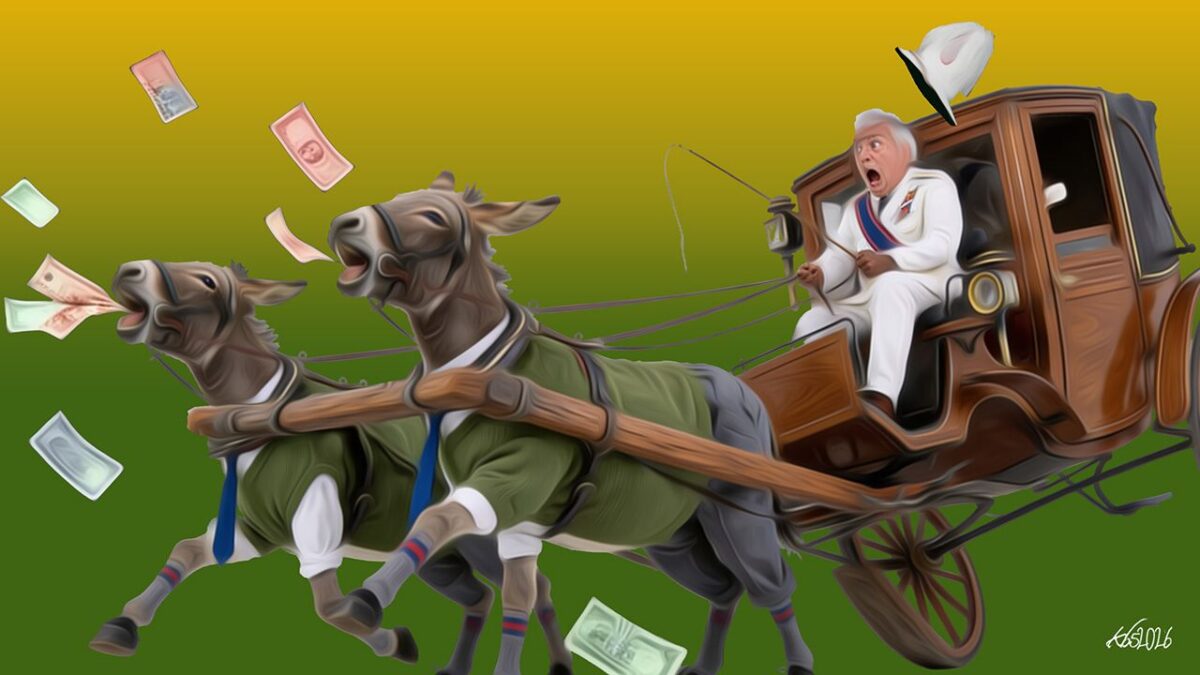
Clearly, colonial (dis)order produced rival elites that have sustained themselves through a toxic and undying scramble for public resources. Neither the Alliance elite nor the counter-elite from many elsewheres illuminate credible alternatives. What is sometimes presented as opposition discourse and reform is in fact a mime staged for a seat at the table of state coffers. Once at the table, reform takes the form of favouring one’s own, using the school, just as the colonizer did, as the primary site for the generation of status. This work of rival elites explains what I explain elsewhere as the politics of death visited recently on Alliance Girls’ High School. The idea was not to confront corruption or flatten the curve to engender equality. This wasn’t Robin Hood; it was Imbuga’s Mulili in that all too-familiar pattern of parasitic state officials who prey on the public and make it private.
We saw President Moi skew resources in the direction of his Kabarak School and later, Sunshine Secondary School. With the most effective teachers and examiners transferred there, Kabarak rose up the national examination results table. Sunshine was placed 6th countrywide at its first sitting in 1998. Maranda High School began to acquire similar prominence, via similar engineering, with the gradual ascendance in government of its alumnus, Raila Odinga. How Mangu High School was transformed in the Kibaki years is also worthy of scrutiny. Just as scrutiny must be visited on the recent transformation of Kapsabet High School into the oldest school in Kenya.
Psychologists should tell us why we need the cultural capital of being associated with pioneers and pioneering to the extent that we sometimes rewrite history and/or engineer the present to create the excellence that pioneering suggests. As we wait for that explanation, we must call out the failures of the colonial design that built these legacies into our culture and our politics. That colonial design is unsustainable, incapable of stretching to be inclusive. In the circumstances, how can we best reimagine our national project for our minds to embrace the constitutional opportunities of devolved government?
Alliance, as Ngugi tells us, “produced its fair share of an essentially cooperative leadership. But contrary to the conscious intentions of its founders, Alliance had also birthed a radical anticolonial nationalist fever”. Ngugi is one example of Alliance’s radical thinkers, one whose pro-people politics earned him detention without trial, followed by years of exile on account of the Moi government’s refusal to have him reemployed at the University of Nairobi.
There are several other examples of Alliance alumni – Anyang Nyong’o, James Orengo, Micere Mugo, Agnes Ndetei – whose commitment to questioning power might have faltered, but it has nonetheless been significant in the reimagining of Project Kenya. Their life-stories are overdue and necessary to answer the question: Can the ethos enshrined in #IWentToAlliance build a different kind of Kenya?
In the words of a famous songwriter, the most painful thing about growth is outgrowing. To avoid that pain, we remained imprisoned, by admission numbers, by old achievements, by stale reputations, by faded glory, and old metrics of thinking about people and places. When this country outgrows Alliance by replacing toxic faith in pioneerism and undying scrambles to rise above others with a commitment to parity, we will have outgrown the colonial state. Maybe then we will grow into a design that is strong to serve us.
***********
Bibliography
Some of Those Who Went to Alliance:
Gikonyo, Betty, The Girl Who Dared to Dream: An Autobiography, Mvule Africa, Publishers: Nairobi, 2013.
Gitonga, Liz, The 5th Columnist: Philip Ochieng, A Legendary Columnist, Longhorn Publishers, Nairobi: 2015
Kiano, Gikonyo, with Irungu Thatiah and Jane Kiano, Quest for Liberty, Sasa Sema Publications (Longhorn Publishers): Nairobi, 2013.
Kipkorir, B. E., Descent From Cherang’any Hills: Memoirs of a Reluctant Academic, Macmillan Publishers Limited: Nairobi, 2013.
Macua, Asaph Ng’ethe, From Misery to Joy: A Journey of Endurance, Nairobi, 2019.
Matiba, Kenneth Stanley, Aiming High: The Story of My Life, People Limited: Nairobi, 2000.
McOure, Kasmuel, Tribalism, Poverty & Post Election Violence, Iko Nini Podcast Episode 337, July 29, 2024,
Mungai, Joseph Maina, From Simple to Complex: The Journey of a Herdsboy, Kenway Publications, Nairobi: 2004
Ndegwa, Duncan Nderitu, Walking in Kenyatta Struggles. Kenya Leadership Institute: Nairobi, 2006
Ngugi wa Thiong’o, Dreams in a Time of War: A Childhood Memoir, Vintage Books, 2010
____________ In the House of the Interpreters, Harvill Secker, 2012
Odinga, Jaramogi Oginga, Not Yet Uhuru, Heinemann: London, 1967
Ogot, Bethwell A., My Footprints on the Sands of Time, Anyange Press Limited: Kisumu, 2003.
Ouko, Pete, 18 Years on Death Row, Engage Talk, October 13, 2022
Sang, Godfrey, with Wilson Kalya, Pioneer Senator: The Life and Times of Gerald Nathaniel Kalya, Posterity Publishers Limited: Eldoret, 2021.
Thatiah Irungu and Jeremiah Nyagah Trust, Jeremiah Nyagah: Sowing the Mustard Seed, Rizzan Media: Nairobi, 2013
Waweru, MG, Kenya’s Tax Czar, East African Educational Publishers: Nairobi, 2021
I Did Not Gain Entry to Alliance:
Gikonyo, Dan, Doctor at Heart: An Autobiography, East African Educational Publishers Limited: Nairobi, 2024
Madoka, Marsden, At The Ready: A Memoir, Kenya Literature Bureau: Nairobi, 2025.
I Was Not Interested in going to Alliance:
Muturi, Justin Bedan, The Fight For Order: The Secret Political Deals, Statecraft, and a Reckoning with Power, 2025
I Made Friends with Some at Alliance:
Njenga, Frank, City Boy: Chronicles of a Nairobi Life, East African Educational Publishers, Nairobi: 2025