|
Getting your Trinity Audio player ready...
|
A congress of Editors from different countries in Africa, and from media houses that possibly represent different political or ideological outlooks, must of necessity concern itself with matters of common interest. What could these concerns be about? It seems to me that, whatever their backgrounds, however different their orientations and peculiar local political environments, the editors from the different corners of Africa must share and be motivated by some common matters of existential nature. Obviously, these questions are about the immediate, as well as the long-term, survival and sustainability of their businesses and operations. The agenda for these couple of days makes those concerns very clear.
However, above all these immediate practical questions of survival, our media leaders, I submit, ought to be even more agitated by those matters of overriding fundamental nature which confront the very survival and future of our continent as we have it today: however lamentable it may be. Simply stated, a gathering of leaders of our media organisations ought to be alarmed by, and reflect on, Africa’s place in and relation with the world today. They must be most concerned by the accelerating destructive reversals of the international order we have taken for granted for so many decades now. These developments threaten to weaken further the already shaky political and economic independence of our countries and with it the survival of our peoples as sovereign human beings.
The media, we all know, do not exist for themselves. They exist in and for society: for the public, for their communities and nations. At any rate, it is the everyday realities of their societies, the existential questions facing their communities and publics at any moment, that the media exist to address. That is what defines the critical functions of the Editor: the important concerns and interests of their publics. Here, let us digress briefly in order to make clear who we mean by the Editor in this presentation. By implication that also defines for us the media type our discussion is about. Here, we are primarily concerned with the social responsibility functions of the institutionalised servant of the public. We are not too interested in the activities of the spontaneous purveyor of personalised opinion and producer of idiosyncratic information on social media who owes no ethical or professional responsibility or accountability to the public.
The Editor, as traditionally and essentially defined, is a servant of the public. S/he is the professional director and intellectual guide in the organisation. This role involves the Editor also as the chief political decision-maker. Formally assigned as such or not, the leadership role of the Editor makes him/her the organisation’s ombudsman for the public’s trust and confidence. The Editor, by definition of public trust and confidence, therefore must be an active advocate for the public interest. These functions, combined with the technical gatekeeping roles and agenda-setting functions, make the Editor’s social responsibility and public accountability obligations especially unique, sensitive and onerous. In Africa’s particular circumstances, the Editor’s role in society should rightly be considered as a mission. I would like, therefore, to raise for the reflection of the African Editor the following three critical issues that confront, and confound, the African condition today. Since we are here principally for the business of the media, I will also try to raise some issues of critical interest to our profession. These are: The rise of aggressive imperialism and the threats to Africa’s independence and sovereignty; The destabilising conflicts and their threats to peace and development; and The steady recession in democratic governance and gains.
Rise of Aggressive Imperialism and the New Scramble for Africa
As we entered 2026, rapid events have shown clearly that the international order we took for granted has turned out to be an illusion. Before our very eyes, the post-1945 multilateral system of institutions, treaties and universal rules of civilised engagements are collapsing. They are fast giving way to an international order of chaos and disorder governed by brute force and disdain for the weak and principles of civilised values. For Africa, this is an existential challenge to which our media and media leaders must pay very keen and critical attention. In the evolving disorder of brigandage and might-is-right, Africa lies the most vulnerable.
America’s Renewed Imperialist Agenda
At the recent Munich Security Conference last week, US Secretary of State Marco Rubio laid out the US’s new foreign policy which amounts to a call for a revival, indeed reinstatement, of US-led Western old-style imperialism. Rubio’s speech regretted the end of colonialism. He urged Europe to shed any sentiment of “guilt and shame” over its colonial past but instead to join the US in reclaiming a dominant “place in the world”.
The racist motivations and intents of a Western imperialist power have never been so blatantly spelled out in several decades. One commentator has described it as a “veiled call for a return to imperial dominance, a nostalgia for the era when our lands were carved up and our peoples subjugated.” In response to Rubio’s ominous forebodings, Sir Sam Jonah, the Ghanaian mining business magnate, sent a letter to the African Union alerting African leaders about the dangers these imperialist agendas pose to Africa. In his letter, Sam Jonah warned:
“Make no mistake: these are not idle musings. They are a stark reminder that in the eyes of some global powers, Africa’s independence is a historical inconvenience, and our resources remain ripe for extraction.”
“…Rubio’s speech,” Sam Jonah’s letter to the AU continued, “underscores a harsh truth: the end of formal colonialism did not end the exploitation. Neocolonialism persists through economic dependencies, debt traps, and geopolitical manoeuvring. We must heed this moment to unite, look inward, and pursue our continent’s agenda with unashamed selfishness.”
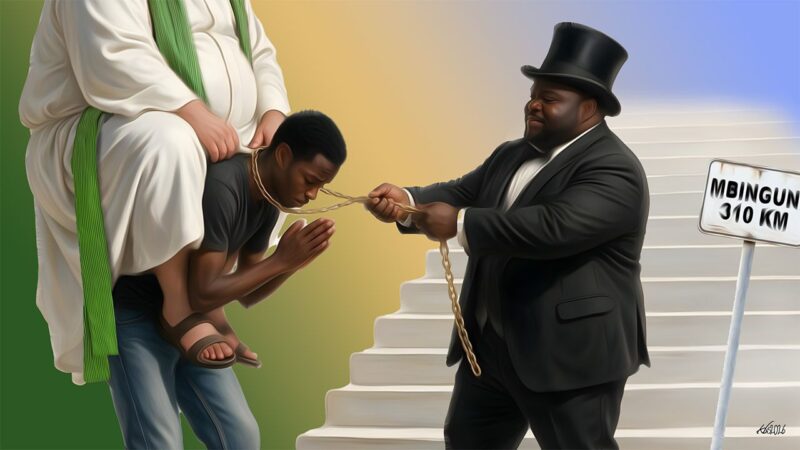
Imperialism, in whatever form or guise, is a stage of capitalism. And its expansionist tendencies, letting blood, mass murder and misery along its paths, are nothing more or less than the search for and control of economic resources. Whichever way you look, Africa will necessarily be at the centre of the revived aggressive imperialist contestation that is looming so ominously. Because Africa’s vast natural resources and wealth have always been the source of attraction to outsiders and of our subjugation by them throughout our godforsaken history. Even before Rubio formally pronounced America’s revitalised policy of aggressive imperialism, Africa’s resources had become the reason for a renewed “scramble” for control. Our continent is at the epicentre of the 21st century scramble for resources by forces ranging from former colonial powers, older imperialist powers and nearly all the emerging or newly industrialising powers: from the West, North and East. Our continent has become, once again, the hunting ground for predators in a world where civilised rules threaten to make no sense anymore. Are we in for a new kind of colonisation; or is it an intensification, or an aggressive form, of what Kwame Nkrumah described as neo-colonialism? This emerging new global condition becomes, as expressed in political economic theory, the principal contradiction of our time. It must be at the top of the priority concerns of any serious African Editor to monitor its manifestations and to mount concerted education of the peoples about it.
Jihadism and Intractable Conflicts, Conditions for Imperialist Intervention
The frightening global development aside, Africa is already bleeding from several seemingly intractable conflicts creating horrendous humanitarian crises. Sudan, which has never had peace for any considerable period of time since independence in 1956, is today the scene of a most bloody carnage. South Sudan appears destined to follow the murderous model of instability remarkable of the “mother” country from which it broke off after decades of armed struggle. The DRC is a veritable example of the curse of natural wealth. Its history of independence started with gruesome murder and it has been bleeding ever since. If there is an example of a so-called “failed state,” that is the DRC. So much so that, sadly, in English the acronyms of the name, DRC, may easily translate into the “Devastated Republic of Conflicts”. Sudan and the DRC, these two sites of endless conflicts are like viruses that threaten to infect the stability of the entire central regions of Africa with wars and mass annihilation.
Jihadism, Barbaric Extremism
Elsewhere, in the Sahelian belt across West and upper central Africa, marauding messengers of death and terror, espousing false ideologies manufactured from the Arab world, threaten peace, progress and life across the Sahel and in all of West Africa. Faced with these serious existential realities, Africa lies prostrate, vulnerable and defenceless. Leaders of the 54 states that constitute the African Union remain completely supine and helpless. They are happy with being chieftains of “micro-sovereign” states, uninterested in coming together for any meaningful collective action to protect the interests of the African people. The African Union, whose headquarters is a donation by a foreign power, China, is dependent on foreign donors for 70%–80% of its budget. Its independence has been so compromised that its founding mandate has been rendered empty, if not useless. It is no surprise that the regional economic blocs have become lame and ineffectual. What used to be a more dynamic ECOWAS confronts serious challenges of continued existence. The disarray of these institutions of African collective action gives a clearer picture of the continent’s vulnerability in the face of a global order that brooks no respect for civilised rules and humane relations.
Democracy Recession
The picture of our continent’s vulnerability and helplessness becomes clearer when one considers that, within each of our countries there are enormous questions of disunity. These factors are primarily exacerbated by poor or undemocratic governance and harsh economic conditions for the overwhelming majority of the populations. These conditions are marked by widespread distrust of government and political leaders, cynicism towards public officials and suspicion of state and public institutions. The result is that they undermine the spirit of patriotism. Essentially, then, the effect is that there remains very little rationale for people to respond to a call to defend the nation as a collective responsibility.
The idea of democracy, for example, has become an illusion. The prospects of constitutional democracy in the last decade of the 20th century held promise for transparency and accountability in governance, free and fair multi-party contests and peaceful transfer of power, freedoms and respect for rights. By and large, these principles and the hopes they raised have remained mere hopes. Across the continent, there is a wave of recession of the gains made by the popular demands that resulted in the retrenchment of military and one-party rule that governed the entire continent.
Africa is not immune to or isolated from the global phenomenon of authoritarianism fighting back to reclaim democratic gains and spaces made by peoples’ struggles. In recent times, particularly in West Africa, a spate of coups d’état represent the extreme of the reversal of democratic prospects. However, in a number of places, disrupting the constitutional order has included tampering with presidential term limits with incumbents employing all kinds of tools of illegality to prevail. On a regular basis, attacks on institutions of democratic governance have characterised the wave of recession of constitutionalism. The independence of the judiciary has been a target of destruction so that legitimate members of the organised opposition and other critical voices can be silenced. The sanctity and integrity of electoral management bodies have been made worthless and elections have been turned into dubious, cynical routine exercises.
As is usual universally, the first casualty in the process of smothering democracy is freedom of expression, with media freedom and independent voices being in the frontline of attacks.
Issues about Journalism
It is a truism, indeed a cliché, to state that, due to the revolution in technologies of communication, the media landscape we have known for decades is changing in so many drastic ways. One critical fact is that the newsroom editor no longer has monopoly over the gate-keeping process. The gate-keeping structures are collapsing and the agenda-setting privilege has been democratised among the traditional newsroom Editors, so-called media influencers and social media algorithms.
These changes are largely guilty of contributing to the monumental rise of misinformation and disinformation, and the general undermining of information integrity in the media landscapes in our continent. Deciphering the truth for the public from the avalanche of dubious, tricky, useless and sometimes dangerous material now available in the public domain is among the biggest challenges to the Editor’s profession today. Fact-checking, a traditional tool exercised by the editor as a matter of routine, is now necessarily elevated to a super-skill. It has become a department of specialised practice that must be integrated into the structures of newsroom organisation if the media house is to retain and earn the public’s trust as a source of reliable information. In today’s complex, multi-dimensional challenge of information disorder, fact-checking may not be the perfect tool for a perfect solution. However, it has proven to be a useful and reliable stop-gap skill and practice that can help rescue the already beleaguered profession of journalism from further reputational disaster.
These challenges of increasing public doubt of media integrity, arising from the whirlpool of confusing information overload, bring us back to revisit the old school of ethics as the burden of the professional Editor, and a new challenge to the curriculum of the journalism schools that have mushroomed on the continent since about the last two decades of the last century.
The Decline of Investigative Reporting
In the face of enduring and expanding corruption, at a time when criminal behaviour and impunity among government officials become more and more entrenched, as the conduct of international finance and business grows more opaque, and as rights abuses persist, it is discomforting that this is the time when the media’s capacity for and practice of investigative journalism is on decline.
About two decades ago, in the euphoric days of the promise of constitutional government across the continent, there was a rise in investigative reporting. This was the honeymoon period of the emergence of the independent press, liberalisation of the airwaves for private broadcasting and opening up of press freedom. This season of promise was destined to be short-lived just as the whole movement for constitutional democracy was to face irreversible disruptions.
Intrepid Editors, such as Burkina Faso’s Norbert Zongo and Mozambique’s Carlos Cardoso, were coldly murdered for daring to expose crimes in the highest of places. All round campaigns of intimidation, arbitrary arrests and detention, trumped-up charges before cowed judges and bribes and cooptation of frightened or pliant journalists have helped to weaken and dampen the practice of investigative journalism.
But the dwindling economic fortunes of media business on the continent has been an important factor that has added more blows to the collapse of this critical specialised professional activity. Few media houses are able to sustain an activity that usually demands more resources and time. Where the practice thrives in any consistent and relevant scale today, many receive support from international, mainly Western, philanthropic organisations.
State of Press Freedom
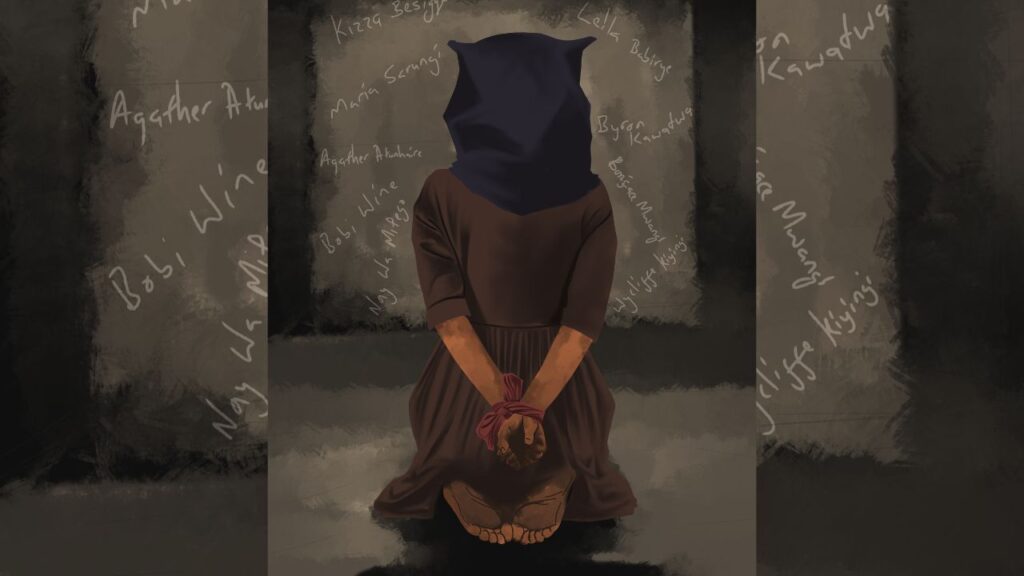
But how can the media respond to its responsibilities effectively when it is under siege, its freedom to function constantly under threat? Though data on abuses and attacks may fluctuate from year to year, press freedom violations of all kinds across the continent have not abated. Of the 591 cases of violations in 2023 affecting 600 journalists in 40 countries, there were 12 cases of journalists killed for doing their work. In that year, the victims included 85 females. The highest incidence of violations were physical, verbal or online attacks followed heavily by arrests and detentions. That year also saw the highest incidence of censorship, recording a total of 112 cases, over the past three years. In 2024, 11 were killed among a total of 480 journalists who fell victim to all kinds of violations. For the first nine months of 2025, there were 274 violations in 30 countries affecting 307 journalists; three of the total victims were killed. In all these violations of press freedom, state actors, including security personnel, were the principal perpetrators. They accounted for 87.3%, 86.7% and 83.26% of the violations in 2023, 2024 and last year respectively. Between July and September 2025, for example, there were 77 cases of arrests and detentions. Six of these victims were female journalists. There were ten females among 55 journalists who suffered physical or verbal attacks in the same period.¹ [Source: IPI]
What Can or Must the Editor Do
As proposed in this presentation, the principal political question that confronts Africa is the haunting threat of imperialist subversion of the independence and sovereignty of our peoples. How does the Editor, the media deal with this gigantic problem? It seems to me that the first step is for the self-respecting, patriotic African Editor to recognise and acknowledge this reality without any apologies. Being so conscious, the Editor will be better prepared to monitor its manifestation as it plays out in all aspects of our peoples’ lives: in economic relations, diplomacy, politically and in other realms. It should be the Editor’s responsibility to raise the public’s awareness and consciousness of how their lives are affected by this new global disruption. The time has come when the African Editor is called upon to be a partisan crusader for Africa’s independence and sovereignty without apologies: but without becoming a banal propagandist of hate, racism or war-mongering. The more effective way of fighting any form of oppression, such as imperialism itself, is by upholding the highest principles and standards of professionalism and ethical conduct.
Challenging the undemocratic practices of the political classes and their governments can be deadly business. It is always the source of repression from governments and their allies. Yet, it is in the media’s own self-interest of survival to be relevant to develop appropriate methods of carrying on this onerous social responsibility. There can be no one way of approaching the matter. Conditions differ from country to country. In extreme cases the independent media may be banned. Or conditions may be such that the media chooses to stop production rather than compromise and become a tool for undemocratic practices. In the majority of conditions as they are today, one may not be a martyr; but there ought always to be some room to provide truthful information relevant and useful for the public.
Considering the widespread condition of intolerance to press freedom, the first task ought to be to strengthen the organisations of all the players in the industry: owners in the private sector, managements in all the sectors, and practitioners, the journalists and allied producers of content. When players in the industry are effectively organised they do present a force for collective security against attacks.
An organised industry also has better prospects in making those demands and bargains that mitigate some of the economic and financial challenges facing the industry. In some of the areas of serving the public’s information and content needs, organised industry can easily develop projects of collaboration in joint production or sharing of content material. Such cooperative initiatives may be best appreciated in areas such as documentary production, investigative reports or even exchange of news reports from distant regions or news on specialised subjects.
Similarly, cooperative ventures may produce mutually profitable results in areas such as training to acquire new skills and knowledge.
In Conclusion
I want to state that I refrained from addressing matters pertaining to the very critical existential questions of business and finance of the media industry in Africa. This is because I do not consider myself competent enough to address those matters. The agenda provides for persons better equipped to handle this very intricate and complex question. In conclusion, I would like to submit that we find ourselves in a time when the media in Africa must stand up by the people and be counted. You are called upon to become more adversarial for peace, protection of our independence and sovereignty.
It is time to experiment with joint common cross-border editorials in campaigns to wake the African Union up to stand up to promote and protect the interests of the African peoples.
It is time to pay closer attention to develop original material in reporting on the conflicts devastating whole regions of our continent. Our media respond diligently to calls by any politician whatever their rank or persuasion. But our media fail woefully in covering human rights abuses, and even pay less attention to violations of press freedom. This must change. It is time to reorganise and strengthen our media organisations and associations for the protection, safety and progress of the industry and its many human players.
In short, our Editors are called upon to rethink and commit to an African future of promise and progress. We are in dangerous times indeed