|
Getting your Trinity Audio player ready...
|
I am from the first generation, I will be forty-five years old in August this year.
I was born and raised in Nairobi, with what I now think of as privilege lite. Enough access to feel protected, not enough insulation to avoid contact with reality. I did not grow up hungry. But I grew up alert. I did not grow up oppressed. But I grew up aware, and sometimes afraid.
Nairobi trained me early in contradictions.
High life and low life were never separate categories. They existed in the same week, sometimes the same day. A neat house with rules and routines, then the street, like Wanyee Road in the ’90s, with its own economy and ethics. You learned quickly that order was conditional.
Order was, and still is, really a function of privilege.
Language followed the same pattern. Queen’s English at school and later at work. Kimeru at home during my formative years. By my teens, defaulting to an English-Sheng hybrid, a language now mocked by everyone, including those who use it. Kiswahili everywhere else, to everyone else.
Code switching was not cultural flair. It was basic competence. Not knowing where, when, how, or what to speak could guarantee social exclusion, and sometimes physical exclusion too. Including being beaten by other kids. “Kuja hapa wewe Barbie.” Or, “Hao ni born tao,” when we would go to Meru.
That constant adjustment shaped my generation in ways that are now easy to miss. We learned how to fit in, how to move, how to adapt. Not out of sophistication, but out of necessity. You learned early that rigidity was expensive.
Those of us born in the early ’80s grew up under Moi, although we did not experience him as a headline. He was atmosphere and dread. Fear did not announce itself. It simply existed. Parents spoke carefully. Radios were turned up so adults could talk freely in case houses were bugged. Certain topics ended conversations. You absorbed the rules before you understood them.
Fear was not dramatic. It was administrative.
Culturally, we were consumers of the outside world. San Fan Thomas. Franco. Mbilia Bel. Michael Jackson and Whitney Houston. Later, Tupac, Biggie, the Fugees, caught late at night on TV shows and copied onto tapes that changed hands quietly, reverently. Bollywood films on KBC. Action movies passed around on VHS, watched until the tape thinned and warped.
Kenya, at that time, was not confident enough to imagine itself loudly.
You were celebrated for imitation. For how closely you could reproduce a foreign accent, a foreign rhythm, a foreign posture. But you were watched carefully, sometimes suspiciously, if you leaned too far into your literal neighbour’s culture.
Curiosity was tolerated only in one direction. Outside.
Culture, when acknowledged at all, appeared mostly as warning. Our mother tongues were used to divide us into people we should not play with, people we should not marry, people we should not trust. Our culture was not primarily about celebrating ourselves and our heritage.
It functioned instead to codify “the others, as monitoring spirits” introduced early and frequently as bogeymen and positioned as permanent interference in our success.
If you wanted scale, relevance, or escape, you looked elsewhere. Outside. If you wanted to dream beyond your circumstances, you borrowed someone else’s voice.
What we did not yet know was that this borrowing would shape us permanently.
Yet Nairobi itself refused to let you be one thing.
The city was messy, unfinished, contradictory. Church crusades next to bars that doubled as brothels and early strip clubs like Tumbos. Matatus parked outside government offices. Fundraisers with DJs, priests, and goons standing side by side – again contradiction. Weddings in the morning, funerals in the afternoon. You learned early that meaning was contextual. Order was temporary.
That was our education.
We moved a lot between 1988 and 1994. Too much, perhaps. Each move required a quiet adjustment, new faces, new rules, a new way of being that no one explained but everyone seemed to know. I learned to talk to anyone, not out of confidence but out of need. It was a small survival skill, the understanding that tomorrow you might find yourself in a different estate, starting again, asking to belong.
Then something shifted in the late ’90s and early 2000s.
Ogopa DJs and Calif Records did not just produce music. They produced permission. Kenyan sound stopped apologising. It became urban, multilingual, confident. Swahili Nation. K South. Nameless. 5-Alive. Gidi Gidi. Music that sounded like the city thought.
For the first time, buying Kenyan was not charity or obligation. It was taste.
We invested. We bought CDs. We went to shows. We argued about lyrics, books, and their writers. Cultural relevance became something you could participate in, not just observe. Before politics opened up, culture already had. It became currency. It became leverage. The higher-ups noticed and used it to level up.
Then came 2002.
Kibaki arrived with Unbwoggable, roads, systems, and a restrained optimism that felt almost suspicious. For those of us raised on caution, hope felt heavy, almost magical. We leaned into it anyway. Careers seemed possible. Planning felt reasonable. You could imagine continuity without irony.
The younger millennials, those born between 1990 and 1995, were born into this mood. Kenyan confidence was already established. Local stars were normal. Project Fame made aspiration glossy and televised. Kenyan talent could be packaged, refined, exported. Progress, to them, felt default.
Then 2007 happened, brutal post-election violence.
For us, then in our mid-twenties, it was a shock. A revelation that the adults did not know what they were doing. That violence was closer than advertised. And yet, for my generation, it also felt like recognition. A reminder of something we had always known but had briefly ignored.
Hope in Kenya arrives conditionally.
From there, responses diverged.
My peers became practical. Functional. Deeply divided by the language and politics of our parents and kin. We pursued careers seriously. Marriage became either urgent or indefinitely postponed. Divorce and sexual freedom became common and quietly normalised. We learned therapy language, but mostly to manage ourselves, not to change ourselves. We became very good at coping and managing.
The younger millennials delayed. Commitment. Children. Certainty. If the system was unreliable, why invest early? Experimentation followed, polycules normalised a rite of passage. Drugs as regulation rather than rebellion. Hustle culture mixed with fatigue. Success performed publicly.
Then came the slow erosion.
Uhuru’s era did not collapse hope. It diluted it. Grand projects. Showbiz. PowerPoint presentations and conmen. Heavy narratives. Borrowed money. Borrowed confidence. Progress as image rather than experience. The optimism of the Kibaki years was not violently destroyed. It was slowly emptied and dismantled.
By the time Covid and Ruto arrived, the language had hardened. Hustle no longer meant pulling yourself out of difficulty. It came to mean outsmarting someone else, then justifying it. Over time, it hardened further, until it became a moral test. Those who struggled had simply not hustled hard enough.
Responsibility moved in one direction only, succeeding at whatever cost to everything and everyone. Pure, unadulterated capitalism fuelled by a cocktail of jaba juice, Class A drugs, Red Bulls, and Instagram likes. It was taught downward, repeated often, and enforced selectively. Empathy was treated as weakness, something you could afford only if you were not in charge.
For the first time, younger people stopped assuming the future would improve. They began planning for continuity of strain rather than eventual relief. Careers were designed around instability. Relationships were delayed and made swappable. Permanence felt naive.
The Gen X cohort surrounding political and corporate leadership resembled every generation that had come before them, with one distinction that mattered. This group did not conceal its cruelty.
I wore it comfortably.
Harmful decisions affecting millions were made without embarrassment. Consequences were acknowledged without concern. Suffering was not framed as unfortunate. It was framed as necessary, or as the outcome of not listening to supreme leaders.
Cruelty did not appear as excess. It appeared as method.
Cruelty proved efficient. It required no explanation and produced quick compliance. To reassure foreign patrons and co-opt the faithful in our eighty per cent Christian nation, it was repackaged as discipline. We were told we needed to be firmer with ourselves, more orderly, more obedient, like errant children or sheep in need of guidance.
PR hacks did the rest. Corporate and political cruelty, erm discipline… was laundered into the language of leadership, responsibility, and reform. It was broadcast relentlessly, from pulpits to boardrooms, from policy statements to motivational slogans, until it surrounded us from every direction and began to sound like common sense. A Jedi mind-trick. Or as my wife normally asks when faced with the blatantly absurd, “Hii si ni uchawi?.” And I understand.
Sometimes retreating into the mystical is the only way to make sense of reality that no longer does.
This is where blame entered the picture.
The generation coming after us, Gen Z, do not see us as unlucky. They see us as complicit. We had education, access, exposure, excess. We adapted and survived. We bought property. We speak fluently about trauma and systems, yet we largely operate within them.
They have nothing but TikTok likes and views. They are angry, and rightly so.
Exhaustion handled privately. Suicides became aspirational and a way out, and by 2023, a national crisis that required government intervention complete with policy, action group, multi-sector committees, tea and mandazis, and budget to stop millennials and Gen Zs from unaliving themselves… Sigh.
From their perspective, we did not inherit a broken country. We managed to break one.
I listen to the music of a younger generation, Alpha and Gen Z, and feel both proximity and distance. Their songs speak the language of release, defiance, impatience. I play them in my car, windows up, volume controlled. I let them fill rooms where my body is safe. I know the words. I know the references. I know the hunger underneath them.
The contradiction sharpens the moment I step into the city with intention. When I go to Gikosh, Kariokor, Kawangware or Toi Market, the negotiation begins before I open my mouth. My body announces me. My shoes, my posture, the way I pause too long at a stall, the questions I ask. Even before language, I am already being read. Not as a customer, but as a category. A class. An age… kabuda. A conclusion.
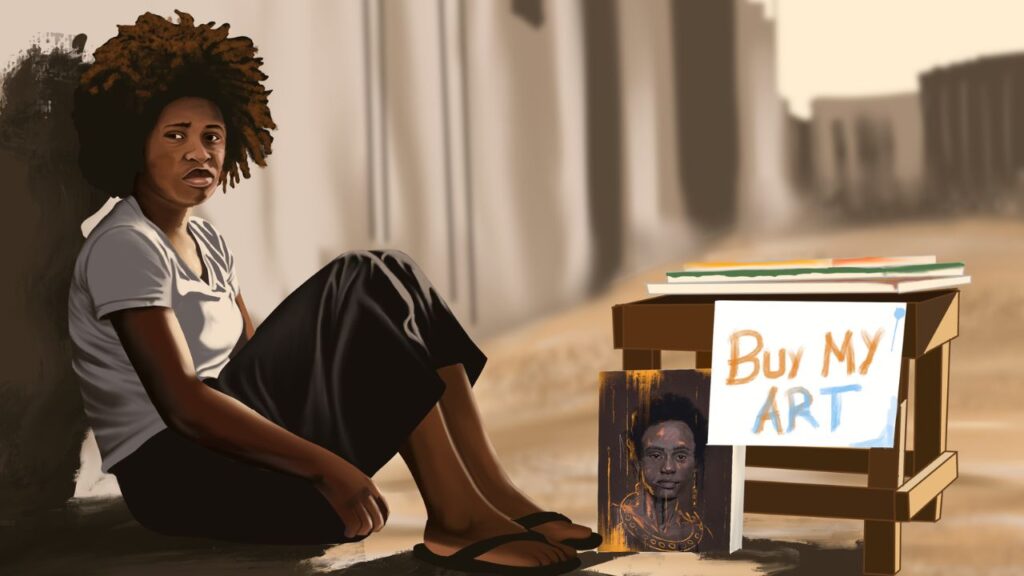
I move carefully through those spaces, aware that curiosity can look like provocation, that hesitation can be mistaken for entitlement. Prices rise before I speak. Help is offered or withheld based on what I am assumed to represent. I am not just shopping for clothes or things. I am navigating a story already assigned to me. And yet, I keep going back. Not out of nostalgia, not out of defiance, but because that is where the culture still breathes. It is also how I pay my bills. Culture is in the streets, not in boardrooms. Because that friction, that messiness, still feels more honest than the sanitised versions sold elsewhere.
The same calculation follows me when I think about concerts in Eastlands. Not the music itself, but everything around it. Whom I go with. How I arrive. Where I stand. How visible I am. Whether security makes me safer or simply marks me more clearly. Every decision sharpens the profile. Before I am a listener, I am an object of interpretation. Before intention, perception. I know that if I showed up fully, without buffers, I would not arrive as a fellow fan. I would arrive as a symbol, a wallet, a stand-in for a generation blamed for promises broken and futures deferred. If I were robbed, it would not feel like chaos. It would feel procedural. An efficient redistribution, justified by a story I already know.
This understanding stopped being abstract in 2023. I gave one of Kenya’s biggest urbantone/rap groups their first serious brand endorsement gig. Not optics. Not charity. Real work. A door opened deliberately. I believed this was what pulling my people up was supposed to look like. They robbed the studio. They wanted to start a fight. They lit up joints in the corporate studio when the client was present, then again in the corridors, metres from an embassy. It embarrassed me. It embarrassed the brand. And the brand, careful and polite, had already told me to deal with everything beforehand because exposure to those people constantly ended up like this. “Ghetto youts doing ghetto yout shit…” Fix it Tim.
The phrase was delivered softly, professionally, and without irony.
So I handled it deftly and cleanly. As I always do. No police. No media. No spectacle. The theft was absorbed. The smoke cleared. Apologies were made. The incident was tidied up and reframed so the brand could move on and assured that order had been restored. That was “grit and character, what they were paying for”. In the months that followed, it was not just me. A small group of us, people like me, older millennials, positioned, already fluent in how the industry actually works, made a decision and acted on it deliberately. Not loudly. Not theatrically. But precisely. Calls were not returned. Opportunities were quietly redirected. Trust was withdrawn in rooms they were never in. Their career did not end in scandal or spectacle. It narrowed. It stalled. It has faded. We knew exactly what we were doing. We understood the leverage we held, how age, class, access, and reputation made our actions final. We told ourselves it was consequence, not cruelty, even as we recognised how easily that distinction bends when power sits on your side of the table.
That knowledge stays with me as I move through Gikosh, through Toi where I walk around recording the sights and sounds regularly, through studios and boardrooms and venues where culture and commerce collide. Wanting to pull my people up while becoming increasingly wary of their intentions. Knowing their suspicion is shaped by class, by age, by a marketplace that teaches scarcity before it teaches trust. Knowing, too, that my wariness, however earned it feels, will always be read as betrayal. And yet, I still go. I still listen. I still show up where the culture is raw and unresolved. Not because it is safe, but because it is real. Because the contradiction itself is the point. Wanting proximity without performance. Belonging without explanation. Knowing that in this city, visibility is never neutral, and that simply being present is already a statement I did not choose, but continue to negotiate every day.
Ogopa DJs and Esther Wahome gave us belief. Kibaki gave us space, albeit with many skeletons in his closet. We turned culture into relevance. We stopped short of turning relevance into leverage. We learned to live inside broken systems rather than dismantle them. We replaced transformation with commentary and called it realism.
My advantage, privilege lite, made this easier. Enough comfort to avoid desperation. Enough friction to feel informed. It is an ideal position for adaptation and a terrible one for revolt.
Now, both millennial cohorts are grouped together. The ones who had everything and still delivered precarity. Housing out of reach. Work unstable. Politics hollow. The future postponed indefinitely. A people divided by struggle, convinced it is tribal.
The younger generations look at us and see people who explain decline very well.
The uncomfortable truth is this. Our greatest strength was adaptability. It is also our quiet failure. We learned to survive contradiction so well that we stopped trying to resolve it.
Jomo taught us oppression.
Moi taught us fear.
Kibaki taught us optimism lite.
Ogopa DJs gave us a voice.
Uhuru thinned meaning.
Ruto removed illusion.
I am not angry. I am reflective. And maybe a little sad. I have lost hope for this country where our children have been born, knowing that this may be it. The data points toward another Nigeria or DRC in the making.
Somewhere in Nairobi, and across the rest of Kenya, younger people are watching us carefully. Our careers. Our compromises. Our language. They are deciding whether adaptability is wisdom or surrender.
They are not waiting for our permission and hate our contradictions. Maybe that’s what growing up is really about.