|
Getting your Trinity Audio player ready...
|
Hope deferred makes the heart sick… – Proverbs 13:12 NLT version
There is a particular kind of grief that comes from watching your country break the same promises your parents once believed in. For Kenyan millennials – those born between 1981 and 1996 – this grief is not abstract. It is the weight of being the most educated generation in the nation’s history while navigating an economy that has no place for them. It is the dissonance of global connectivity meeting local stagnation, of democratic ideals colliding with entrenched political dynasties, of being raised on stories of national possibility only to inherit a republic that seems determined to consume its young.
This is a generation caught in a profound contradiction: globally exposed yet locally constrained, digitally connected yet economically excluded, socially aware yet politically disillusioned. And beneath it all runs a deeper current–the unhealed traumas of parents and grandparents, the emotional debts of survival, and the question that haunts every milestone: How do we build futures when we’re still excavating the past?
Millennials were raised with high hopes by parents who had learned that a good education opens doors of prosperity, leadership and opportunities. Our parents came from a time when just having a high school education guaranteed you a job, and governments that paid for education abroad and guaranteed jobs once you graduated and returned. They knew that even employers could pay for a master’s and keep giving you guaranteed employment for a duration, with a house and other perks on top. They had employers that had their own hospitals and schools, making having and raising children a much more affordable venture. They had offers for land through SACCOs and mortgages that made sense. In their world, the one thing that had a guaranteed rate of return was education, and boy, did they invest in it.
If it sounds like a dream to us, it is because we never encountered the intentionality and organisation that our parents experienced. We found semblances of it in the values they held and in the ways in which they raised us. Not only that, we were coming of age just at the liberalisation of the media. From having only KBC as the main source of entertainment on radio and television, we now had KTN, STV, and later NTV, with Capital FM, Metro FM, and Kiss FM for us urban kids, redefining our palate, our dreams and expectations. We watched Fresh Prince, Days of Our Lives, X-Men, The Bold and the Beautiful, Batman, Lois & Clark: The New Adventures of Superman, and Renegade. TV was a part of our schedule. I remember doing my homework in the evening to the sound of music from Jimmi Gathu’s shows on KTN; every day had a theme and a sound.
It may not make sense now with the Internet and YouTube, but back then, these shows were our gateway to the music happening globally. Jimmi pioneered it and we were home imbibing every single song, from Jam-A-Delic, Rhythmix, KassKass, Rapem, and more. We all found our preferences, the cultural nexus points that brought us together or excluded those who did not fit in or understand. In typical teenage behaviour, what we consumed became our identity. Monday to Friday we were glued to the TV in that evening hour that was generally accepted to be for us while the adults were still on their way home or in the kitchen.
It was a different time; although many of our parents knew about the outside world from books, news, and Reader’s Digests, or from friends and family who had travelled, or even from entertainment, the outlook was not the same. KBC mostly had Latin shows like Escrava Isaura and extremely grandiose shows like The Bold and the Beautiful, or Derrick the German minimalist detective, or Mr Bean. They presented a different reality, one lived by others. We could watch and be entertained and for the adults they could separate what they were watching from the lives they lived. For us children, however, something else was happening in the recesses of our minds that was probably being missed. A certain life, a standard if you will, was being developed. Without knowing it, these shows shaped the dream of what adulthood should look like and a subtle reorientation towards global citizenship was taking place within us. For those who had solid family traditions and guidance, this was not the case, but for the rest of us without adult parental guidance, either through abandonment or absence, we built a life in our minds of how things should be once we were adults.
To understand Kenyan millennials is to first understand what they inherited. The 1990s – when most were children – represented Kenya’s nadir. The Goldenberg scandal – a fraud scheme involving fictitious gold and diamond exports – cost Kenya over 10 per cent of its GDP, with inflation reaching 105 per cent and the money supply surging 35 per cent in 1993. This wasn’t merely an economic crisis; it was a betrayal that hollowed out national institutions and decimated family stability. For many families, the 1980s and 1990s saw a shift from circular educational migration to a one-way mass exodus seeking stability abroad.
Remember, our parents had been raising us to follow in their footsteps. Education was the key to success. It didn’t matter what your gifts were; the expectation was that if you did well, everything else would unfold. This was said by our parents, our teachers, and our relatives.
They only knew one way, and with time, the order would be restored to what it was supposed to be. Few, if any of them, could have seen where the world was headed and what would become of their children on whom they had placed such high hopes.
One of the unacknowledged stories among millennials is what the ’90s, all the way to Kibaki’s election in 2002, did to us. My mother, who was a secretary then and a single mother, lost her job. Unable to sustain the city life, we moved back home to my grandparents’. It was a jarring change for me. I moved schools from the expensive IGCSE school my diaspora father had been paying for, to a local primary school in the area. The irony of it all is that my father worked for the same organisations that were responsible for the measures that led to my mother’s employment situation. Moving back was not easy; the tensions in an already difficult mother-daughter relationship were compounded by another daughter-in-law and more grandchildren coming home. At some point, there were about 12 of us. When home is welcoming and nourishing, there is impetus to start over; when this is not the case, it’s a class in dysfunction, bitterness and constant tension. I watched my mother try her hand at numerous things – making candy, selling gum arabic, baking. None of the ventures took off enough to enable her to stabilise financially. In the end, the only option left that many were looking at – moving abroad.
We already had family abroad, and it was decided that my mother would go to the US. The plan was that she would go to America, and when she had settled down, I would follow her. She made sure I had a passport and prepared me as best as she could. I grieved; it felt like a part of me had been cut off. It didn’t help that her absence had left a gap; I was now included in adult disagreements because there was no one to shield me. The workload on the home front now included me and my education suffered. There would be times I forgot to do homework because no one reminded me, but I was also busy making dinner for the family. A disagreement with the adults resulted in the house being split into two. My cousins and aunt on one side, my grandparents and I on the other. It was sort of like the Berlin Wall, just inside a house.
The tension was too much, and so I played the one card that would be accepted. I cried to go to boarding school, using all the reasons that could justify my case. It was accepted, and a year and a half after my mother left, I was in boarding school. My circumstances were not unique; there were at least four of us whose mothers were abroad trying to make a better life for us. One of us got to go and visit during one school holiday and I was envious of the stories she told. Boarding school was a respite for me, a haven despite the occasional bullying. It had routine, rhythm and good food, the teachers cared and were invested in our success. I was a good student and caught on and did well in my KCPE.
By then, it had been four years of expecting to go to America to join my mother. Every time we spoke and I asked when I would go, the response was always the next holiday. I patiently waited, and when I finished my exams, the expectation was that during the long holidays it would finally happen. Only there was a small issue; I did very well in my exams, so well that I was earned a place at a coveted national school. Right there, education trumped everything else, and that was the end of that dream and promise.
The long and short of it is that things did not turn out as we had both expected, and what was meant to be a few years at most became extended by many factors, and in the end it was a 20-year separation. As an adult now, I can see why; my mother wasn’t able to become stable or successful enough to build and grow deep roots in America and take me there. But passing my KCPE so well and landing in a national school became the excuse for why I didn’t go to America.
Without an adult to have conversations with and help explain things, there is a way a child makes sense of the changes in their world. In my case, my mother’s leaving, even if it was to better us financially, had a huge effect on me emotionally and psychologically, leading to years of struggling with feelings of abandonment and suicidal thoughts. I was emotionally stunted, and this in turn crippled me in adulthood, especially once I became a mother. All that had happened to me had left me with powerful, underlying subconscious beliefs that could not be shaken by any experiences to the contrary that I had had. I write about them in my book, Missing My Mummy, but it wasn’t until I began to confront what happened that I was able to find my footing in the world as myself rather than as someone continually justifying my worth and needing to prove to others that I belonged.
It took many years for me to sit with what happened and how it shaped my thinking and the person I became. The expectations I had of life and the life I was living were night and day. This cognitive dissonance is lived a lot by heavy social media users in Kenya. We see dream lives, economies, and countries then settle into our own reality. The Internet has become the millennials’ escape tool of choice, just like alcohol, drugs, workaholism, and other vices.
The early years of the Kibaki government were filled with hope and possibility; our country could finally reach its full potential. There was no tolerance for police demands for bribes with some even being arrested by wananchi. Free education gave millions of children a chance at a better life and businesses were being started and thriving everywhere we looked. How could I not think that there was a better opportunity for me?
This dream was shattered during the post-election violence in 2007–2008 when I was in the last year of my International Baccalaureate programme. We watched the country burn in a way that we hadn’t quite seen before. Even with previous clashes and violence, the government limited what came to the public consciousness. This one, though? We had journalists like Boniface Mwangi in the thick of things, taking gruesome images of limbs being hacked off, bodies and homes being burned, families being displaced from their homes. Neighbours were turning on each other brutally. I went to volunteer at the Jamhuri Park Internally Displaced Persons Camp (IDP) and I couldn’t go back. An entire afternoon of children and parents recounting what happened and how they lost each other and what they witnessed was too much to bear. I volunteered later with two other campaigns for IDPs that allowed me to help from a distance – one with MamaMikes which had partnered with Tusky’s to supply the IDPs with food and personal items, and another with Habitat 4 Humanity to raise funds to build houses for IDPs. This was probably our first deep reckoning with the reality of the underlying hate, evil, and tribalism being weaponized amongst us.
A few months ago, I met an Uber driver who lived in the Rift Valley during the post-election violence. A millennial himself, he confirmed that the numbers of the dead were far greater than what was known. He and his village mates would fight and kill those attacking them from other villages, burying them in shallow graves. What does witnessing or participating in violence like that do to a person, to his family of origin, and if he chooses to get married, to his wife and kids? Back then I had a laptop and so I went online and found and read all the reports on the post-election violence. It haunted me deeply.
At the time, however, I was living a double life – perhaps one of the millennial skills is the ability to show up even when the world is burning. I was out clubbing with friends, Diaspora Kenyans and Ugandans living in the UK. Tamasha was full even though there was no meat, but Carnivore was empty. The Ugandans, who were older than me, had lived through Idi Amin Dada’s rule as children and they kept warning us that, unlike Uganda, we had nowhere to run to. We were too modern, with too many buildings and open land compared to their fertile forests with enough food to feed and shelter people during conflict. I could hear what they were saying but I couldn’t internalise it. For millennials – many in their teens and twenties – the post-election violence that killed over 1,000 people and displaced between 350,000 and 650,000 others, was a shattering of the national promise. Sexual violence increased over 60-fold during this period, and the ethnic tensions exposed fundamental fractures in the nation’s identity. This wasn’t ancient history their grandparents discussed in hushed tones–this was their coming-of-age, their formative years marked by smoke, betrayal, and the realisation that the Kenya they’d been taught to believe in might not exist.
The present: When global exposure meets local stagnation
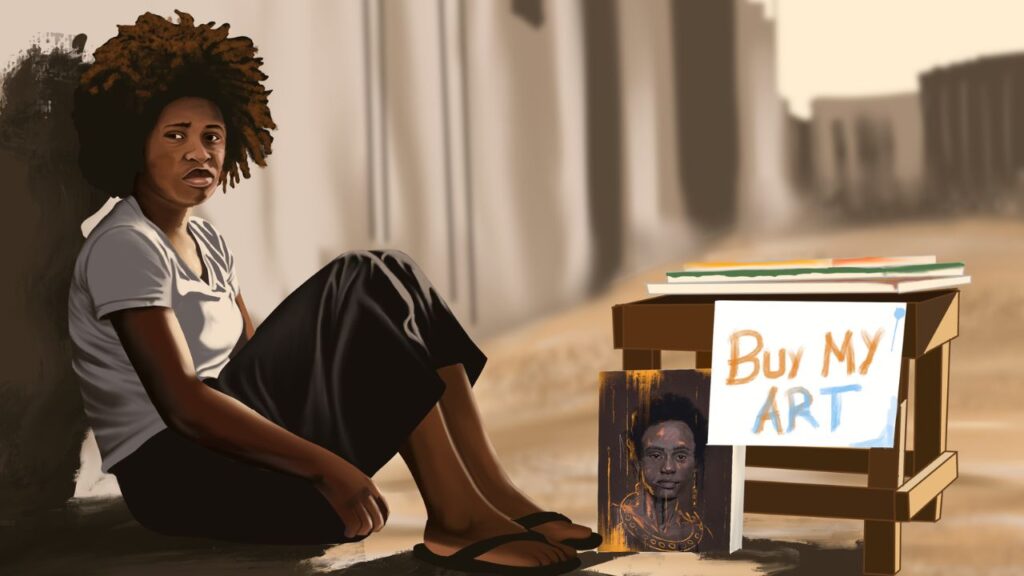
Now, consider what makes this generation uniquely positioned to feel this betrayal so acutely. Kenyan millennials are the most educated generation in the nation’s history. Yet youth aged 15 to 34 years, comprising 35 per cent of the population, face a staggering 67 per cent unemployment rate. This generation grew up with the Internet, with smartphones, with access to global conversations about success, opportunity, and meritocracy. For older millennials, it is harder as they watch their peers who achieved these dreams. Almost every one of us is a person or five away from someone who has had great jobs or a successful business or made it abroad and, despite challenges, been able to set themselves up in life.
It’s hard to contrast this with the many others who are unemployed, underemployed or even unwilling to work. The movies and shows they watched led them to dream of building something transformative. They consumed American and British media that promised education would be their ticket to prosperity. Yet when they graduated, some with masters and PhDs, there were no jobs. When they looked to their leaders, they found President Kenyatta, and now President Ruto, who had styled himself as a “hustler” committed to transforming the economy from the bottom up but instead placing punitive taxes on essential goods. The education system we were once proud of is a pale shadow of itself. Inflation is higher and basics like food and housing aren’t what they used to be. It is no wonder that in June 2024, Kenyans led by the Gen Z took to the streets in protests that were “tribeless, leaderless and partyless”—a radical departure from Kenya’s ethnic-based politics.
The emotional reckoning: Trauma, expectation, and the politics of healing
Last year, during what were dubbed the GenZ protests, led mainly by the generation that follows ours, we had to confront the reality of what our nation and our lives had become. What makes this moment particularly poignant is that it’s occurring as the oldest millennials turn 45 – firmly in middle age. This is the age at which people typically consolidate identity, build stability, and pass on values to the next generation. But how do you do that when your own foundation is fractured?
Nearly 75 per cent of Kenyans under 35 face limited access to meaningful job opportunities, which means that healing remains a luxury many cannot afford. For older millennials, who tasted the heady liberalization of the Kibaki years, their current lives are especially bitter. We were too young to starting working immediately, and for those who went to university, too young to build a career that would reap the benefits of the time yet old enough to see the path taken by the older generation and follow it, only for it to lead to a mirage. There is a wisp of the things they could have achieved if only they had a few more years of good, people-focussed leadership. A few more years of good jobs, good relationships, good financial income, good businesses and good health. The dream of good leadership that plans and dreams for generations to come has never materialized in the ways we expected. The political landscape offers little solace. Our leaders seem to think that they can enrich themselves in a land of growing angst and frustration.
This is the crux of millennial disillusionment: we were promised meritocracy but inherited oligarchy. They were told education would liberate them, but found themselves overqualified and underemployed. They were raised to believe in democratic ideals but watched elections devolve into ethnic arithmetic and dynastic succession.
What helped me deal with the reality of my life? Confronting what happened to me, what I had expected as a child and what I got, the gaps and how they had crippled my abilities in adulthood. Without covering up and without hiding, I then began to acknowledge all that had happened to me, how it affected me, how it shifted my expectations, often reducing hope, or postponing it, or putting it in a suitcase, waiting for a day that never came. I had not realized how many things I had hoped for but had slowly given up on until I began. It was necessary to grieve and lay to rest some of those expectations and dreams. The cognitive dissonance in our souls, the hopes we held and the reality we live, is kept at bay by the addictions, all the – holisms (workaholism, alcoholism, etc.). Yet healing comes when we gain the courage to finally acknowledge and grieve, stating the truth of what lies before us. My immediate relationships, my community, my faith, held me in the tumultuous season. There are few things as devastating as realizing that you fooled yourself in your attempts to hope for better. The shattering of dreams can sweep you away, but there is another side to it all. Once you take stock, you can accurately start to see where to rebuild. Can we finally stop running away from the pain and turn to face the reality properly?
Where healing meets politics: The path forward
This is a civilizational inflection point. This is about whether Kenya can bridge the gap between the trauma it inherited, the current chaos, and the future it aspires to build.
Healing requires naming the pain, sitting with it and tracing its path to current realities. Healing also requires systemic change, because once one understands an issue, resolving it cannot be hasty. Sitting with an issue uncovers the many unexplored angles; some of the things we blame on ourselves are historical and require painful cultural decisions. Shifting our path as a nation needs well-considered decisions that are implemented with participation and goodwill. The healing millennials need isn’t just therapeutic; it’s structural. It requires economic transformation that creates dignified employment, not just survival hustle; political accountability that breaks dynastic strangleholds and ethnic patronage networks; institutional reform that makes corruption genuinely costly rather than politically expedient; intergenerational dialogue that honours the trauma parents and grandparents endured while refusing to perpetuate their survival strategies; and rebuilding of community to lean into each other and receive support as we come together and move away from capitalistic, individualistic ways of living.
But here’s the profound challenge: healing requires rest, and rest requires security, and security requires resources that most millennials don’t have. How do you process your mother’s absence when you’re scrambling for rent? How do you unpack generational trauma when today’s crisis demands your full attention?
The unfinished dream
Kenyan millennials stand at a crossroads between their parents’ unhealed wounds and their children’s uncertain futures. They are the generation that was supposed to consolidate Kenya’s democratic gains, leverage technological progress, and fulfil the promise of independence. Instead, they find themselves fighting battles their grandparents thought they’d won.
The dreams aren’t dead; they’re suspended, waiting for systems to catch up to aspirations, for healing to become possible, for the gap between global exposure and local reality to close. Whether that happens through reform or revolution, negotiation or rupture, will define Kenya’s next chapter. And millennials, standing between inherited trauma and imagined futures, need to write it – whether their elders like it or not.