Elections ordinarily serve two main purposes. One, they facilitate the peaceful change of leaders or the renewal of the mandate of incumbents, which is necessary for their legitimacy regardless of the quality of their leadership.
Two, they provide a stress test for a country’s governance institutions and the overall integrity of the nation state. They essentially check whether a country can disagree politically without succumbing to violence or outright war.
In this regard, Uganda’s 2026 general election, which pits Robert Sentamu “Bobi Wine” Kyagulanyi against President Yoweri Museveni in a repeat of the 2021 contest, provides the same predictable set of answers to the first issue above, then repeats many questions that have remained unanswered over three decades in the case of the second.
Start with leadership change. Since independence in 1962, Uganda has never witnessed a peaceful transfer of power from one elected leader to another. In the 24 years between 1962 and 1986 when the National Resistance Army (NRA) led by Yoweri Museveni took power, Uganda had gone through two invasions (1972 and 1978), three coups (1966, 1971 and 1985) and six presidents: Milton Obote, twice, Idi Amin, Tito Okello Lutwa, and the short-lived transitional periods under Yusuf Lule and Godfrey Binaisa.
By comparison, the National Resistance Army/Movement (NRA/M) and Museveni’s reign, now in its fortieth year, has offered remarkable stability while postponing or avoiding altogether the delicate matter of the peaceful transfer of power from one elected leader to another.
Museveni and his regime’s seeming unbeatability can be traced to five main factors: the ability by the NRA (which became the Uganda People’s Defence Forces) to secure a monopoly on state-level violence; building alliances with established centres of political power, especially the Democratic Party and the central Buganda Kingdom; securing key foreign backing from Western powers while keeping other world powers warm; fusing the NRA/M into the state while restricting political rivalry and contestation for almost two decades; and social-economic reforms that have improved livelihoods, powered growth, and reduced poverty.
The last two are worth further analysis. The big political church the NRA/M set up in 1986 was remarkable for how loosely defined it was, appearing to accommodate individual ambitions rather than institutional agendas in a government of national unity.
A few days before the NRA took Kampala in January 1986, rebel leader Museveni met with Paul Kawanga Ssemogerere in Nabbingo on the outskirts of the city. Ssemogerere was widely believed to have won the 1980 election whose disputed outcome in favour of Milton Obote had provided the NRA with the casus belli for its “liberation war”.
While Museveni left to fight, Ssemogerere stayed to lead DP in opposition in parliament, before joining the short-lived Lutwa government in 1985. He and the DP had the political legitimacy and experience that the NRA/M lacked, hence the invitation to nominate officials to the first cabinet. Notably, however, there was no structured power-sharing agreement.
Unsurprisingly, it did not last. By the time Ssemogerere fell out of government and decided to run against Museveni in Uganda’s first direct presidential election in 1996, many of the DP officials were already gone or assimilated into the NRM. Museveni’s election taskforce was primarily made up of his NRA/M colleagues, the new political allies having by this time outlived their usefulness.
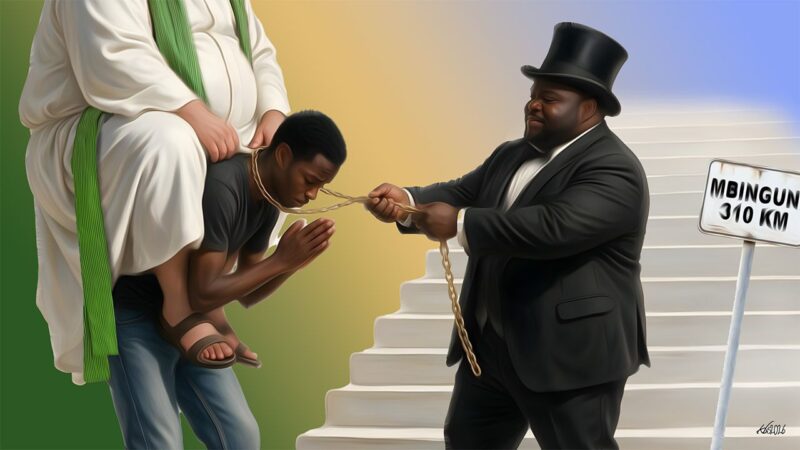
President Museveni’s longevity within the NRM fold and in electoral contests across the aisle owe much to his mastery of the art and practice of transactional politics at the individual level, with him as the ever-present fulcrum.
When Kizza Besigye, a leading NRA/M ideologue broke away in 1999 citing the lack of democracy within the movement and ran against Museveni in 2001, he was quickly isolated and presented as a disloyal and recalcitrant cadre driven by ambition rather than conviction.
In hindsight, one of Museveni’s deftest political moves was to ensure that internal rivals or malcontents left individually or in small groups (Eriya Kategaya and Bidandi Ssali in 2003, David Sejusa in 2013, Amama Mbabazi in 2015, etc.) while leaving the door open for their return. All four, and others, returned to the fold, albeit in significantly lower-profile roles.
The other was to continue reaching across the aisle and recruiting rivals and political opponents, expanding the choir but never allowing a synod to consider choosing a new bishop. In this regard, as the years went by, Museveni’s cabinets began to look increasingly more like that of 1986, packed with former political rivals.
Besigye’s former allies Beti Kamya and Beatrice Anywar were among the first to join. Then Obote’s son Jimmy Akena brought the UPC party into an alliance with the NRM, followed by Nobert Mao and the DP. The NRM today is a big church party where recent recruits like Speaker of Parliament Anita Among and her deputy Thomas Tayebwa, both previously in FDC, can quickly rise to its top echelons.
The biggest overture, arguably, was to the political and military elite of northern Uganda. The NRA was essentially a southern army that fought against the northern political-military dominance of post-independence Uganda. The resistance continued militarily through Joseph Kony’s Lord’s Resistance Army (LRA) and through political support for opposition candidates in 1996, 2001, and 2006.
However, after the LRA was forced to flee into the Central African Republic in 2006, Museveni and the NRA/M went on a charm offensive in the north, building a new political alliance that was previously unthinkable. In this post-war society, the peace and stability promised by Museveni and the NRA/M was an easier sell while post-conflict donor programmes and large commercial agriculture created a peace dividend.
This cooperation with and co-option of political rivals has made it almost impossible for anyone to build a cogent opposition core, or a wider party or movement around it. President Museveni’s warning, during his swearing-in ceremony after the 2016 election, that there would be no opposition in Uganda by the 2021 election continues to reverberate.
This grand alliance with the political elite, much of it transacted at the level of individual interest rather than wider institutional interests, created a vacuum in the opposition ranks which contributed to the emergence and rise of asymmetric political actors like Kyagulanyi, who came to prominence as the Afrobeat musician, Bobi Wine.
Kyagulanyi’s “People Power” movement emerged out of a sense of exclusion; in his successful by-election campaign in 2017, Bobi Wine, the self-styled “Ghetto President” routinely said parliament (meaning power and resources) had not gone to the ghetto so, instead, the ghetto was now going to parliament.
Not surprisingly, many of those carried into parliament by this wave have tended to address their individual financial priorities and political ambitions, often creating rifts within the party that the government has been on hand to exploit and widen.
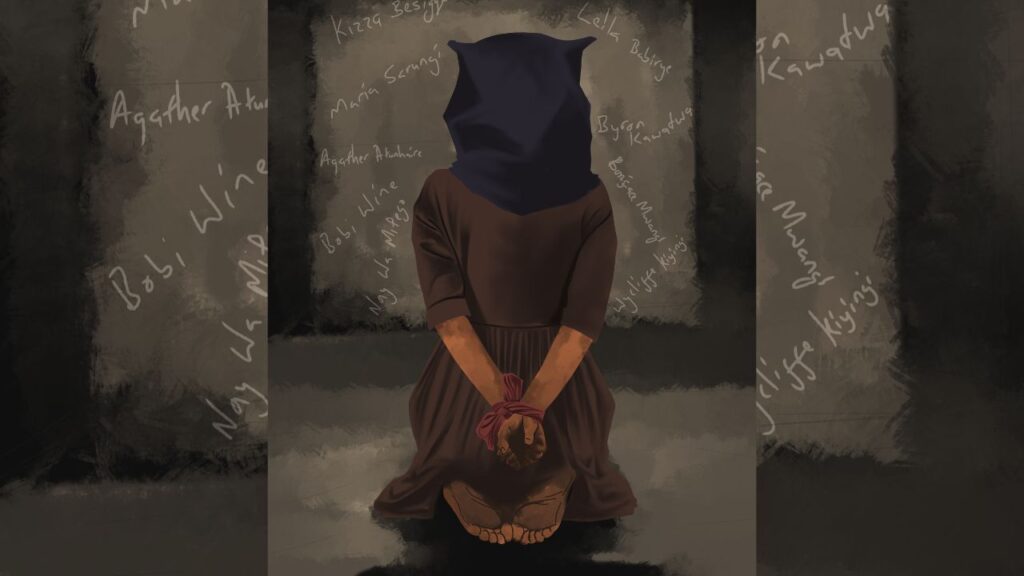
After a brutal response from state actors during the 2021 election during which scores were shot dead in November 2020 and many more abducted and tortured, and after internal fighting, Bobi Wine’s National Unity Platform (NUP) party has run a “protest vote” campaign this time round.
A protest vote is energising to the millions of young Ugandans who feel left behind. The economic growth in Uganda in the 1990s and 2000s cited earlier has lifted millions out of poverty but a high population growth rate has pushed many back in or left them teetering on the edge.
The percentage of the population living under extreme poverty fell from 24 per cent in 1989 to 7.3 per cent in 2019 but the actual number of extremely poor people increased from 10 million to 18.1 million over the same period.
Youth unemployment remains stubbornly high while labour productivity stays low. In 2021, only four out of every 10 pupils completed primary school, a slight improvement from the 35 per cent who did so in 2000. This is lower than the average rate for Least Developed Countries (63 per cent) and behind neighbours Kenya (78 per cent), Tanzania (74 per cent) and Rwanda (63 per cent).
Due to these poor education outcomes, malnutrition, and the lack of opportunities, the World Bank estimates that the average Ugandan will only achieve 38 per cent of their potential during their lifetime.
Uganda has achieved or is on track to achieve just 28 per cent of the UN Sustainable Development Goals and “significant challenges” remain in meeting 13 of the 17 goals. What the numbers don’t show is the sense of despondency that fills graduates without jobs, small entrepreneurs struggling to make payroll, and even white-collar executives who, in a low-wage economy, are one medical emergency away from losing it all.
A protest vote allows young, disillusioned Ugandans to vent and let off steam. The NRM campaign slogan, “Protecting the gains” validates some of this anger as a reminder that there are some who have done well over the past four decades.
But it does little to give the NUP the national appeal to articulate a positive alternative vision and mobilise around it. It has also served to keep political and economic elites away from the young party, further radicalising its supporters against “the establishment”.
The commercialisation of politics and its bastardisation by bringing less experienced and qualified individuals to the top have made it unpalatable to anyone with options or whose only interest is public service, not self-aggrandisement.
Thus, a chasm has emerged in Ugandan politics between the few who have done very well, the extreme end that feels completely left behind, and the large middle that knows life can and should be better, but doesn’t have the voice to articulate how, or the tools to force the change.
Elections and campaigns should provide a platform for the articulation of alternative policies. However, the transactional nature of politics and the defenestration of political parties have cemented individual merit as the main consideration for electors, while the commercialisation of politics has put most seats up for the highest bidders.
Political violence, the handmaiden of electoral contests in Uganda, has been relatively muted this time round. Security agencies have been urged to exercise restraint as Uganda seeks to avoid the kind of violence seen in Tanzania during last year’s election.
The NUP has been hamstrung from expanding its core support beyond central Uganda. The internal calculus within the NRM is that this, together with direct cash handouts to potential voters under the Parish Development Model (each parish of the country was allocated about US$25,000) will be enough to return an electoral victory without the bloodstains of violence.
This, the thinking goes, should allow for a quick return to normalcy, including powering ahead to complete the East African Crude Oil Pipeline through Tanzania, which should create fiscal space for expanded expenditure on social programmes and bring more disaffected young Ugandans into the tent.
This tension, between hope and despair, between a “protest vote” and “protecting the gains”, is inherent in contemporary Ugandan politics and is at the heart of this current contest.
If “protecting the gains” sounds familiar, it is probably because it echoes the political sentiment from Uganda’s first direct presidential election in 1996.
Museveni’s official campaign promise in that election was a mouthful: peace, unity and transformation for prosperity. The most memorable slogan, however, was coined by Local Government Minister and NRM mobiliser, Jaberi Bidandi Ssali in adverts aired on the private FM radio stations that were then mushrooming across the country.
In the adverts aired in Luganda, the country’s lingua franca, Bidandi Ssali asked voters if they had registered any personal achievements, then urged them to protect them by voting for the NRM and candidate Museveni.
The unpersuaded and those without any gains to protect were also offered a classic piece of propaganda and disinformation: the state-owned New Vision newspaper ran an advert claiming that former President Milton Obote was next door in Kenya waiting to take power if Museveni’s main rival in the polls, DP’s Ssemogerere, won the election.
This mix of hope and fear was devastatingly effective and Museveni won with 74 per cent of the vote, his highest tally ever.
Few people expect a different outcome when the results of this election are called. As long as Museveni is still alive, the succession question in Uganda will always have an answer given the way the state and country have evolved around the incumbent and the levers of incumbency. Museveni remains the answer, whatever the political question.
Yet many unanswered questions remain. What happens when President Museveni is no longer able to govern? Is a weak and fractured political elite able to guarantee civilian rule in his absence or will the country return to military rule? After four decades built around a strong leader, will another emerge with the same set of unique skills, or will power be contested by many lesser talents? How will institutions that have been undermined to expand individual power, survive in a post-Museveni era?
Elections in Uganda provide mock exams to test some of these hypotheses, but the final exam is unlikely to be marked on ballot papers. To protect its gains, Uganda must find a way to manage the barbarians at the gate.