When Ugandans head to the presidential polls on 15th January, they will be voting for the seventh time under the mostly liberal 1995 constitution that opened the country up to political participation, free-market economics and civil and political rights. And yet, the most plausible outcome is that Yoweri Kaguta Museveni will be announced winner.
Museveni has grown from individual into institution. He has taken every important decision of Uganda’s political, economic and military life in the last four decades. He holds cultural, social, economic and military power. He is imperial. Unmatched in the country’s brief history. He is ruthless with power. He is equally an enigma. He is as loved (and feared) as he is hated. In rural constituencies where his government has spent three years making direct cash transfers under the Parish Development Model (PDM) programme, Museveni has received a rousing welcome, unquestioning loyalty and broad support, and yet in urban constituencies where the majority of the population are young people who have emigrated there in search of work and opportunities, the verdict has been harsh. His government has been lethargic, slow on projects, labelled corrupt, and in some cases accused of being out of touch with the realities of a young generation that makes up the bulk of the population.
But Museveni and his party, the National Resistance Movement (NRM), are working overtime to win back that crowd too. His campaign has taken a three-pronged approach; his direct engagement with voters at rallies, party apparatchiks getting competitors to pull out of contentious races, and a caravan of young people moving into cities where he has campaigned to run festival-style campaigns. This strategy is buttressed by the use of security agencies to complicate opposition campaigns and slow them down or stop them entirely.
The contradictory question is: How is an 81-year-old who has been in power for 40 years going to win the election?
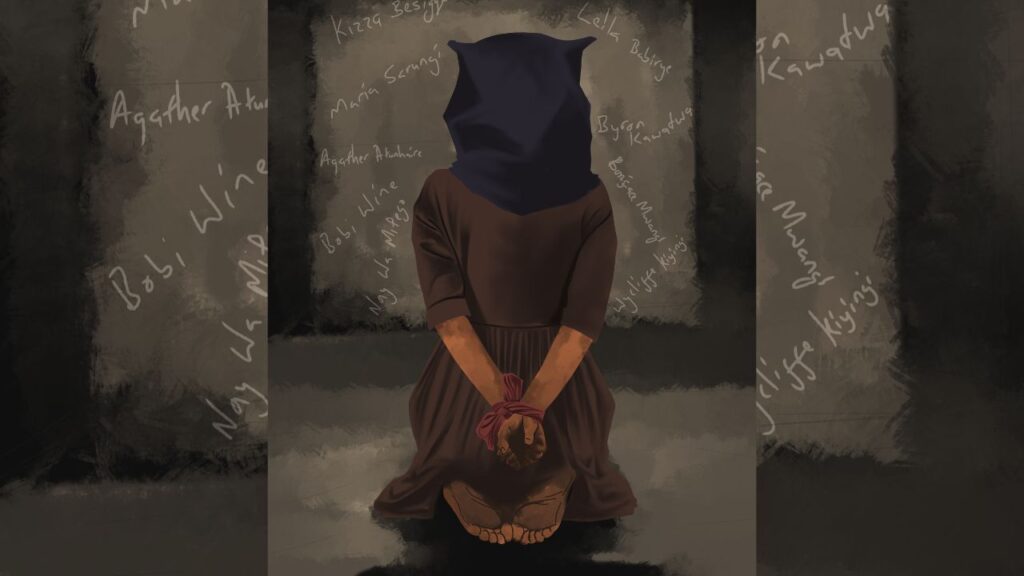
It is not supposed to be a contradiction, except it is. His main challenger, Robert Kyagulanyi – famed as Bobi Wine – is running a bootstrapped, brave and tenacious campaign. He alleges that more than a hundred of his supporters and campaign staffers have been arrested by police. Some have been brought to court and charged on flimsy grounds – theft of mobile phones, obstructing traffic – while for others the wheels of justices have not moved at all; they remain missing. Unaccounted for or simply disappeared.
Bobi Wine is 43. And every inch young. He runs to some of his campaign venues. He dances at them. He is entertaining and rebellious. When he is stopped by police from proceeding to campaign venues, he directs his campaign at the police officers, reminding them that they are poorly paid (cops earn about US$130 at the lowest rank) and poorly housed. He is also a famous singer. He built his career and fame right before the eyes of many young Ugandans, singing his way out of the ghetto and into riches. His music speaks against income inequality and state excesses, and demands equity. This has made him a powerful competitor against Museveni and an unusual political foe.
In the 2021 election, Bobi Wine took 35 per cent of the vote (a result he contested), the highest a competitor against Museveni has ever polled. Some analysts put it down to a block vote from the Buganda region, from which he hails – but a closer look at the data belies that conclusion. Bobi Wine did well in most urban constituencies and his party took 57 seats in parliament – not many in a house of 529 legislators but the largest number in the opposition and the most the opposition has had in parliament under multiparty politics. His message in that election was simple: the young people are angry. They want better. Beginning as a movement of grievances, People Power dissolved into a political party a year to the polls and with just eight months to the election, the National Unity Platform processed and fielded candidates for almost 80 per cent of the electoral positions.
Uganda has never had a peaceful transfer of power since independence. This singular fact is a very defining part of every election. Through nine presidencies, the terminal point has always been violent – Museveni himself came to power through a bloody civil war that lasted five years and killed north of half a million people. His government, from the initial stages, was seen as a stabilizing force. It opened the country up to national dialogues which led to a liberal constitution that provided for a bill of rights that provided for property rights, civil and political rights, and social and economic rights. It returned the repossessed assets of the Indian population to Asian elites and took on aid and massive loans to provide welfare – free education, free healthcare (to an extent), and public security.
For a brief period, the method to the madness worked magic; Uganda emerged from the ruins of the 1980s. For context, in 1980, Kenya’s economy (the largest within the East African region) was seven times that of Uganda but a decade later, Uganda had more than halved the distance and the two economies were only US$4 billion apart. That recovery had come from tough decisions: fiscal discipline (adhering to budgets), lean government, price liberalization, private sector encouragement, flexible exchange rates and a near-zero tolerance to corruption. At his first election, Museveni won with 74 per cent of the vote. He was so popular that he defeated the runner-up, Paul Ssemogerere, at his own polling station. But Museveni and his party, the NRM, have never truly been comfortable in power, especially during elections. In the 1996 polls, an election where he had a clear margin, opposition supporters were intimidated, there were documented disruptions to opposition rallies and what observes identified “fundamental flaws” to the electoral process.
The presidential poll is the crowning contest for power in Uganda. The presidency in Uganda has such overarching and overwhelming power that it renders the contest a zero-sum game. The president of Uganda picks all the security chiefs appoints the Chief Justice, and fills a myriad of other senior government positions in ministries, departments and agencies. The president is also the commander-in-chief of the armed forces, a position that provides unprecedented access to all manner of intelligence – including political and economic intelligence. The presidency also receives a double budgetary allocation, first under the office of the president, which now contains a ministry, and then as State House, to conduct official government business as the residence of executive power. It is difficult to imagine that anyone can squander this massive head-start in the competition.
For this reason, every time the Supreme Court has dealt with an election petition following a presidential election, it has upheld the result but indicated that the election was neither free nor fair. The incumbency guarantees a myriad of upper hands that an opposition has no access to.
Months to the coming election, for example, the president has been on countrywide campaign-style tours dubbed “PDM tours”. The Parish Development Model is a government-led programme to finance agricultural production in the country. The government has sent nearly US$28,000 to each of its 10,595 parishes to be given out as loans to farmers, the president’s core electoral base. Museveni has visited regions and interacted with farmers and beneficiaries while also using the platforms to campaign for the ruling party.
And yet, this incumbency and unfair advantage are at the core of the mass discontent and disillusionment. When Museveni came to power, more than half the country was not yet born – none (or few) of them have a recollection of war, breakdown of the state, or strife. First-time voters in this election were born in the early 2000s, in the gilded age of the ruling party. Their political aspirations are not immune to the global influence of social media and their class aspirations are created by education. For them, social services such as health, education, infrastructure, jobs, income, and housing are an immediate demand yet the government is heavily constrained by revenue, grand corruption and lethargy.
Uganda collects just enough revenue to meet half of its budget and relies on grants, aid and loans to finance the other half. The failure to translate this revenue into the aspirations of the youth has created mass discontent – which is well represented by Bobi Wine, Museveni’s challenger. Bobi Wine’s power does not lie much in the creation of alternative policy; his electorate does not demand that of him. It is in voicing the grievances of the youth. His content that provokes the most engagement on social media are those posts in which he calls out corruption and the malaise within the NRM. And young people can see it all around them; in their retreat from urban centres, the NRM has allowed services to break down. In Kampala, the capital where some five million people live, the road infrastructure has deteriorated terribly. State bureaucracy is seen as inefficient – from business licensing, to the creation of incentives for small and micro enterprises to thrive – and yet the tax authority cracks down heavily. For the first time in decades, there have been three separate protests from businesses and labour unions over high taxation that nearly ground business to a halt. To end it, the president agreed to a townhall meeting with traders; the meeting ended acrimoniously.
The political elite – mostly members of the ruling party – have been fingered as participating in grand larceny. A social media campaign to expose corruption alleged that the Speaker of Parliament, a member of the Central Executive Committee of the ruling party, was engaged in grand larceny that involved the channelling parliament money to private use. The allegations coincided with near tone-deaf displays of wealth; the Speaker gifted her husband – also a member of parliament and leader of the country’s football body – a Range Rover from within the precincts of parliament.
Unlike Kenya and Tanzania, Uganda is heavily militarized and dissent through protestsis brutally suppressed. It is thus difficult to predict where, when, and in what form it will be manifested. Voters often punish their legislators and to remove this possibility, most of the powerful ruling party politicians have resorted to a combination of threats, inducements and promises to have their opponents pull out of races so that they can run unopposed.
The arrival of Donald Trump for a second term as US president had a tempering effect on Ugandan, and regional, politics. His scuttling of USAID, which funded massive governance programmes, and the adoption of protectionist economic policies were another nail in the coffin of neoliberalism. Uganda was by the beginning of Trump’s second term already turning its back on the ideology. The state had developed a rare appetite for a return to areas previously demarcated for the private sector: the government recapitalized its state bank, took control of electricity generation, transmission, and distribution, and returned regulation to its most profitable exports such as coffee. Museveni also adopted a careful hedging approach to his foreign policy, openly praising Russia’s Putin and hosting his foreign minister Sergey Lavrov at a time when the West was heavily condemning them for the invasion of Ukraine.
This hedging approach has had the impact of forcing Western embassies in Kampala to recalibrate their relationship. Uganda is seen as a stabilizing factor in the region and this fact has overridden all other concerns. Where traditionally embassies issued press releases in defence of civil and political rights, this time, they’ve been calculating. Tacit messaging has overridden the previous democracy promotion foreign policy. It is in this arena that Museveni’s opposition has proven to be featherweight. Three of the candidates – including Bobi Wine – have actively messaged that they would pull Ugandan troops from Somalia, South Sudan, and the DRC, an outcome that would rebalance, and even unsettle, the West’s security architecture. Bobi Wine himself has run a campaign anchored in civil and political rights, which appeals to his electorate but is increasingly finding less and less audience in both the West and China.
Regional actors like Kenya and Tanzania have also been quiet – not that they spoke much in previous elections; both view Museveni as very important to their own countries. Tanzania has a heated crude oil pipeline – the longest in the world – running from Uganda’s oil fields to its port at Tanga (which Bobi Wine has threatened by saying that he will renegotiate oil contracts to which Uganda is a party). Kenya’s Ruto is an avid admirer of Museveni but Kenya as a whole sees Uganda as an essential market for her goods and an unsettled transition may lead to tensions in the region.
And so, as Uganda heads for the polls this week, it is likely that the expected routine will play out. However, the unsettled grievances may prove to be a black swan.