|
Getting your Trinity Audio player ready...
|
“So CBC is designed for short-term training of workers. In Europe, it is used among refugee and immigrant communities who need to be integrated into the community as fast as possible with skills they can use to earn a living. In other words, the adults are assumed to have basic human abilities of cultural identity, values, communication, and social skills, and all CBC is doing is giving workers tools for the workplace.” ~ Dr Wandia Njoya
When Hannah*, our firstborn daughter, sat for her KJSEA exams last year, she was among the thousands of pioneers transitioning to Grade 10 in the newly established Kenyan Education Competency-Based Curriculum (CBC), since rebranded to Competency-Based Education (CBE).
Like many parents, I was drunk on the PR and the political rhetoric strungi that extolled the new curriculum above the 8-4-4 system, which we – a millennial generation still grappling with the side effects of exams, cramming, the Big 4 career options – blamed for our miserable lives stuck in jobs we hate but can’t quit. Not in this Kasongo economy.
We, the products of a system we felt seemed hell-bent on judging a fish based on its ability to climb a tree, together with the Ministry of Education, wanted to do away with exams completely. We had also swallowed the “talent carrot” that was dangled in front of us, whose hook – careers beyond being a doctor, lawyer, pilot, aeronautical engineer – was but a mirage for a majority of the learning population attending public schools.
Grade 10s and the indigestion of the CBE strungi
For nine years, the strong strungi was given to us like prescribed medication three times a year. Take two tablets of expectations: “Below”, “Approaching”, “Meeting”, and “Exceeding Expectations”; two tablets of practical-based learning (I see you all who also spent nights making wandindis, printing portfolio photos, late evenings hunting for “locally available materials” and accompanying your young ones to the market for evidence photos of activities).
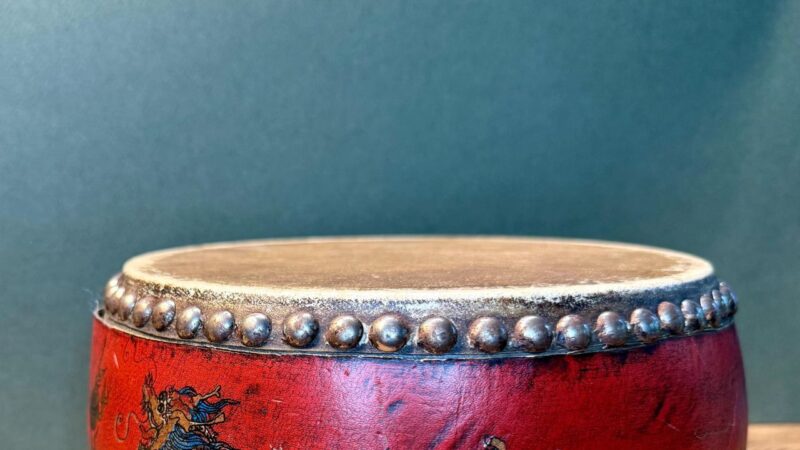
This CBE has had us doing all manner of acrobatic exercises, which I found increasingly impractical. CBE has turned us all – parents and our children into local DIY scavengers. For any learner living in an urban area, some project activities border on the absurd. Take, for instance, the assignment that our son was given to make a wandidi or orutu (traditional musical instrument) using tin cans. And don’t even get me started on what the children in the rural areas are subjected to. How do you learn swimming lessons in fields or atop tables?
We were sold a pipe dream for nine years, only to wake up to a nightmare early this year.
Hannah did exceptionally well and earned herself a place at a girls’ national school in Kiambu. But she was adamant about the pathway she wanted to take: Arts & Sports Science – a subject combination of fine arts, literature, French, music, and dance. This came as no surprise to us. We had spotted her affinity for the arts from as early as five years old when she began drawing characters from her favourite cartoon shows.
While Hannah had not been accepted at any of the schools of her choice, we, in our naive faith in the system, had believed that the national public school assigned to us by the ministry would indeed offer both the chosen subject combination and a conducive environment for her.
An educator and a fierce critic of CBC, Dr Wandia Njoya had warned us for years. In a 2019 article, she said,
“Pathways mean that the arts will always be treated as an appendage, as something for children who do not perform well in academics or science. And those children will invariably be those attending poorly equipped schools. And that attitude towards the arts implies ALL KNOWLEDGE, not just the arts. It means we remain mediocre, uncreative, and unimaginative. It means that Kenyans will remain blocked from inventing, innovating, and creating, even as institutions perform innovation by creating ‘hubs’ and ‘innovation funds’.
As a product of public high school education, I knew that this school was no private school. I anticipated that it would be devoid of the bells and whistles that Hannah had enjoyed. Similarly, I had no illusions about the kind of culture and rigour Hannah would be exposed to. Her father and I wanted that for her. A public boarding school setting where discipline, individual and collective responsibility, and academic excellence, with infrastructure to support the Arts & Sports Science pathway, would mould her.
We were shocked to learn that the school was not offering fine art – had no amenities, no faculty – and that the administration had no interest in supporting the over 30 students it had admitted for this pathway.
Perpetuation of traditional prejudice against the arts
When Dr Njoya predicted that there would be hardly any fine arts teachers and that few parents would encourage their children to pursue that pathway, she was branded an enemy of progress who sought every possible opportunity to malign this wonderful curriculum which, according to the Ministry of Education, recognized, encouraged, and supported the talent pathway.
“Right now, we are bracing for a fight over the pathways which Grade 10 children will be entering next year. I can almost predict with certainty that few parents will want their children to pursue the talent pathway. There are hardly any fine arts teachers anyway, because the colleges are not training them, because the fine arts are not an examinable subject in the outgoing 8.4.4 system.”
By Hannah’s own account, corroborated by numerous other students in the arts pathway who confided to their parents, they began experiencing systemic bullying which, according to her, was instigated by the teachers and emulated by the other students.
Disparaging remarks like, “You are all academic dwarfs”, “Msifikiri mlikuja hapa tu kuimba” (Don’t think you came here just to sing) became normalized, thrown around casually any time the arts class was caught making noise or whenever there were altercations between the students and the teachers.
As a creative whose career and life’s purpose are centred around the arts, this was phlegm-filled spit in my face.
The whole “talent” pathway is a veneer. Once you scratch the surface, there’s nothing but hot air.
Last year, Dr Njoya found that only 14 public schools in Kenya offer art at the KCSE level, meaning that the Teachers Service Commission does not have teachers in sufficient numbers to teach fine art under the new curriculum. Thus, despite all the PR from the Ministry of Education, despite their arm-twisting all national schools to offer all three pathways, including arts and sports science, the ministry only had 14 trained art teachers. Let’s chew on that for a minute.
News reports indicate that during the first Grade 10 intake in January, most public high schools that had been earmarked to teach the arts dropped subjects such as fine art, film, and theatre. A principal I spoke to during my search for a school for Hannah disclosed that the school had to use the English, Kiswahili, or music teachers to teach subjects under the arts pathway.
By the second term half-term break, it had fully dawned on us that the only alternative for Hannah was a private school.
Perpetuating the view of the arts as elitist
Although relieved to have finally found a private school where the arts are accorded equal regard as the sciences, we are aware that this is an option that very few parents can afford.
Parents are now grappling with the reality that the ministry has removed the pedestal on which we had placed our prestigious national high schools. According to news reports, many schools are understaffed, underfunded, and overpopulated, accommodating between 10 and 15 streams with between 50 and 60 pupils per class within much the same infrastructure left behind by the schools’ colonial founders.
Is artistic expression a luxury or a fundamental human right?
Our education system has forced us to unwittingly continue to perpetuate the arts as something only the elite can pursue. By treating artistic expression as a luxury rather than a fundamental human right, our education system quietly executes a cultural heist – convincing us that creative legacy is reserved solely for the privileged. But creativity is not an elite commodity to be rationed; it is our collective heritage, our memory, and our primary engine for critical thought.
Early this year, as my family and the art fraternity mourned the death of Patrick Mukabi, one of Kenya’s most distinguished visual artists, my thoughts and memories of him kept returning to the Dust Depo Studio where he inspired, moulded, and imprinted his legacy on the minds, hearts, and hands of a new generation of children, including Hannah and her siblings.
Uncle Suppu – as Mukabi was known to the children he taught – treated his artistic expression as a historian with nothing but a brush, paint, and canvas would. His artistic rendering of women in the marketplace tells our collective story of what beauty there is even in the mundane simplicity of the everyday moments at Marigiti.
When we allow schools to strip the arts from the classroom, we actively participate in erasing our own stories and stripping ourselves of the only language we have to convey our deep human emotions, experiences, and reflections of the world around us. We must reject this erasure narrative of artificial scarcity. It is time for parents, educators, and community creators to aggressively advocate for a curriculum that recognises and supports the teaching of the arts to be as essential as the teaching of STEM (Science, Technology, Engineering, and Mathematics) subjects.