|
Getting your Trinity Audio player ready...
|
1.
One week after returning to China for the summer, I came down with a cold and a fever.
During my recovery, I shut off every channel through which work could reach me, as though I were gradually drifting away from a particular identity and the time-space it inhabited. I watched Japanese anime and read Chinese books. For a while, my English and Kiswahili went to sleep. My e-reader, loaded with more than a dozen books for next semester’s research plans, had not been turned on for a week. It, too, lay quietly asleep.
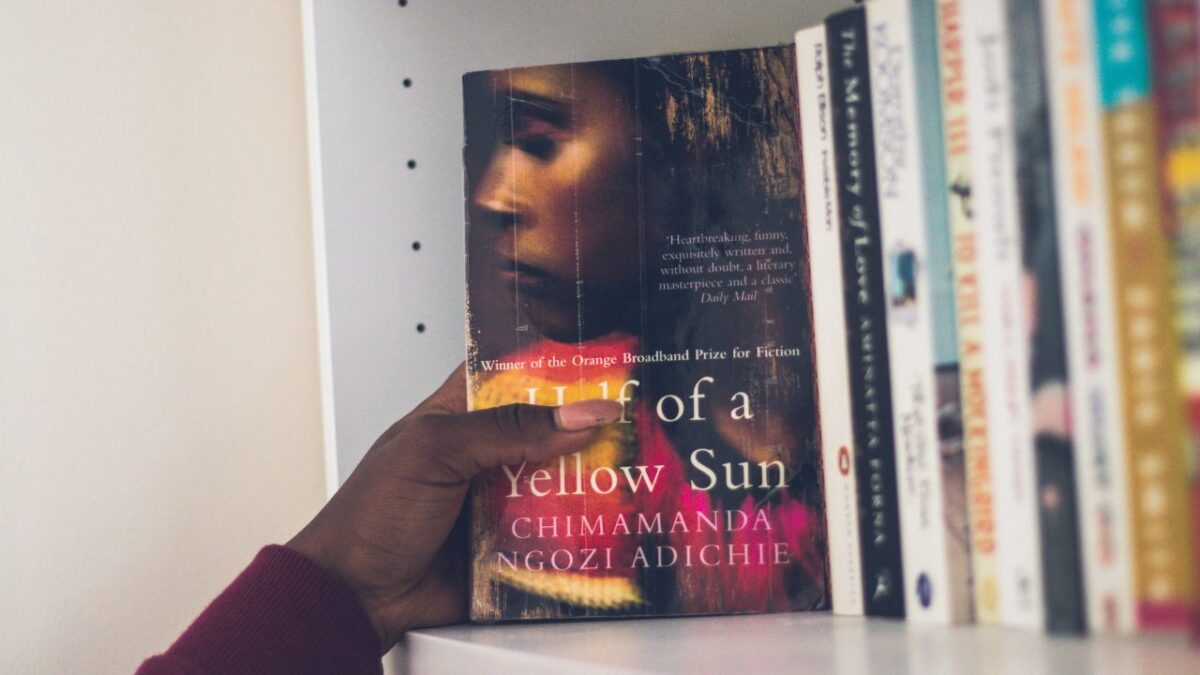
On the first day after I recovered, with little to do—or perhaps nudged by preparations for next semester’s teaching—I returned to my summer reading: Nnedi Okorafor‘s novel Lagoon. Her leaping prose and fluid storytelling felt like seawater, like waves, and even more like the mist that, in the novel, hangs over Lagos. The book awakened my memories. It awakened another identity within me, along with the time-space in which it dwells.
2.
“What is your research?”
“African literature.”
Just these two words—“Africa” and “literature”—are enough to trigger a cascade of questions.
One summer during my PhD, back in China, I attended a dinner party organized by my parents’ generation. A middle-aged uncle, cigarette in hand and one leg crossed over the other, looked at me and asked: “African literature? Does Africa even have literature? When you go to Africa, don’t you just see elephants and lions?”
Before I could respond, he had already launched into his grand theory about whether Chinese culture or Western culture was superior, as if he had forgotten what he had asked in the first place: African literature.
After I started working, I met an Asian professor of East Asian languages. When she first heard my research area, she gave me the same look of surprise: “African literature? Isn’t that something only Black scholars study? How did you end up working on this?”
From my PhD years to my current job, I have answered the question of why I study African literature countless times.
For many people, an Asian woman working on African literature still seems difficult to imagine. When Asian women do not choose fields, they are expected to enter—such as East Asian languages and literatures or Asian American studies—their academic position often becomes difficult to locate epistemologically. Many people seem uncertain how to make sense of my presence.
In my first month at work, I was constantly borrowing books from the library, returning them, buying coffee, and writing. Because I looked young, I was almost always mistaken for a student.
“What year are you in? What do you study?”
“Oh—you’re a professor?”
“Oh—you’re the new faculty member in Africana Studies?”
Faced with a series of questions and exclamation marks, I always find myself needing to explain. My skin color and my research form a kind of mismatch in the eyes of others, as if a sandbag were tied to my legs—heavy, weighing down every step I take.
Terms like Black, African, Africana, Āfēilìjiā, all seem closely tied to the idea of “Blackness.” On one level, this connection is entirely understandable. In North America, Black Studies emerged out of student movements in California in the late 1960s, when students demanded that university curricula pay greater attention to people of color in the United States. Black Studies not only opened up systematic academic inquiry into Black history and culture but also laid the groundwork for other ethnic and minority studies in higher education, such as Asian American Studies, Latinx Studies, Indigenous Studies, and Gender Studies. In the United Kingdom, Canada, and other Western countries, Black Studies developed along its own historical trajectories, while also intersecting with and resonating with the North American experience.
The formation of Black Studies was never simply about establishing a stable academic discipline within the university. It carried a revolutionary and radical charge, reflecting Black students’ deep concern with racial equality and ongoing struggles for social justice. At the time of its emergence as a field, the wounds and legacies of slavery still deeply structured social reality; African nations had gained political independence one after another, yet this had not necessarily translated into improved living conditions for their populations; and apartheid in South Africa remained firmly in place. Against this historical backdrop, Black Studies was envisioned as a field to be led by outstanding Black scholars, to cultivate more Black intellectuals, serve Black communities, and expand Black voices in the public space.
Africana and Africa, in many contexts, are often implicitly bound to the subject position of Black scholars. Therefore, when an Asian scholar enters Africana Studies, their presence is often seen as “unexpected,” and they are asked to account for it. Faced with such questions, I often respond in this way. Compared to the surprise provoked by an Asian woman studying African literature, white scholars appear able to move freely across the academic map: they can choose to study almost anything, and rarely are they asked why they have chosen a particular field. When a Black scholar enters East Asian studies, however, they are often met with similar questions and similar looks—why East Asian languages and cultures?
Of course, one can offer academic explanations: Afro-Asian historical connections, solidarities within global racial politics, even narratives of “returning to ancestral origins” in search of cultural affinity. Yet the structural tension faced by scholars of color lies in this: they often cannot easily say, “there is no reason—I simply like it,” as a fully legitimate explanation. In a sense, the expression of “free” intellectual interest itself appears to be a privilege unevenly distributed.
When many people express confusion about my research, there are also those who are not surprised at all, who feel no need for further explanation—for instance, my department chair, Father Brown.
3.
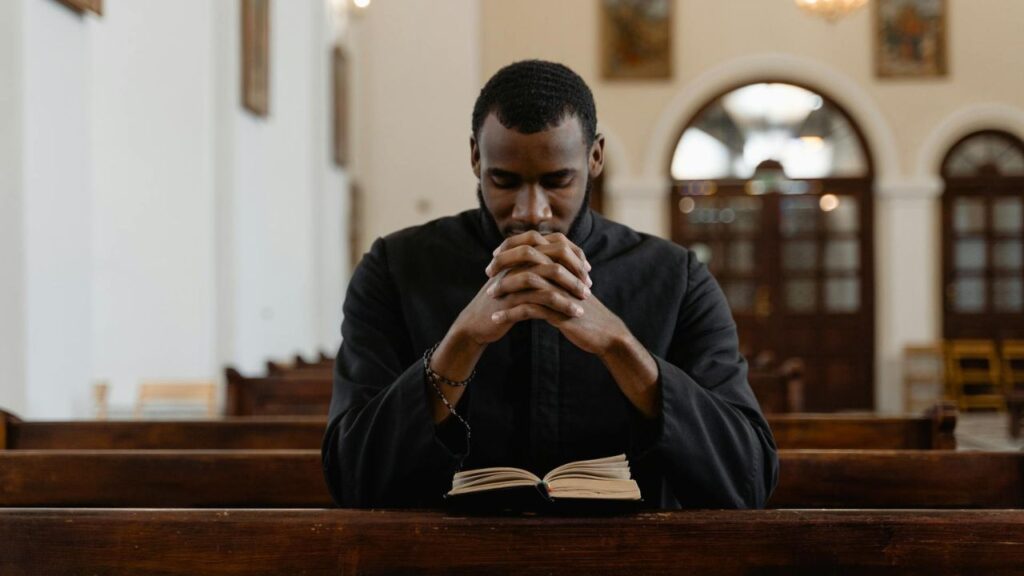
Father Brown is a Black elder in his eighties, with a voice like a bell and eyes sharp as a torch. In autumn and winter, he always wears a black overcoat and carries a briefcase, coming to work regardless of wind or rain. People calls him “Father,” not “Doctor” or “Professor,” because he is a Jesuit priest. Beyond teaching and administrative work in the department, he also travels around the town and surrounding areas to serve Catholic parishes and preside over various important events. His name is well known throughout this region.
Unlike many others, who show surprise when they first hear about my research on African and African diaspora literature, Father Brown is never surprised. Perhaps this has something to do with his age and wisdom. He lived through racial segregation in the United States, witnessed the rise of the Civil Rights Movement, and saw the wave of national independence movements across Asia, Africa, and Latin America. He not only knows this history, but has also been friends with many leaders, thinkers, and writers involved in those movements. Father Brown has a deep understanding of the historical connections across Asia, Africa, and Latin America. His understanding of Africana Studies is shaped by the spirit of Pan-Africanism.
This understanding may also come from his younger years—during the height of African decolonization, when many African intellectuals came to study in the United States. He became classmates and close friends with many of them. These transcontinental friendships gave him a lasting sense of the diversity and continuity of Africana worlds, and allow him to understand, with ease, my interest as an Asian woman in African and African diaspora literature.
4.
On May 28, 2025, Ngũgĩ wa Thiong’o, the Kenyan writer who occupies a central place in the history of African literature, passed away. Father Brown sent a department-wide email expressing condolences.
Among Ngũgĩ’s many works, the one that has had the greatest impact on me is the essay “On the Abolition of the English Department.” Written in 1968 and co-authored by Ngũgĩ wa Thiong’o, Henry Owuor Anyumba, and Taban Lo Liyong, the essay offers a profound critique of the disciplinary structure and pedagogical orientation of the English Department at the University of Nairobi. It has appeared both in collections of Ngũgĩ’s essays and in anthologies of literary theory. Though brief, it remains remarkably thought-provoking, raising fundamental questions about African literature and the decolonization of the humanities in Africa.
Many of the proposals articulated in the essay have yet to be fully realized. The word “abolition” itself underscores the work’s prescient radicalism. The three scholars proposed abolishing the English Department and replacing it with a Department of African Literature and Languages, one that would place African literature at the center of the literary universe. The map of world literature they envisioned was organized along the following lines: first, African literature, especially oral traditions; second, the literatures of the African diaspora, including Caribbean and African American writing; third, Western literatures, including works written in English, French, and Portuguese; fourth, Kiswahili and Arabic literatures; and finally, Asian literatures. This was not merely a proposal for curricular reform. It was an attempt to reimagine the center–periphery structure of world literature itself—to envision an entirely different literary map of the globe, one organized around a radically different set of centers and margins.
Each time I return to this essay, I find new insights. I do not take it as an unquestionable canon; rather, I read it as a spark that ignites thinking. Every re-reading feels like the rekindling of that flame. At first, I approached it through a rather idealistic, literal reading. I was, for a time, disillusioned with Western classics and believed they could be entirely set aside—that one might simply stop reading or engaging with these texts. But as I returned to the essay and reflected on my teaching practice, my position became more nuanced and dialectical. I came to understand that the authors were not advocating the rejection of other literary traditions, nor a complete rupture from them. Rather, they were calling for African literature to occupy a central position, while maintaining an ongoing dialogue with Western canonical texts as well as other literary and disciplinary traditions.
Inspired by this essay, I consider the question of the “situatedness” (因地制宜性) of teaching African literature to be one that deserves further and sustained reflection. My teaching has, in turn, provided valuable insights into my research. By “situatedness,” I do not simply refer to a utilitarian logic of adaptation or a form of opportunistic tailoring to local conditions—what might be summarized in the phrase “sing whatever song suits the mountain” (在什么山唱什么歌). Rather, I am more concerned with how teaching in different contexts invites us—and our students—to think critically about what it means to do research in specific locations. What kinds of meanings does such situated scholarship generate? And how do the expectations of different academic ecologies converge or diverge from one another?
During my doctoral studies, I focused on African literature while also developing a strong interest in African American literature. However, due to disciplinary boundaries and the required structure of my program, this interest could not be fully developed. Later, I encountered the frequent claim that African American literature and African literature are fundamentally different and therefore not comparable. In many universities as well, African studies and African American studies are institutionally separated, producing clear departmental boundaries between the two fields. Yet the simple assertion that “they are different and therefore should not be discussed together” risks obscuring the possibility of dialogue between them. As Pan-Africanist historiography has already shown, there are historical grounds for reading these literatures in relation to one another. My own teaching practice has likewise reminded me not to close off this space of conversation.
5.
Many students from African countries pursue higher education across the world. Today, countries such as Nigeria, Ghana, and Kenya play an important role in the global circulation of international students. In this context, when African students arrive in North American academic settings to pursue research in African literature and culture, is African diaspora studies important or relevant to them? The answer is undoubtedly yes.
In my first year of teaching, I had the opportunity to design and teach two graduate seminars—Black Feminist Thought and African Feminism. Different student cohorts significantly shape the way a seminar unfolds, and they also place high demands on the instructor as both organizer and facilitator. When I first taught Black Feminist Thought, I felt a certain sense of anxiety. It was an experience I could not have imagined five years earlier, especially given the scale and complexity of the subject matter.
Unexpectedly, however, the course proceeded with remarkable smoothness. The seminar had seven international students, forming a classroom atmosphere that was both diverse and intellectually vibrant. Five of them were from Nigeria, with backgrounds primarily in English literature and philosophy, while the remaining two were exchange students from Eastern Europe. Upon first encountering an Asian instructor facilitating the course, one could easily detect a certain hesitation and confusion in their expressions. Yet once the seminar discussions began, the atmosphere quickly became lively and organically engaged. Almost every student was able to find in Black Feminist Thought points of connection to their own experiences, historical trajectories, and cultural memories.
The seminar opened with a discussion of the dialectical tensions between Afro-pessimism and the intellectual tradition of Black Marxism. From there, we moved into a sustained comparison between Black Feminism and African Feminism, before extending the discussion to the Cold War itineraries of figures such as Audre Lorde, Angela Davis, and Shirley Graham Du Bois, who traveled across Eurasia during the era of the so-called “Iron Curtain.” It was precisely through these narratives of migration and travel that the entire class came to recognize a crucial insight: Black Feminist Thought itself opens a broad global consciousness and contains transnational ethical and political imaginations.
For some Nigerian students in the seminar, a question that repeatedly surfaced was what kinds of research topics to pursue. Some were inclined to focus on African literature and the arts in their own local contexts, while others felt that African American literature might be more closely aligned with their experience in North America and therefore offer a more immediate point of entry.
Indeed, for Nigerian students studying in the United States, the term Blackness acquires a far more complex and layered set of meanings. While North American racial discourse is often insufficient for accounting for the histories and social realities of the vast African continent, once an international student—particularly a student of color—enters Western academic and social spaces, race inevitably becomes an unavoidable dimension of everyday experience. One’s status as an international student, accent, appearance, and the often-invisible histories of upbringing elsewhere may all become conditions that shape academic life. In this context, it is impossible to bypass the question of race.
It is therefore unsurprising that when a graduate student asked in class, “Can Black feminism and African feminism truly be in dialogue with one another?”, the question was not only legitimate but required serious engagement at the intersection of theory and practice. As Patricia Hill Collins has already suggested in Black Feminist Thought, this line of inquiry is far from new. By invoking African feminist writers such as Ama Ata Aidoo and Buchi Emecheta, she reminds us that any cross-cultural feminist comparison must take seriously the structural differences of race, class, and nationality.
More recently, I have also been reading the work of Yogita Goyal, whose scholarship raises similar questions while further extending this comparative perspective. In her recent book Runaway Genres, she situates what is currently labeled as the “Global African Novel” within the longer African American literary tradition, particularly the genre of the slave narrative/testimonies of freedom. She argues that different historical formations of “mobility”—whether escape, exile, or voluntary migration—may each carry their own specific historical conditions yet still generate possibilities for dialogue within a comparative literary framework. These global African novels are often usually seen as “Afropolitan,” but beneath their cosmopolitan surface lies a sustained critique of globalization, migration, and transnational experience. Rather than simply affirming a unidirectional movement from Africa to Europe or North America, these texts frequently register, in tones that are sharp, ironic, melancholic, philosophical, and at times absurdly humorous, the structural inequalities of the global world system, as well as the continuing traces of colonialism and imperialism in the present.
These examples suggest that the concept of “African literature” is fluid in nature, continually in motion and never reducible to stable or enclosed boundaries. The very process of engaging with and interrogating this concept is one of continuously opening its limits and expanding its scope of meaning. When African literature enters into dialogue with other literary traditions, it generates new possibilities and new interpretive pathways. For this reason, while it is certainly important to be familiar with literary history and different critical paradigms, such knowledge should not become a framework that constrains our understanding of African literature. African literature is always in the process of becoming, always in motion; its richness and complexity lie precisely in its resistance to being fully captured by any single academic paradigm.
Even when African literature is taught or discussed within the so-called North American academic system, “North America” itself is by no means a monolithic entity. Its system of higher education is marked by multiple layers of differentiation, including distinctions between public and private universities, research universities and liberal arts colleges, as well as variations in geographic location. These factors together shape distinct institutional goals and pedagogical practices. This is especially true in the American South—whether understood geographically or in terms of its historically and culturally inflected meanings—where the teaching of African and African American literature carries particular significance. The small town where I work is located precisely at the border between North and South. In electoral terms, it appears as a small blue island in a vast red landscape. The surrounding region bears the traces of multiple histories of racial segregation and violence. For instance, the now nearly abandoned town of Cairo, located at the confluence of the Mississippi and Ohio Rivers, once functioned as an important riverine passage point in the era of slavery. Its geographic position made it a key transit zone for enslaved people moving northward toward free states, and thus a crucial node in the broader geography of freedom and escape along the river system. The nearby town East St. Louis carries similar historical imprints. Although these histories belong to the past, when reading the works of writers such as Toni Morrison and Alice Walker, one can still glimpse, across the deserted fields, sparse settlements, quiet railroad crossings, and dilapidated buildings of these small towns, the lingering presence of a violent and traumatic past.
The dialogue between African diaspora literature and African literature is not a new intellectual endeavor. Historians of Pan-African studies have long undertaken extensive work in this direction. Whether it is referred to as Africana literature, African and African diaspora literature, or Global Black literature, these fields have, in different ways, sought to engage in comparative literary inquiry across cultural and historical boundaries. Although this is not a new problem, such work remains far from sufficient; it urgently requires further textual excavation, close reading, and sustained critical reflection, as well as the re-reading and reinterpretation of archival materials. More importantly, how might African literature and African diaspora literature be situated within the framework of world literature? Here, the “world” in “world literature” should not be understood simply as the material world or the existing geopolitical map of the globe. I am more inclined to understand it as a verb: “worlding.” From this perspective, re-mapping world literature through an Africana historical and intellectual lens would inevitably challenge established center–periphery structures. Ngũgĩ’s essay, discussed earlier, already offered an important conceptual gesture in this direction.
How, then, might this process of “Africana worlding” unfold? This remains an open question that requires continued discussion. I understand global Black literary studies—or African and African diaspora literary studies—as fundamentally a comparative literary project. But what, then, does “comparison” mean? As someone trained in comparative literature, I rarely label my own work as such. I approach comparison with caution, and even with a strong sense of anti-comparativism. Rather than treating comparison as a simple exercise in identifying differences between “apples and oranges,” or A and B, what demands critical attention is the very question of the grounds of comparison.
Returning to Africana literature as a world of inquiry, we may identify concrete historical anchors for comparison—for instance, the exchanges between African intellectuals and African American and other diasporic intellectuals within the transatlantic world, including correspondence, face-to-face encounters, mutual readings, and intertextuality. At the same time, one may also pursue a form of comparison that extends beyond immediate historical contexts, examining similarities and differences in literary forms, genres, and narrative paradigms. Yet such transhistorical comparison, while seemingly straightforward, in fact requires extensive reading and sustained intellectual engagement. Literary studies depend not only on imagination, but at times also resemble an empirical discipline grounded in rigorous engagement with texts. A recent and highly compelling example is Stephanie Bosch Santana’s Forms of Mobility, in which one chapter examines the circulation and localized adaptation of Langston Hughes’s serialized newspaper fiction Simple in Southern Africa. The stories of Simple circulated widely across African and diasporic worlds, linking together imaginaries of Black urban life across Harlem, Johannesburg, Harare, and Lusaka. In such scholarship, the proportions of African literature, African American literature, and other diasporic literatures such as Caribbean literature—whether evenly balanced, asymmetrically distributed, or dispersed in more difficult-to-quantify configurations—are themselves analytically significant, as they reflect distinct methodological commitments and modes of comparative practice. They reveal how different scholars construct distinctive frameworks and mapping of global Black literary studies. It is precisely in this sense that “Africana worlding,” understood as a verb and as an ongoing process of world-making, becomes vividly manifest here.
6.
From a North American context to the African continent itself, an important question arises: what is it like to teach African literature on the African continent? Has Ngũgĩ wa Thiong’o’s long-standing dream of abolishing English departments been realized? Has African literature education grounded in indigenous African languages made meaningful progress? These questions still require careful thought and further research. Different African countries, regions, and types of universities all shape very different realities. Here, I want to offer a set of fragmented but revealing observations. Since I have long been attentive to cultural production and writing in East Africa, the examples here are mainly drawn from my field observations and reflections in this region.
In my daily conversations with Kenyan colleagues, Kiswahili literature often becomes a shared topic. Grace, a colleague from Nairobi, was once an outstanding student who earned a scholarship to study in the United States for her undergraduate degree. When she saw me reading Kiswahili literary texts, she exclaimed: “Oh, isn’t this what we had to memorize and analyze for exams in Kenya? I never wanted to look at these texts again. Good luck to you. At least you are not studying them for exams.” Another colleague, Amina, is a graduate student of Kiswahili language studies from the coastal region. When we discussed a short story by the Tanzanian writer Euphrase Kezilahabi, she knew of his importance in the Kiswahili literary history, but it was the first time she had read his work closely. Without reading it with me and supporting my understanding of the text, she might not have had the opportunity to engage with this author’s work in such depth.
These small examples made me realize that even within what is often broadly labeled “East Africa,” there are significant differences. Kenyans are not necessarily familiar with Tanzanian writers; literary education at the University of Nairobi may differ substantially from that at Makerere University in Uganda.
The intensity of exam-oriented education in Kenya is also striking. The way my Kenyan colleagues respond to exam texts is not unlike how I feel when reading Lu Xun or classical Chinese literature. As for my Nigerian graduate students, they noted that different literature departments in their universities have different emphases. Some focus more on African American literature; compared to Ngũgĩ wa Thiong’o or Wole Soyinka, they may be more familiar with Toni Morrison or Maya Angelou. More surprisingly, some are more familiar with British literary classics, such as Shakespeare, than with Ngũgĩ wa Thiong’o or Wole Soyinka.
This set of observations is also reflected in African literary conferences, further revealing the internal unevenness within African literary studies. For example, a scholar working on Chadian literature once remarked in a session attended by only two listeners: “Compared to the more visible Nigerian or Kenyan literatures today, how many people truly pay attention to the literature of Chad?”
7.
During the period in which I am writing this essay, I am visiting old friends and my former Kiswahili language teachers in a small coastal town in East Africa. Conversations with them have made me even more aware of the complexity of African literary education on the continent.
I am fond of collecting Kiswahili literary works, and my visits have taken me through a wide range of bookstores: those in shopping malls in Nairobi, bookstores near airport boarding gates, textbook shops in small coastal towns, old bookstores in the old town centers of Dar es Salaam, private educational publishing shops in Dar es Salaam, and public bookstores affiliated with university Kiswahili departments. The books displayed in these spaces already reflect the uneven folds of reading practices in East African literary culture. For example, the African literature section near the boarding gates of Nairobi’s airport is dominated by English-language books. They are expensive (often around twenty US dollars), carefully designed, brightly colored, and mostly published by presses in major Western cities such as New York and London. The works are also largely familiar: they feature emerging African writers widely read in Euro-American academia, many of whom are writers-in-residence at Western universities. In a sense, these are the Afropolitan “stars” of African literature.
By contrast, in textbook-oriented bookstores in small coastal towns, such English-language novels are rare. The most visible shelves are occupied by school textbooks and exam guides, reflecting Kenya’s strong exam-oriented education culture. Kiswahili literary works are often placed in corners, with unclear categorization and covered in dust. Yet when one looks closely, these shelves still contain an impressive range of literary production: works by Ebrahim Hussein, Said A. Mohammed, Ken Walibora, K. W. Wamitila, and others, spanning plays, novels, short story collections, literary criticism, poetry, and introductory guides to poetry analysis. There are also texts designed specifically as supplementary reading for secondary school students.
During the holiday, I read a supplementary reading book for seventh graders. It was not easy. I still had to stop from time to time to look up words and work through the text slowly. When I encountered very idiomatic expressions, I also had to ask local friends and teachers for help. At first, I felt frustrated. But then I thought: a foreign reader who has studied Chinese for many years, if they were to read the “children’s literature” we grew up with—such as the works of Cao Wenxuan—would probably not find them easy either. Moreover, many of these texts have long exceeded the boundaries of what we call “children’s literature.” The same feeling applies to Kiswahili-language reading materials for secondary school students: the themes they address already go beyond the limits of children’s literature.
One of my young Kiswahili teachers is not only skilled in teaching Kiswahili language but also has a passion for creative writing in Kiswahili. I gave him a Chinese name, Ma Xin, echoing the sound of his original name. Ma Xin is not from this coastal town. He comes from a village further south and, through hard work, entered the university in town, becoming the first in his family to attend university. He is not tall but sharp and speaks eloquently. We are the same age, but his eyes carry a depth more mature than mine. This maturity is not worldly or calculating; rather, it is marked by a kind of innocence and idealism. His love of literature, and his belief that studying the humanities can change one’s fate, reveal a certain unguarded brightness in him.
Under the outdoor shelter of the university cafeteria, with sea wind passing through the coconut trees on campus and crows perched on the roof, Ma Xin told me: “Yesterday I had an argument with someone, and it really upset me.” I expected him to describe a heated conflict, but instead he continued: “So I wrote a poem about it.” He then handed me more than thirty pages of Kiswahili poetry, ninety stanzas in total, each strictly following a fixed rhyme scheme. This impulse—to respond to a disagreement by writing poetry—reminded me of my undergraduate classmates in poetry societies, who were skilled in regulated verse forms in classical Chinese poetry such as lüshi and jueju.
Ma Xin has also written fiction; his first novel was self-published with the help of friends. He began learning Arabic at a young age, grew up in a Muslim family, and is deeply familiar with the Qur’an and related literary traditions. On the car ride back from Malindi that day, he spoke excitedly about his interest in French, saying he hoped one day to read the original French works of Léopold Sédar Senghor and Thomas Sankara. This shows not only that he has a rich creative writing practice, but also that he has already initiated his own worlding of Africana literature. Ngũgĩ wa Thiong’o’s vision may not yet be fully realized within the institution, but in Ma Xin’s own reading and exploration, it is already quietly remapping the world(s) of Africana literature.
On our way to Malindi, the African Literature Association Conference was taking place in Nairobi. I am sure international scholars there have been well acquainted with Yvonne Owuor’s celebrity novel The Dragonfly Sea. Yet teachers in the coastal town have rarely heard of the book. However, when I mentioned that the novel had brought Lamu Island into global literary visibility, one of my teachers from Lamu responded that, although she had not read it before, she felt a sense of joy and recognition.
This recalls an important reminder that we cannot overlook the flourishing local African cultural and literary production. Although it is sometimes hard for these works to access the Western publishing circuits due to their use of African languages, this does not mean they lack sophistication. Supporting their development requires stronger engagement with local teaching and research infrastructures. Even within local contexts, however, reading is shaped by different circles, communities, habits of consumption, and levels of purchasing power. Beyond sociological approaches that emphasize the class dimensions of reading, we should also not overlook the texts themselves, for each work opens up an entirely new world. When Yvonne Owuor brings Lamu Island into the field of global scholarly visibility, writers of Kiswahili supplementary school reading, such as John Habwe, have also, through their work, introduced the world to East African secondary school students.
African literature encompasses both Ousmane Sembène’s revolutionary romanticism in his depiction of a railway workers’ general strike, and Teju Cole’s melancholic urban stream-of-consciousness and metaphysical reflection; it includes both the whispered protest and the articulation of women’s intimacy and friendship in Mariama Bâ’s epistolary form, and the dazzling celebrity feminist expression of Chimamanda Ngozi Adichie, who moves between academic and popular spheres. It is precisely this diversity and inclusiveness that give African literature its constellation of brilliance and its inexhaustible interpretive possibilities.
Given all these reflections and observations, designing a syllabus for African literature is never a simple task. One must first ask: where is the course being taught, who are the students, how is it taught, and in what language? All these questions complicate syllabus design. Constructing a syllabus requires careful consideration of the starting and ending points of the course, the mapping of the literary field, the dialogue between units, the selection of texts, whether to follow chronological order, and whether to include multiple perspectives on literary history. All these decisions shape how students come to understand African literature. Any fixed or rigid impression is potentially dangerous. A good syllabus may be both deep and broad, but more importantly, it should not reify interpretation; instead, it should remain open, continuously offering new perspectives and possibilities. In other words, a syllabus is not only a vehicle for knowledge and information, but also a reflection of one’s ethics of teaching African literature.
8.
Returning to the central concern of this essay: the situated nature of teaching African literature. Here, “situated” does not refer only to the country or linguistic environment in which teaching takes place, but also to the type of university, the specific student populations, and the departmental location of instruction. Whether in English departments, French departments, Chinese departments, African and African Diaspora Studies, Kiswahili studies (as well as departments of other African languages), or Comparative Literature, course design must involve a critical reflection on the historical formations and structural limitations of one’s own discipline, field, and department, so as to explore the possibilities for teaching African literature within and against these constraints.
Given the expansive scope of African and African diasporic literatures, these texts often cannot be fully contained within established departmental or disciplinary boundaries. This makes it all the more necessary to call for cross-departmental collaboration, so as to strive for greater presence for African and African diasporic literatures within traditional academic structures. As a teacher and researcher, each new text, topic, or course design becomes an opportunity for my unlearning.
Such a radiant and flourishing body of African literary production is like the tides of the Indian Ocean and the Atlantic Ocean, continuously washing over the sandy shores of history and the present, rising and falling without end. In the face of this tidal force, I often feel my own smallness. I choose instead to listen quietly to every whisper of the waves, to attend to the contours of each crest of foam, to entrust myself to the sea wind, to breathe deeply, and to feel the vastness of this universe, the surging force of language, and the vibrant life that pulses across this continent and among all who remain connected to it.
Reflexive Epilogue: On Language Choice
Before writing this essay, I hesitated over which language to use. I am not trained in creative writing in Chinese. Since secondary school, I have only written exam-oriented compositions; after beginning doctoral study, I have primarily written academic papers. I participated several times in provincial and municipal writing competitions yet never received more than a participation award. In recent years, as my reading in Chinese has diminished, my capacity for Chinese writing has also gradually weakened. I once considered writing in English. I attempted to do so and drafted several versions but eventually set them aside.
The question of language has long been a central concern in African literary studies. Perhaps the question of language choice in China-Africa writing will also become an important site of inquiry. In the end, I chose to remain faithful to an inner voice and to write this essay in Chinese. Even if my expression sometimes feels awkward or unpolished, I still choose this language as a means of conveying thought with sincerity.
I dedicate this essay to all sincere and generous young scholars working across China and Africa.
–
Written in China, Kenya, and America over June, July, and August in 2025
*This piece has been awarded First Prize in the category of non-fiction in the Second Global China-Africa Writing Competition (2026) held by CASIN (China-Africa Shanghai International Network). The competition is managed by Dr. Flair Donglai Shi (Shanghai Jiao Tong University), under the directorship of Dr. Jodie Yuzhou Sun (Fudan University). The judging panel of 2026 consisted of Dr. Lifang Zhang (Tsinghua University), Dr. Kaiyang Xu (China Foreign Affairs University), and Mr. Eric Mupona (Zhejiang University). This piece was originally written in Chinese, and the English version has been provided by the author. The Elephant has permission from both CASIN and the author to publish this translation first. For more details about the competition and CASIN, contact us at casinwriting@gmail.com.