|
Getting your Trinity Audio player ready...
|
The tales told of the origins of colonial Nairobi, formerly Enkare Nyirobi, are awash with references to railways, guns and the Imperial British East Africa Company. Animating them are hunters and loyalists; resistors displaced and burned, new locomotive terrains forged.
Yet, I would also argue that there are two critical chronicles often displaced in both formal and popular narratives about this urban space. This is, first, the important and tragic histories of its enslaved foundations; the reality that “old slave-traders [had] skirted the forests” of this region, and that many of its current thoroughfares are former slave trader caravan tracks.
As Andrew Hake wrote in 1977, in his book African Metropolis: Nairobi’s Self-Help City,
From 1850, the northern route, passing through Ngong close to the Nairobi River, was increasingly developed in spite of the fierce reputation of the Maasai and Wakwavi. Arab and Somali traders, sometimes financed by Indian Banyans at the coast, penetrated up-country in search not only of ivory, but also of porters who would carry it to the coast and then themselves be sold as slaves.
This is a history that we have chosen not to remember, yet whose afterlives we remain surrounded by. Undoubtedly, in our postcolonial governments’ conscious negation of our own blood-filled histories of enslavement, we deliberately disconnect from our people’s elsewhere – those who were forcefully displaced, tortured, killed and trafficked.
Building onto these histories of the enslaved, are, I suggest (and this is the second off-staged chronicle), other Nairobi protagonists whose sojourns in this city are not given enough weight.
Enter the “detribalized native”.
A small note here before I move forward, to say that I am not a fan of the words “tribe”, “tribal” “detribalized”, but seek to sit, instead, in the kinds of fear that this “detribalized” population provoked in the colonial state, and which can be paralleled to the post-June 25, 2024 surveillance, violence, extrajudicial actions and the “treason” and “terrorism” policies that have been launched by the Ruto government in the last two years.
As in the “legal” and extralegal regimes of the colonial bureaucracy, these state actions targeted a population (through lawfare, slander, and inhumane violent actions) that really was just trying to make do with the new conditions of their lives; statuses indelibly and violently marked by the illegitimate rule, displacement, alienation, taxation and brutality of a settler colonial regime.
What the colonial government saw as the “insolent” behaviours of the detribalized native – of claiming their right to movement, to determine their own lives, in many ways mirrors our present.
Ruto’s remarks about “treasonous” protestors, whose right to assemble is guaranteed by the constitution, the patronizing statements by brown-nosing leaders about the need to “raise” our teenagers well, the need to discipline them to “respect” a structure that long lost any ounce of humanity, echo the vacuous disciplining broadcasts of the colonial state.
The “problem” made explicit in these illusory narratives – both then and now – is not the state itself (or the self-serving and extractive actions of parliamentarians), but those who dare question its violence. Recall the words of Kimani Ichungwa when he dismissed Gen Z protestors as constituting a “KFC eating, Uber riding generation”? Deflecting attention from its own impotencies (that only survive by its sheer monopoly of force), the government asserts that it is “unruly” young people – as it was previously “illegitimate” and “ungovernable” African city dwellers – who are misplaced in their understanding of the present; they are ungenerous to the “progress” that has been made for them.
The imperatives of the moment, therefore, and which draw on genealogies of colonial interventions fixated on the “detribalized native”, are that one must obey and not question, that we should pay allegiance to structures that are every day and in multiple ways death making.
But the detribalized natives remained defiant (as many of the colonial Nairobi City Council reports show); the gunfire of the colonial state could never make them obedient, or their obedience total.
Report after report (both those that survived and likely those that were burned) document a litany of African contraventions, even despite the proliferation of colonial weapons. So preoccupied was the city administration by this “detribalized” (and possibly detribalizing) force away from their “natural” rural home, that they were the target of numerous laments, parliamentary discussions (even in the British House of Lords), and city bylaws.
Although this is not a claim that the current socio-political conditions are equal, I would argue that the Ruto government’s reaction to the present moment of necessary generational disobedience has some genealogy in the interventions that the colonial regime used to respond to the question of the “detribalized native”.
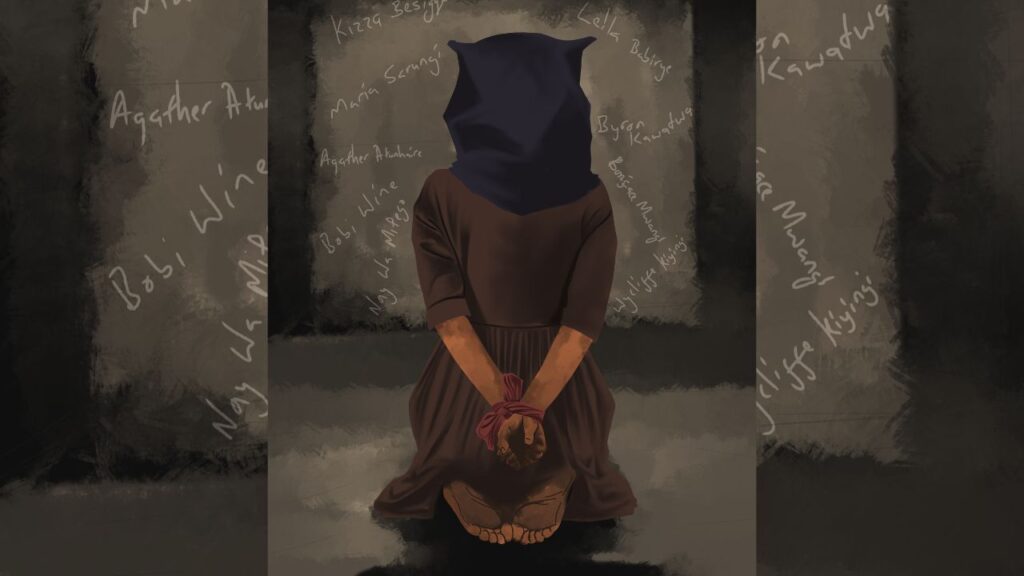
And as with the colonial government, the expansion of state violence (abductions, bodies dumped in quarries, the killing of bloggers, city-wide barricades) illustrates that the government, like the population, is not even convinced of its own supremacy.
What took place in June 2024 was unparalleled in post-independence Kenya. The sheer unity, courage, defiance, complexity, imagination and love that both those on and off the streets showed in demanding better, setting afoot another Kenya, continue to shape our lives in many material and immaterial ways.
“Compensation” money cannot change this, nor will it make us forget all the lives that were prematurely stolen from us – from Rex Maasai to Kennedy Onyango.
But while the moment may appear novel, it draws on a longer legacy of African disobedience – small and big challenges by “natives” to illegitimate rule.
The seeds of our current defiance flourish following the actions of Africans who paid fines to the colonial government for (as the archives document) holding illegal “ngoma” parties, pushing a handcart down the wrong side of the road, not leaving the town when their work contracts were over, living as urban “eyesores” who did not respect borders. Certainly, while forcefully confined to the interstices, through their disobedience, they gradually reclaimed the centre.
This they also did through the Harry Thuku protests, the 1950 Nairobi General Strike, the Mau Mau uprising, and many more urban African actions.
Without a doubt, the lives of Kenya’s Gen Z are shaped by the afterlives of colonialism. And, as with the early African generations in the city, this demographic is still creating lives from within the city’s excluded arenas, while knowing that their role is at its centre.
Through protests, dance, collective imaginations, political education during picnics and drunken lecture series, art, digital spaces and beyond, other frontiers are forged. They rebel, as those earlier “detribalized” generations did, against the state’s imposed and violent choreographies and cartographies.
These youthful forms of political being and becoming are not perfect, nor can they be romanticized, but their power – as we learn from those before us – must never be underestimated.
The state knows this too; in its oscillation between lawfare and gunspeak, as in the colonial bureaucracy, the present regime performs an empty prowess.
The fear of this demographic that the government exhibits – even as they are dismissed as “spoilt”, a “youth bulge”, “terrorists,” “treasonous”, or “kids” – mirrors a colonial state’s preoccupation with the “detribalized” native and what it could eventually portend.
In this Kenya Kwanza’s fears are well founded; they should know that Gen Z, as the detribalized native, will aways strike back.