|
Getting your Trinity Audio player ready...
|
Floods do not create inequality. They expose it.
In recent weeks, images from Nairobi showed residents forming human chains from public service vehicles to help strangers reach higher ground. Commuters waded through muddy floodwaters trying to get home. Cars were swept away. Owners of shops in the central business district watched their stock disappear under rising water.
Headlines across local and international media focused on climate change. Similar tragedies have unfolded across the region, from floods in Mozambique earlier this year to landslides in Ethiopia that claimed more than a hundred lives.
Climate change is undoubtedly part of the story. But it is not the whole story.
The floods in Nairobi reveal something deeper about how many sub-Saharan cities were built: not for dignity, but for survival.
Cities designed for dignity allow people to get home safely, maintain their livelihoods, and live with a basic sense of security even when the rains come. Yet in many African capitals, floods routinely turn everyday life into a struggle for safety and stability.
When a city floods, it reveals whom the planning process protected and whom it did not.
Floods reveal the geography of inequality
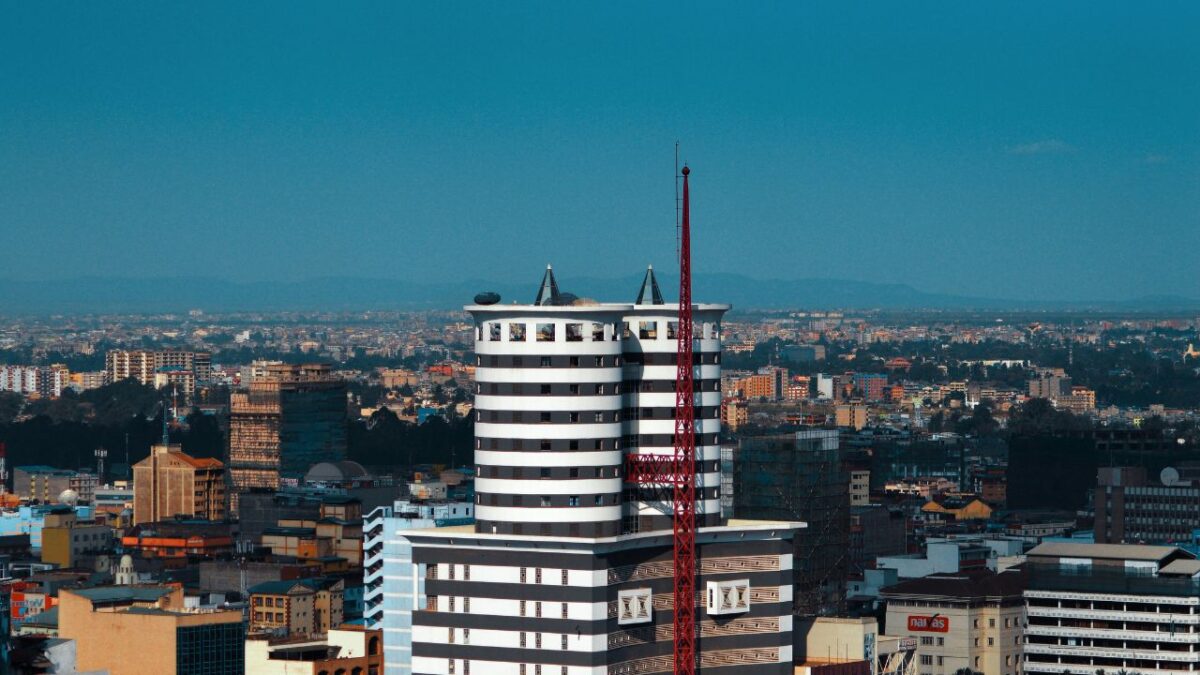
Nairobi is a city of striking contrasts.
Affluent neighbourhoods often sit on higher ground, with controlled zoning, better drainage systems, and abundant tree cover that naturally absorbs excess water. These areas also benefit from strong resident associations that enforce planning regulations and resist uncontrolled development.
Meanwhile, many low-lying areas where ordinary Kenyans live and work remain vulnerable. Informal settlements expand along riverbanks and floodplains. Businesses in densely populated commercial zones absorb enormous losses whenever heavy rains arrive.
For years, these realities existed side by side with little intersection. The most vulnerable communities bore the brunt of disasters with limited public attention. Those struggling daily to make a living rarely have the time or political leverage to organize for better urban planning.
But nature eventually forces a reckoning.
Water does not negotiate. When rivers burst their banks, they follow their natural paths regardless of what has been built in their way. Development on riparian land and unchecked construction inevitably return as disasters during heavy rains.
Floods reveal the geography of the inequality embedded in the city’s design. Yet the deeper issue begins long before the rain falls.
The capital city trap
For decades, Nairobi has been the symbolic centre of the Kenyan dream. Generations grew up with a simple aspiration: leave the village, move to Nairobi, and build a future. Like New York in Alicia Keys’ famous lyric, Nairobi became the “concrete jungle where dreams are made”.
The numbers explain why. Research from the Kenya Bankers Association indicates that Nairobi hosts nearly 59 per cent of the country’s micro, small, and medium enterprises. Although the city’s resident population is roughly 4.8 million, its daytime population approaches 6 million as workers commute into the capital.
Opportunity is concentrated here. Universities, financial capital, infrastructure, and professional networks all converge in one place. Students graduate and remain in the city searching for work or launching businesses.
When economic opportunity is centralized, people follow it, even when the system is already overwhelmed. Nairobi’s population density is estimated at more than 6,000 people per square kilometre, compared to a national average of roughly 100 people per square kilometre. The city is between sixty and eighty times more crowded than the country as a whole. Over time, this concentration creates a cascade of pressure.
Infrastructure strains under growing demand. Informal settlements expand rapidly. Housing becomes unaffordable. Traffic congestion consumes hours of daily life. And when climate shocks arrive, the system proves fragile.
This is the capital city trap; when an entire country’s ambitions, industries, and opportunities converge in a single urban centre that was never designed to support them all. Eventually, even the privileged begin to feel the strain.
The digital economy changes the map
For most of history, economic participation required physical proximity. Factories created towns. Financial centres created global cities. Workers migrated toward industrial hubs because that was where opportunity lived. But the digital economy is changing this equation.
Remote work, digital entrepreneurship, e-commerce, and global service exports are enabling people to participate in markets without living in a capital city. A business can operate in a rural town as long as reliable electricity and internet access are available.
The digital economy dissolves the geographic monopoly of capital cities. For countries like Kenya, this shift presents a rare opportunity. Instead of concentrating growth in a single metropolitan core, policymakers and investors could support the development of multiple regional hubs.
Prosperity could expand outward in concentric circles rather than remaining trapped in one overcrowded centre.
Imagine thriving digital and commercial ecosystems emerging within a radius of one to three hours of Nairobi – towns where people have greater space, lower costs, and stronger community ties while still participating fully in national and global markets.
In many ways, Kenya has already demonstrated its ability to leapfrog outdated systems. The country bypassed landline infrastructure and moved directly into the era of mobile money and smartphone-driven commerce. The next leap could be geographic.
Crisis as a catalyst
History shows that crises often accelerate structural change. The COVID-19 pandemic permanently altered how millions of people think about work and location. Remote employment became normalized across industries that previously insisted on physical presence.
Similarly, major natural disasters often push governments to rethink infrastructure and urban planning.
Dubai offers a telling example. After experiencing its heaviest rainfall in 75 years in 2024, the city moved rapidly to reassess drainage infrastructure and climate resilience. Authorities announced compensation measures for affected residents and allocated significant funding for repairs and system upgrades.
The message was clear: safeguarding residents’ dignity and security was a priority. The difference between resilient cities and struggling ones is rarely the weather. It is leadership and institutional responsiveness.
Africa’s demographic opportunity
Africa today has the youngest population in the world. Digital connectivity continues to expand. Education levels are rising. A generation of tech-savvy young people is eager to build businesses, careers, and new forms of economic participation. Yet talent alone is not enough.
Africa is not short of talent. It is short of distributed opportunity. For decades, cities served as the primary gateway to advancement. But a digitally connected generation now has the potential to build livelihoods beyond traditional metropolitan centres.
Encouraging regional ecosystems, strengthening digital infrastructure, and investing in secondary cities could unlock enormous economic potential across the continent. The question is whether policymakers and institutions will seize this moment.
A moment for reflection
Sometimes nature forces societies to confront truths they have long ignored. The floods in Nairobi are not just a disaster. They are a signal. They signal that the current model – overcrowded capitals absorbing the ambitions of entire nations – may no longer be sustainable.
Cities should not trap people in daily survival. They should enable dignity, opportunity, and community.
Africa now faces a choice.
Will we rebuild the same centralized systems that produced these vulnerabilities? Or will we design something better, cities and economies where prosperity flows across entire countries instead of pooling in a single urban core?
If we listen carefully, the floods are asking us that question.