|
Getting your Trinity Audio player ready...
|
Much of Kenya’s political language implicitly genders failure as female, imagining it as wearing a female face or inhabiting a female body.
Much of Kenya’s political language implicitly genders failure as female, imagining it as wearing a female face or inhabiting a female body.
During the heated debates on the Finance Bill 2024, Leader of the Majority Party in the National Assembly, Kimani Ichung’wah, emerged as one of the most vocal defenders of the bill in Parliament. Public backlash followed swiftly. But much of the criticism that gained traction online was not about the substance of the bill or Ichung’wah’s legislative accountability. Instead, he was branded “Muka wa Ruto” – Ruto’s wife.
When political leadership fails, public trust is betrayed. When power is abused or exercised without accountability, the language used to describe that failure is rarely neutral. It is feminised. It is labelled umama. It is questioned through a gendered lens, “Kwani wewe ni mwanamke?” It becomes “Muka wa Ruto” or flower girls. Failure is not simply incompetence; it is branded womanhood.

This is a deeply political, patriarchal—and certainly not accidental—framing. As Kenya edges toward another election cycle, with artificial intelligence now embedded in political communication and media production, this gendered coding of failure is becoming more entrenched and more dangerous.

Political satire and online trolling often draw on multiple identities—gender, ethnicity, class, and appearance—to ridicule leaders. Yet even within this broader culture of insult, femininity consistently emerges as shorthand for weakness, dependence, or incompetence. Patriarchal assumptions remain the foundation upon which these insults gain meaning and traction.
To be a “wife” in this framing implies submissiveness, dependence, and inability to think independently. Loyalty to the President is not framed as political calculation or ideological alignment, labels often reserved for men, but as feminised obedience. Political failure is rendered female.
The same logic now extends to AI-generated content. During the #RutoMustGo protests, images circulated depicting President William Ruto in bras, reinforcing the symbolic association of poor governance with femininity. In Kenya’s political imagination, bad leadership is not just weak; it is womanly.
This language reflects a broader cultural environment where masculinity is associated with authority and strength, while femininity is treated as shorthand for weakness, excess, or moral failure.
We see this logic again in the treatment of Deputy President Kithure Kindiki. His softer voice has been widely mocked online and labelled insufficiently “manly” for the office he holds. He has even been nicknamed “Sophia the First”, a female cartoon character. The ridicule is not about policy but performance — how closely he fits masculine expectations of power.
At the same time, Kindiki is described as “Ruto’s Yes Man”, while his impeached predecessor, Rigathi Gachagua, is often nostalgically framed as a “truthful man” for publicly clashing with the President. Dissent is coded as masculine courage; loyalty becomes feminised weakness. The binary is rigid and revealing. Femininity is used as an insult even when no woman is involved.
This pattern also shows how patriarchy disciplines men. Male leaders are pressured to perform aggression, dominance, and confrontation to be seen as legitimate. Softness, loyalty, negotiation, or caution are read as feminine — and therefore politically weak. Feminisation becomes a way of policing male behaviour, reinforcing a narrow definition of leadership that harms both men and women.
Despite the promise of the 2010 Constitution, Kenya continues to fall short on gender inclusion in political leadership. More than a decade later, the two-thirds gender rule, anchored in Articles 27 and 81(b) of the Constitution, remains unimplemented. After the 2022 General Election, women make up about 23% of the National Assembly and 31% of the Senate, far below constitutional intent.
The Political Parties Act, which provides mechanisms such as the zebra list to ensure gender balance in party nominations and leadership, is routinely undermined. Major political parties remain male-dominated at the highest decision-making levels, with women occupying a small fraction of party leadership positions. Structurally, women are locked out, yet symbolically, they are made to carry the burden of governance failure.
Global research shows that gendered media framing shapes how voters judge candidates, affects their viability, and influences access to funding. Kenya lacks comprehensive national data tracking gendered political insults, but media monitoring and civil society reports consistently show that women candidates face disproportionate harassment online and during campaigns. The absence of systematic data does not negate the pattern; it underscores how deeply normalised it has become.
This feminisation of political failure does not stop at individual insults. It is institutionalised through media framing.
The term “flower girls” has become one of the most enduring and damaging metaphors used to describe women in Kenyan politics. Senator Gloria Orwoba has publicly described how the phrase is deployed to portray women as ornamental, useless political actors — present but powerless. At one point, women MPs walked out of Parliament in protest, refusing to be reduced to decorative accessories in a male-dominated institution.
Yet the term refuses to disappear. It has been repurposed, normalised, and even mainstreamed. Former Deputy President Rigathi Gachagua used “flower girls” to mock President Ruto’s Cabinet, including Deputy President Kindiki and Prime Cabinet Secretary Musalia Mudavadi. Soon after, Standard Group ran a front-page story featuring Kindiki and Mudavadi under the headline “Mere Flower Girls.” A phrase historically used to diminish women was now used to emasculate men, without ever questioning why femininity itself is the insult.
Television stations followed suit. TV47 aired a segment questioning the relevance of deputy governors, framing the debate around whether they were “merely flower girls.” The metaphor has become shorthand for political redundancy — and it draws its power precisely because womanhood is understood as lesser.
This is the contradiction at the heart of Kenya’s political culture: femininity is despised as weakness, yet constantly used to explain failure.
Yet when women demonstrate strong leadership, the language flips. In 2009, when Martha Karua served as the only woman Cabinet minister under President Mwai Kibaki, she was widely referred to as “the only man in Cabinet”. Her insistence on constitutionalism, her refusal to compromise on electoral justice, and her eventual resignation were celebrated, but only by stripping them of femininity. Good governance, once again, was understood as male.
A similar dynamic shapes perceptions of Winnie Odinga, EALA MP and daughter of the late Former Prime Minister Raila Odinga. Her bold political engagement has earned praise, but often in masculine terms — she is frequently described as “the son he never had.” Online commentary reduces her achievements to her lineage, scrutinises her personal life, and questions her legitimacy as an independent political actor. Her courage and decisiveness are recognised, but only after being coded as masculine, while her womanhood is weaponised to undermine her authority.
Women are therefore caught in a paradox: femininity is blamed for failure, while competence is only legible when masculinised. This is happening in a country that has never been ruled by a woman.
These dynamics are shaped not only by gender but also by class, ethnicity, and generational politics. Elite women with established surnames often receive different coverage from grassroots candidates, while younger, digitally visible politicians face intensified scrutiny on platforms where virality shapes perception faster than policy debates.
Social media has amplified these patterns. Misogynistic language travels quickly and widely, reshaping perceptions before accountability can intervene. During the protests against the Finance Bill, Kenyan women repeatedly pushed back, insisting on a basic truth: bad governance by men is still bad governance by men. Feminising it does not make it more accurate; it only makes politics more hostile to women.
Across East Africa, similar narratives are unfolding. In Tanzania, President Samia Suluhu Hassan, the country’s first woman leader, has faced sustained gendered attacks, many amplified within Kenyan online spaces. Criticism has targeted not just her leadership but also her identity as a woman. (During recent elections, she was labelled “Idi Amin Mama”, collapsing her presidency into a crude comparison with one of the region’s most brutal dictators, Idi Amin Dada of Uganda, and reducing complex governance debates to gendered ridicule.
The attacks soon shifted to her body, clothing, religion, and sexuality. AI-generated cartoons circulated depicting her undressed, while commentary questioned her femininity, her likeability, and her legitimacy. Men who govern harshly are described as strong. Women who do the same are described as monstrous.
This is where artificial intelligence becomes central to the conversation, not as a neutral innovation, but as an amplifier of existing bias.
AI systems are trained on historical data: language, images, jokes, insults, and stereotypes. When that data is misogynistic, AI reproduces misogyny at scale. With short prompts, users can now generate cartoons, memes, altered images, and deepfakes that feminise male leaders to mock them and sexualise women leaders to discredit them.

The impact is already visible on Kenya’s X and TikTok social media platforms, where manipulated political images circulate widely. One such image—a cartoon depicting President Ruto in a coffin— even contributed to calls for amendments to the Computer Misuse and Cybercrimes Act of 2025.
Political satire has long played an important role in holding power to account in Kenya. Cartoonists like Gado have been celebrated for using humour to say what formal reporting often could not. Yet satire is not immune to critique — especially when it relies on gendered tropes that reinforce exclusion rather than challenge power.
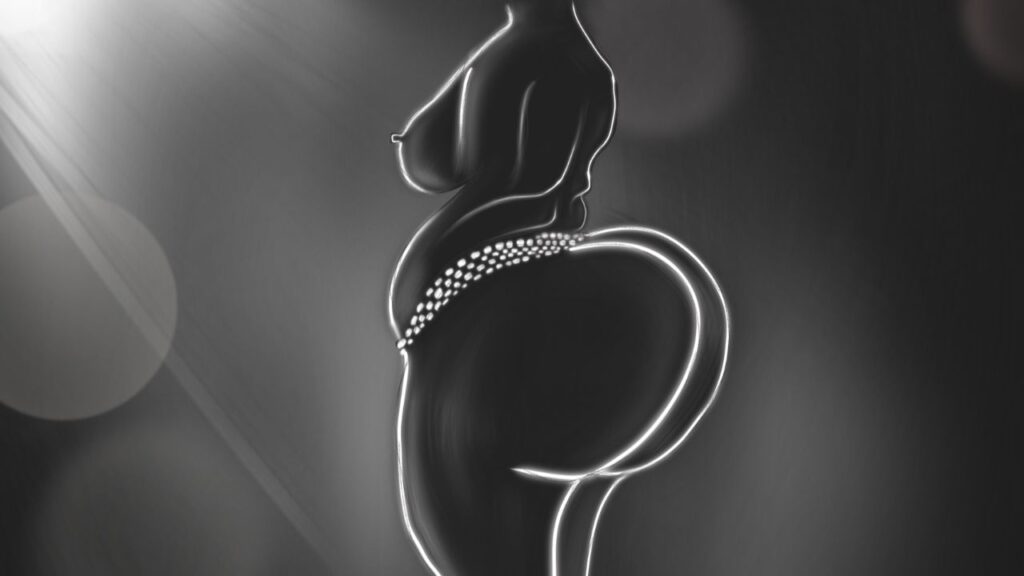
Some of Gado’s own work has fed into this feminisation. His caricatures of Anne Waiguru, or cartoons depicting a female cow with exaggerated udders being milked to symbolise corruption, rely on feminised bodies to represent bad governance. The imagery matters. When corruption is visualised through female anatomy, it subtly teaches audiences to associate misrule with femininity itself.
Gado, however, maintains that gender symbolism in his work is intended to expand — rather than narrow — the language of political accountability. He points to the recurring character “Wanjiku”, whom he portrays as a sharp, politically conscious woman representing the Kenyan public. In many of his cartoons, Wanjiku confronts those in power directly, sometimes even defiantly “showing the middle finger” to politicians. For Gado, this character embodies an intelligent, fearless woman who is unwilling to tolerate abuse of power. He also describes himself as an “equal opportunity cartoonist”, arguing that satire should hold leaders accountable regardless of gender: anyone in public office who engages in corruption, he says, deserves to be satirised.
At the same time, Gado acknowledges that once a cartoon enters the public sphere, its meaning is no longer solely in the hands of the artist. Audiences interpret satire through their own political and social lenses, and he says he remains open to critique about how his work is read. While he emphasises that he is careful not to over-sexualise women leaders in his depictions, he accepts that debate around imagery is part of the role cartoons play in democratic discourse. He also rejects the growing use of artificial intelligence in political cartooning, noting that he has never used AI in his practice and arguing that AI-generated images often lack the nuance, context and sophistication required for satire that genuinely provokes public debate.
In a recent experiment, I prompted AI tools (ChatGPT Pro) to generate 22 images of people based solely on profession, without specifying gender. The results were telling. Only five images depicted women: a nanny, a nurse, an activist, a TikTok user, and a woman representative. The remaining images — senator, governor, MP, Cabinet secretary, MCA, president, engineer, doctor, Gen Z protester, East African president, and X user — were all male.
Even digital spaces were gendered. The “X user” was male. The “TikTok user” was female. This mirrors Kenya’s online ecosystem, where X has become notorious for undressing women using Grok AI, spreading political violence, and coining misogynistic slurs, while TikTok is feminised as unserious or frivolous. AI, trained on biased data, is not neutral. It reproduces and amplifies the hierarchies it learns from.
Ethical responsibility has never been more urgent. AI is not simply a tool for humour or critique; it is a force capable of shaping political reality, particularly in a society where leadership is already gender-coded. Without careful consideration and accountability, the very mechanisms meant to expose power abuses risk reproducing the same injustices they were meant to challenge.
As Kenya heads into another election cycle, the stakes are no longer abstract. Deepfakes and viral manipulation will not only shape reputations, but they will shape voter perception and campaign outcomes in real time, often faster than verification, regulation, or public accountability can respond.
The feminisation of bad governance is no harmless joke. It is a political language that teaches voters that leadership is masculine, failure is feminine, and women’s bodies are fair game for public punishment.
And this language is not new. What has changed is its scale, speed, and permanence. Social media and AI have amplified what once circulated in whispers and print into viral narratives that can reach millions and shape public perception before facts can intervene.
Kenya cannot continue to symbolically blame women for a system they have been systematically excluded from shaping. We cannot feminise failure while masculinising power and still claim to support gender equality. Bad governance is not inherently female, nor is leadership inherently male; these are social constructions we must confront. As AI, social media, and political satire converge in new ways, the narratives that have long undermined women’s authority are accelerating.
The real question is no longer whether women are capable of leadership. It is whether Kenyan political culture, now mediated by media, algorithms, and digital communication, is willing to recognise authority without gendered punishment, or whether the next election cycle will simply reproduce the same hierarchies in faster, more automated forms.
–
This analysis was produced as part of the Gender+AI Reporting Fellowship, with support from the Africa Women’s Journalism Project(AWJP) in partnership with DW Akademie. The journalist used AI tools as research aids to review and summarise relevant policy and research documents and extract key statistics. All analysis, editorial decisions, and final wording were done by the reporter, in line with The Elephant’s editorial standards.